U.S. moving 7,000 ISIS suspects from Syria to Iraq amid concerns over security and due legal process
Erbil, Iraq — The U.S. military is in the process of transferring nearly 7,000 ISIS suspects from prisons and jails in northeast Syria to detention facilities across the border into Iraq. The operation comes amid concerns over security, following a mass escape from at least one prison in Syria, but it is also raising concern over the detainees' fate.
An Iraqi security source told CBS News that as of Thursday, nearly 2,000 detainees had been transferred into the country.
Iraq has vowed to put the prisoners on trial, and many could face terrorism charges in an opaque justice system that, just seven years ago, saw alleged ISIS militants, including European nationals, convicted and sentenced to death.
At the end of January, Syria's Ministry of Defense announced a 15 day extension of a ceasefire that largely ended clashes between government troops and Kurdish forces in the country's northeast. Those clashes had led to chaos around prisons holding ISIS detainees in the region long controlled by the U.S.-allied Kurdish Syrian Democratic Forces (SDF).
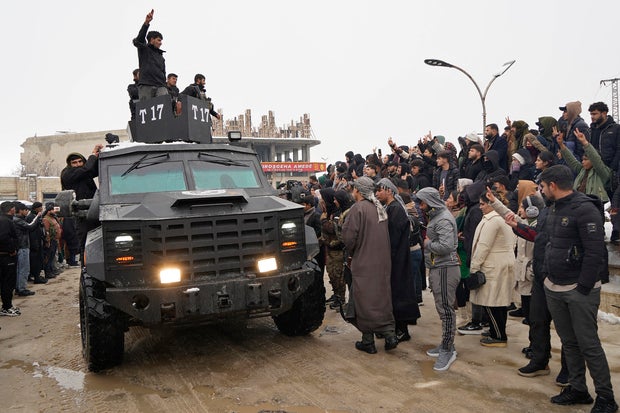
The mayhem included a Jan. 20 mass-escape from one facility.
The defense ministry said the ceasefire extension was intended to enable the U.S.-led military coalition to complete the transfer of the ISIS suspects to Iraq.
From the start of the U.S.-led war against ISIS in 2014, the SDF played a decisive role in defeating the terrorist group and forcing it to abandon its self-declared Islamic caliphate in 2019. ISIS, while no longer holding significant territory, still poses a threat, and the SDF has continued working alongside coalition forces to carry out joint operations aimed at preventing its reemergence.
As a result of the initial offensive and the ongoing operations, thousands of ISIS suspects were detained in prisons and detention centers guarded by the SDF and coalition troops in northeast Syria.
But a deep lack of trust between the SDF and Syria's new, post-dictatorial government, which is also backed by the U.S., led to the clashes that weakened security at the prisons holding the ISIS detainees — many of them hardened militants.
The uncertainty over security at the detention facilities alarmed not only the SDF and leaders in Damascus, but neighboring countries and the U.S., and Washington agreed to relocate the roughly 7,000 ISIS suspects to more secure detention facilities in Iraq.
U.S. Secretary of State Marco Rubio confirmed the plan, saying the prisoners would "be in Iraq temporarily," and urging the detainees' home countries to repatriate their nationals.
In Iraq, officials wary of further mass escapes moved quickly to tighten security along the border with Syria while offering secure facilities to hold transferred detainees.
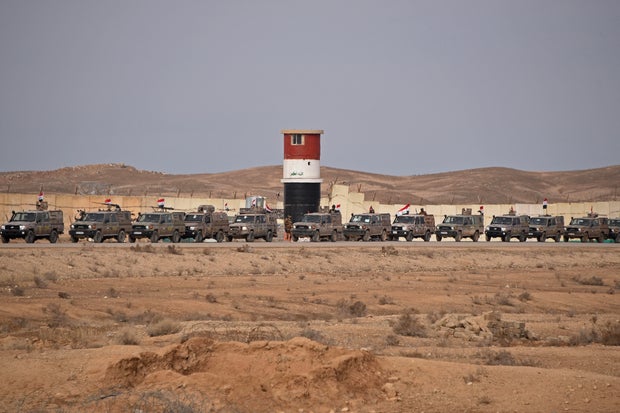
"It is better to have them imprisoned and secured in Iraq than worry about their escapes and releases in Syria," one Iraqi security source, who was not authorized to speak on the matter, told CBS News.
But while Rubio said the ISIS suspects would only be held temporarily in Iraq, the government in Baghdad has gone further, saying it's ready to put them on trial.
Iraq says it can offer ISIS suspects "fair and decisive trials." Can it?
Iraq's top legal official, the President of the Supreme Judicial Council, Judge Dr. Faiq Zidan, said in a televised address on Jan. 23 that his country was fully prepared to handle the cases of ISIS suspects, foreign and domestic.
"While some countries refuse to receive their nationals involved in terrorist crimes, the Iraqi judiciary confirms its full readiness to try terrorists detained in camps within Syrian territory, in accordance with national laws and international obligations, ensuring fair and decisive trials, achieving justice for the victims of terrorism, and preserving security in Iraq and other countries," Zidan said.
But Sarah Sanbar, a researcher with the New York-based Human Rights Watch organization, questioned Iraq's ability to carry out so many trials fairly, telling CBS News that the last time such a large number of people were put before courts in the country, the "system was completely overwhelmed."
Following the defeat of ISIS in Iraq at the end of 2017, the country put thousands of ISIS suspects on trial. According to the United Nations mission in Iraq, between January 2018 and October 2019, the Iraqi judiciary processed more than 20,000 terrorism-related cases.
Iraqi officials have not confirmed how many people convicted of terrorism offenses were sentenced to death during that period, but Human Rights Watch and Amnesty International have said around 8,000 people are on death row in the country, including non-Iraqi citizens.
Several news outlets, including The Wall Street Journal, reported in 2019 that seven French nationals were among the hundreds of people sentenced to death. A CBS News team attended one of the trials in Baghdad.
"They were totally sham trials," Sanbar told CBS News. "Confessions obtained under torture, people being tortured in detention centers, trials that lasted 10 minutes without a lawyer present, where they were sentenced to death, on the basis of an anonymous informant and no corroborating evidence."
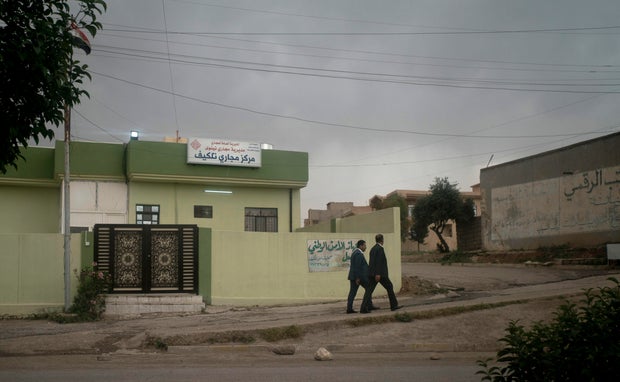
Responding to questions sent by CBS News via email, an official with Iraq's National Center of Justice and International Judicial Collaboration rejected Sanbar's accusations, saying the "Iraqi judiciary categorically rejects torture" and noting that "extracting confessions through coercion is a crime punishable under Iraqi law."
"Terrorism trials in Iraq are conducted in accordance with current laws and within a constitutional framework that guarantees the right to a fair trial, the defendant's right to a defense, and the eligibility of rulings for legal appeal," the official at the center said, adding that all such proceedings were "overseen by specialized judges working under extraordinary circumstances imposed by the scale and nature of these crimes."
Sanbar said Iraq's justice system "has come a long way" since the trials in 2019, as the country itself has continued to stabilize, "but that being said, a lot of those core systemic issues still persist."
Calls for Iraq and the U.S. to say "who's even there"
"We don't know who is there," Sanbar told CBS News of the detainees being moved into Iraq by the U.S. "And part of what we would call on authorities to do in Iraq, and the coalition, is to be very clear about who they're transferring, inform the families, give them access to legal representation, so that first and foremost, we know who's even there."
On a visit to a massive prison housing ISIS suspects in Hasaka, northeast Syria, in 2019, CBS News found that most of them were Iraqis or Syrians, but there were also many Europeans, Asians, Turks and citizens of other Arab countries. There was also one American man, but CBS News learned later that he had been repatriated.
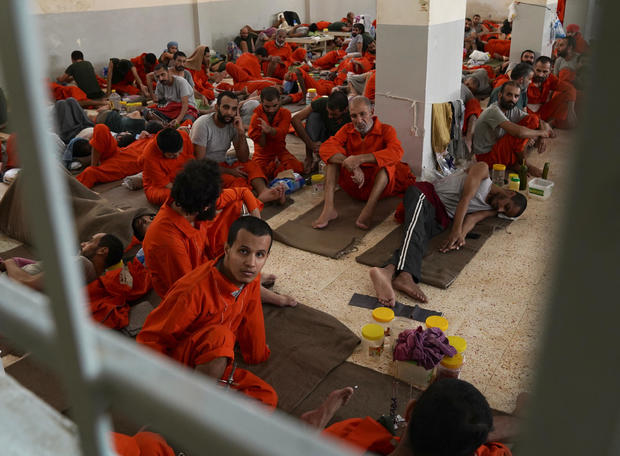
So far, no third country has commented on the transfer of any foreign nationals to Iraq or the possibility of them being put on trial in the country. That has not come as a surprise to Sanbar.
"We've seen these countries whose citizens left to join ISIS completely washing their hands of any sort of responsibility. They've let them languish there for the last 10 years," said Sanbar. "We would hope that now they would take them home, and we call on them to do so."
The Iraqi National Center of Justice and International Judicial Collaboration told CBS News it was in communication with a number of countries regarding the matter, though it did not identify them.
When CBS News spoke with Iraq's justice chief Zaidan in 2019 about criticism over the previous convictions and death sentences, including of seven French nationals, his stance was clear: Other countries should either handle it themselves, or let Iraq do it Iraq's way.
"My message to the foreign governments," Zaidan said: "Please respect the Iraqi court and the Iraqi law. If you want our court to make a trial for all the fighters, you must respect our decision. You must respect our law. If you don't accept what we are doing in our court, please take your detainee for you, take your suspect for your country, and make a trial in your country."