Can Texas Gov. Greg Abbott remove Democratic lawmakers who left the state over redistricting?
The Texas Legislature attempted to meet Monday to consider a redistricting plan that would favor Republicans, but Democratic members who left the state over the weekend did not return, denying the quorum needed to convene the session. Gov. Greg Abbott vowed to take steps to remove those lawmakers from their seats, and Texas House Speaker Dustin Burrows said he had signed civil arrest warrants for the absent Democrats.
Republicans "can make idle threats, but as long as they are out of state, there's really nothing that they can do," said Mark Jones, a Rice University political science professor.
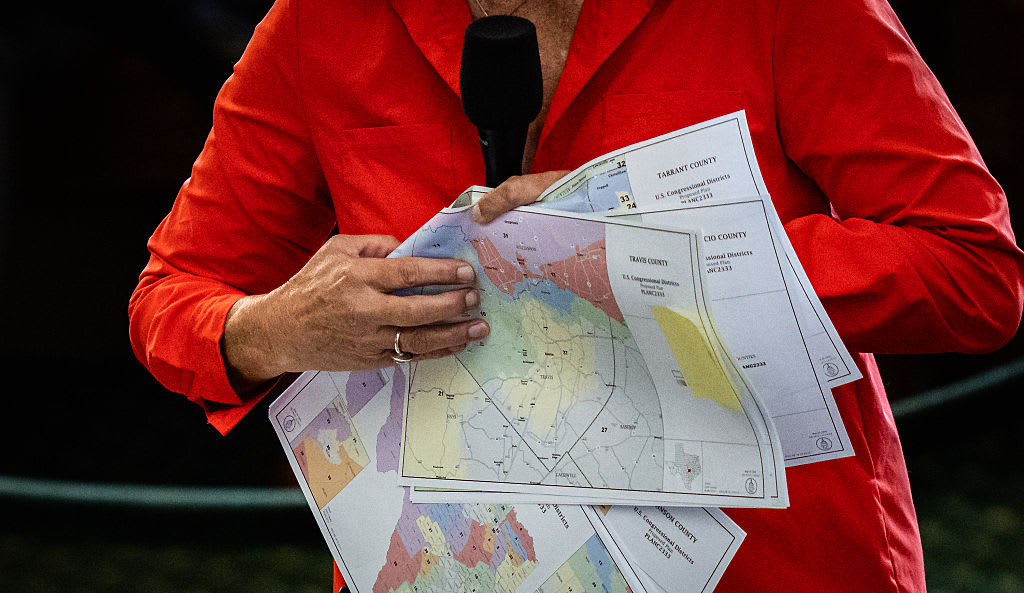
More than 50 Texas House Democrats left the state on Sunday, leaving the chamber short of the two-thirds quorum needed to bring a vote to the floor. Democrats are protesting the President Trump-led effort by Republicans to redraw the state's U.S. House congressional map, which could net the GOP up to five more seats.
"We are fighting for representative democracy, and whether or not that will continue, and so we're willing to face whatever consequences may come our way," Democratic state Rep. James Talarico told CBS News.
Texas Republicans on Monday and Tuesday returned to the Capitol in Austin but did not have enough members for a quorum, so the session could not be called to order.
How are Texas officials trying to force Democrats back?
Attorney General Ken Paxton on Tuesday said he would ask a judge to declare the seats vacant, after Burrows gave the Democrats until Friday, Aug. 8, to return.
"This House will not sit quietly while you obstruct the work of the people," Burrows said Monday.
To assist Burrows, Abbott said Monday that he had ordered the Texas Department of Public Safety to "locate, arrest, and return to the House chamber any member who has abandoned their duty to Texans." But the Texas DPS does not have jurisdiction to arrest them out of state. Within the state, they could be placed under civil arrest, which would compel them to return to the Legislature.
U.S. Sen. John Cornyn, a Republican, said Tuesday that he had contracted the FBI to "to aid in Texas state law enforcement efforts to locate or arrest potential lawbreakers who have fled the state."
Rep. Ann Johnson, a Houston Democrat, told CBS News' Ed O'Keefe in an interview Monday that "a quorum break is written into the Texas Constitution," and "the threat of arrest is something that should be an alarm for a lot of folks."
What laws are Abbott and other Republicans alleging are broken?
Abbott claimed Monday on Fox News that the Democrats could face bribery charges if their costs while out of state are being covered by others.
"I think based upon comments made by legislators themselves, they face a possibility of facing bribery charges, which is a second-degree felony in the state of Texas, there's one way to cure that, and that is if they get back to the state of Texas and make quorum today at a hearing that we have at 3 o'clock, they can cure themselves of any quid pro quo that would subject them to potential bribery charges," Abbott said.
But Jones noted that "Texas, compared to other states, has very loose ethics laws."
"The governor is certainly welcome to make that argument, and theoretically it has a limited level of potential to move forward, but at the end of the day, if you look at Texas ethics law and look at all of the things that are allowed under Texas ethics law … we would rank receiving money to pay a fine at the lower end at the potential for an ethics violation, let alone things that are illegal," Jones said.
Cornyn also noted the bribery claims in his letter to the FBI, writing that he is "concerned that legislators who solicited or accepted funds to aid in their efforts to avoid their legislative duties may be guilty of bribery or other public corruption offenses."
Abbott said Sunday that if members didn't return by 3 p.m. CT Monday, he'd "invoke Texas Attorney General Opinion No. KP-0382 to remove the missing Democrats from membership in the Texas House."
Abbott was citing a 2021 opinion from Texas' Republican Attorney General Ken Paxton, which was written after a previous walkout when Democratic lawmakers left the state to protest a change in the voting laws. The opinion, which is nonbinding, says a "district court may determine that a legislator has forfeited his or her office due to abandonment and can remove the legislator from office, thereby creating a vacancy."
But Jones noted that the only legal ways to remove a Texas lawmaker is either for the person to be expelled by a vote of two-thirds of the Legislature — which happened when legislators voted to expel Republican Rep. Byron Slaton over misconduct in 2023 — or by voters at the ballot box.
Republican state Rep. Briscoe Cain posted on social media Monday that he would file a bill to declare a seat vacant if a legislator missed seven consecutive days of a session. But since there is no quorum, that bill can't receive a vote — at least for now.
Why did Texas Democrats flee the state?
Abbott called a special session last month to take up the redistricting effort, along with 17 other issues, including relief for Texas flood victims, a review of the flood warning system and emergency preparedness, and a THC ban. Congressional redistricting, however, was to be considered first.
Texas has a part-time legislature which meets for 140 days every other year. The governor has the right to call a 30-day special session to address certain topics. The current special session started on July 21.
Abbott can call as many special sessions as he wants, which means that if Democrats run out the clock on this special session, he could call another one as soon as it ends. After the 2023 legislative session, for example, Abbott called four special sessions, which kept lawmakers in Austin into December. He convened the first one only hours after the legislative session ended.