Sen. Rand Paul says DHS, ICE must "restore trust" after Minneapolis shootings of Good, Pretti
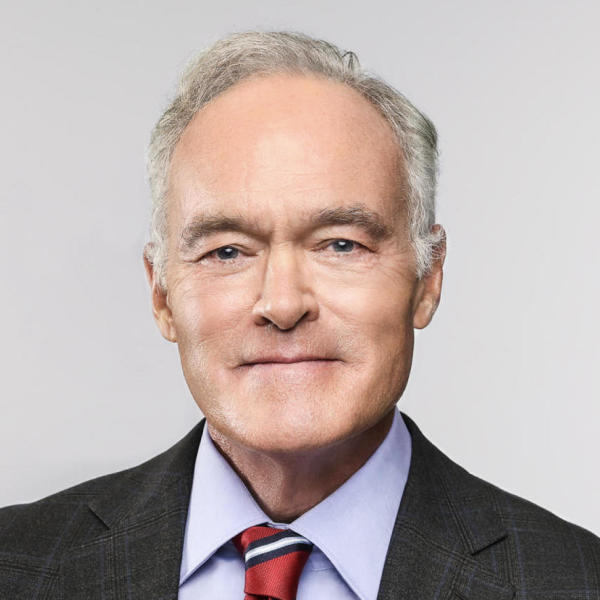
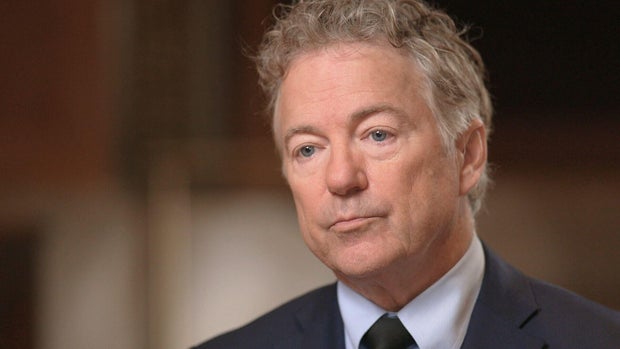
"Who can you kill?" and "when can you kill them?" Those are questions Republican Sen. Rand Paul asked last week after the deaths, in Minneapolis, of Renee Good and Alex Pretti — shot by officers of the Department of Homeland Security. Sen. Paul is chair of the Homeland Security Committee and, against the grain of many in his party, he has scheduled a public hearing in Minneapolis. Paul told us he doesn't trust the Trump administration's investigation after top officials failed to tell the truth. Homeland Security Secretary Kristi Noem said Alex Pretti was a terrorist who attacked federal officers, that led Sen. Paul, Republican of Kentucky, to watch video of the killing again and again.
Sen. Rand Paul: I saw no evidence. I saw a man that was retreating. I mean, he went to the middle of the street. He didn't even obstruct traffic. He let a car go through. As the agents advanced on him, he retreated to the side of the street. A woman is violently pushed to the ground, and he turns to help her, and that's when he is grabbed from behind. I saw no evidence of him assaulting the police.
Scott Pelley: Should Secretary Noem be fired?
Sen. Rand Paul: I think we have to get through our hearing February 12th, and I think we have to see what the people who work for her say. But my advice to them, if they're watching and they come to testify, is if you come in and you're going to justify that this man was-- aggressively assaulting your police officers. That cannot be acceptable, and that's why they're lacking in trust.
He also says he's concerned about the misstatements of others.
Scott Pelley: The commander of the Border Patrol operation…
Gregory Bovino: This looks like a situation where an individual wanted to do maximum damage and massacre law enforcement.
Scott Pelley: The FBI director didn't tell the truth about Pretti's right to carry a gun…
Kash Patel: You cannot bring a firearm, loaded with multiple magazines to any sort of protest that you want. It's that simple, you don't have that right to break the law and incite violence.
Scott Pelley: …The president's advisor, Stephen Miller, called Pretti an assassin. That's a lot of people--not telling the truth.
Sen. Rand Paul: It sounds like terrible judgment. I mean, terrible conclusions, incorrect conclusions, stating things that no one else believes. you can lie to your heart's content if there's no video. But the video doesn't support what they're saying.
Scott Pelley: You seem to be saying trust is broken.
Sen. Rand Paul: Without question.
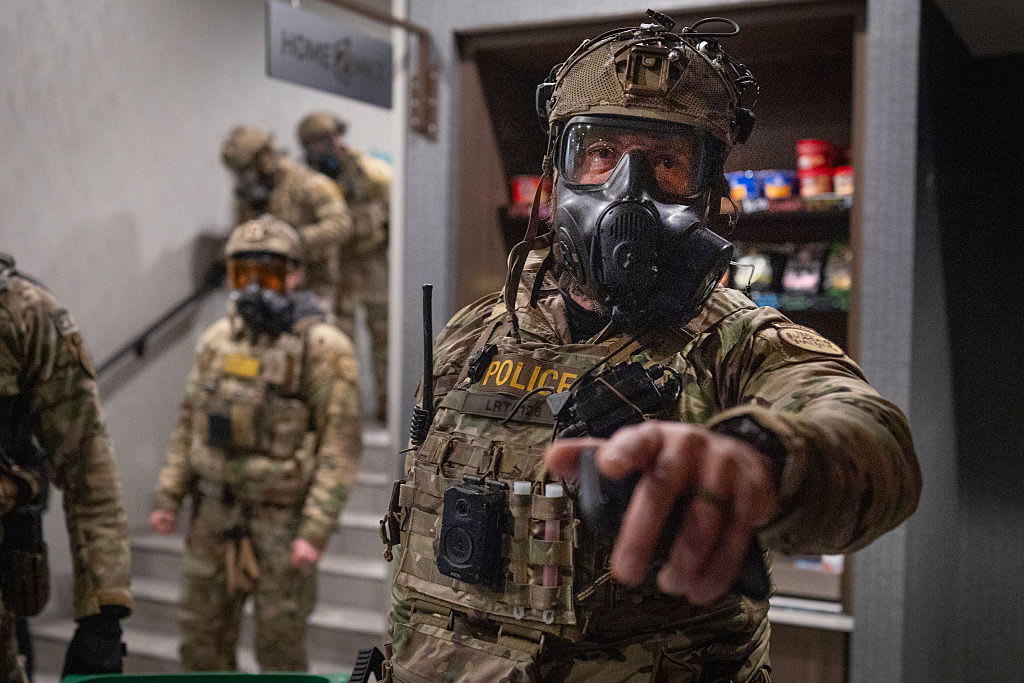
There's been little trust in Minneapolis for a month. The city is led by Democrats and is a sanctuary city. By city ordinance, Minneapolis does not allow its police to assist in federal immigration enforcement. Last month, to sweep up illegal immigrants, the Trump administration ordered in 3,000 officers of the Border Patrol and Immigration and Customs Enforcement, known as "ICE." It's a force five times larger than the Minneapolis police. Images of brutality inflamed protestors who, in turn, harassed the agents, blowing whistles, blocking streets, pushing the limits of the First Amendment right to peaceably assemble. The Department of Justice says, last week, 16 people were charged with assaulting officers or property.
Scott Pelley: In your view, do the protesters in Minneapolis bear any responsibility?
Sen. Rand Paul: Well, sure. I mean the thing is If you were my son or daughter would I tell you to spit on the police? Absolutely not. Would I tell you to yell and scream at them? No. I would tell you to go to a primary and knock on doors, sign up people, and try to convince people, particularly in a primary, of who to vote for. That is the way I would protest. But is it illegal to protest? No.
January 7th, Renee Good was blocking a street. As Good moved forward and to the right, an agent who had been in front of the car opened fire.
That day, Homeland Security Secretary Kristi Noem described Good as a terrorist.
Kristi Noem (on 1/7) It was an act of domestic terrorism. What happened was our ICE officers were out in an enforcement action. They got stuck in the snow because of the adverse weather that is in Minneapolis. They were attempting to push out their vehicle, and a woman attacked them and those surrounding them and attempted to run them over and ram them with her vehicle.
Did she aim to hit the officers or simply drive away as others believe? Her death stoked anger into rage. Days before he was killed, Alex Pretti spit at and kicked a federal officer's car.
A scuffle followed. Pretti had a gun in his waistband, for which he had a permit and, in Minnesota, the right to carry. Officers let him go. Then, on Jan. 24, Pretti was shot after an officer shouted that he had found the gun—again, in his waistband.
Sam Trepel: Because based on what I can see in the video, there isn't a clear reason for the use of force.
Sam Trepel investigated police shootings for the Justice Department. She led the federal prosecution in the death of George Floyd in 2020.
Trepel says the Pretti shooting isn't the only concern in the video.
Sam Trepel: For one thing-- when the federal agent pushes the woman that Mr. Pretti was helping. it's not clear from the video why that would be justified. There's the-- spraying of a chemical agent on Mr. Pretti and the woman he was trying to help. And the justification for that isn't clear either.
Until she resigned last year, Trepel was a prosecutor in the Department of Justice Civil Rights Division. Traditionally, the Civil Rights Division investigates cases like these and makes the decision on whether to press charges. In the Trump administration, Sam Trepel says, the Civil Rights Division has been hollowed out.
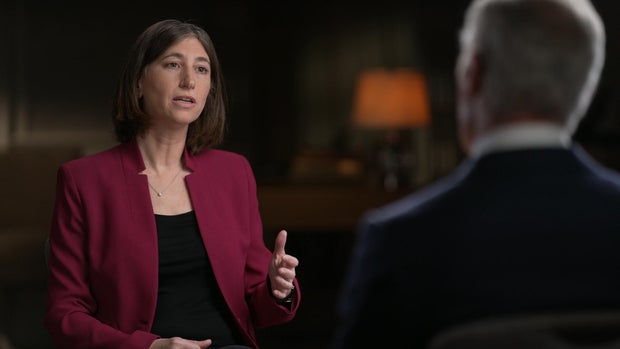
Sam Trepel: Since January of 2025, the division as a whole has lost over 75% of its career, nonpartisan attorneys.
The Justice Department tells us the Civil Rights Division is "reviewing" Pretti's death but in the Renee Good killing, the department says there is no basis for a civil rights investigation--one of many decisions Trepel finds troubling.
Sam Trepel: What's really different and striking here is that the federal government appears to be shutting the state investigators out completely. And that's very unusual and, in fact, unprecedented, in my experience. Typically, the federal investigative team and the state investigative team work very closely together. And they coordinate, and they collect evidence in close coordination with one another, and then they share that evidence.
But, in Minneapolis, state investigators tell us that federal agents are not sharing the evidence.
Scott Pelley: What signal does it send to other federal officers and to the public if a case like this is not thoroughly and transparently investigated?
Sam Trepel: I think it sends a message that federal agents are above the law, and that's a very dangerous message to be sending to them and to the public.
Daniel Altman: At this moment there's a real question in people's mind about, "Will this incident be looked at appropriately?"
Daniel Altman recently retired from U.S. Customs and Border Protection, where he led more than 50 investigations into officer shootings.
Scott Pelley: How unusual is this investigation?
Daniel Altman: What is unusual about it is that we're not following the established protocols. And given the amount of concern from the public, there hasn't been the type of explanation that's needed.
Explanation, Altman says, of the scope of the investigations and what will happen in the end.
Daniel Altman: We should have a commitment from the Department of Justice that when that's concluded, regardless of what they decide, whether to indict somebody or not, that there'll be some feedback provided to the public about the decision that was made and the basis for it.
Scott Pelley: What's at stake in having a transparent investigation?
Daniel Altman: I think at this point, public confidence in law enforcement, certainly federal law enforcement in this country, and public confidence in our rule of law in general is at stake.
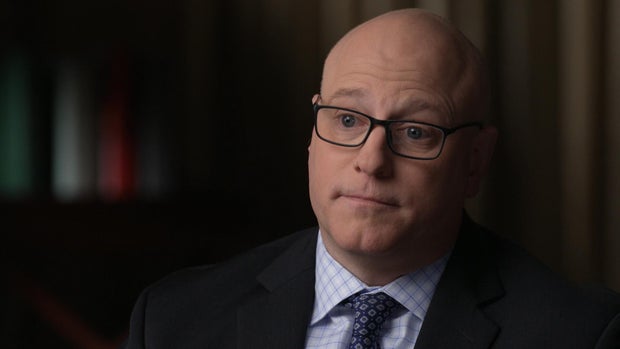
Last week, the administration responded to the criticism. The leader of the Minneapolis operation was replaced by Tom Homan. Homan is the top White House official on deportations and reports to the president. Homan met with the Minneapolis mayor and Minnesota governor. About Secretary Noem's comments, she now says she was working with the best information she had at the time. We asked for interviews with Noem, Homan and others, none was made available. Friday, Todd Blanche, number two at the Justice Department, called the shootings "tragic." He said there is a civil rights investigation into the Pretti killing, but he also said this:
Todd Blanche: I don't, I don't want to overstate what's happening. There's I don't want the takeaway to be that there's some massive civil rights investigation that's, that's happening. This is a what I would describe as a standard investigation by the FBI when, when there are circumstances like what we saw last Saturday and that that investigation to the extent it needs to involve, lawyers at the Civil Rights division, it will it will involve those.
Scott Pelley: Could the FBI have a credible investigation?
Sen. Rand Paul: That's-- a question. I don't-- I don't know the answer to that.
Scott Pelley: Maybe not, is what you're saying?
Sen. Rand Paul: Well, there were some pretty immediate conclusions on whether or not you're allowed to carry a gun at a rally which were incorrect and not really reflective of the Second Amendment or the law. So, I don't know who should do this. I think really if it were an independent group outside of the federal government would be better, actually.
It turns out, there was a federal indictment Thursday in Minnesota sought by the Civil Rights Division. Not in the Good or Pretti cases, but charges against reporter Don Lemon, who covered a protest at a church. The Department of Justice accuses him of intimidating the congregation and interfering with religious freedom. Lemon denies it.
In Rand Paul's scheduled hearing for Feb. 12, witnesses in this room are expected to include the heads of the agencies with boots on the ground in Minnesota. Paul says he is reserving judgment and will examine all aspects of the mayhem in Minneapolis.
Sen. Rand Paul: There are officers' cameras that should be released at some point in time and haven't been. But if one of them shows evidence that's different than what I'm saying, I'm perfectly willing to be, you know, corrected.
Scott Pelley: Can the American people trust the Department of Homeland Security?
Sen. Rand Paul: I think to restore trust things are gonna have to improve. But I'm not gonna say it's all one side. I mean, Minneapolis, the mayor of Minneapolis has said explicitly he will not cooperate. That is a significant part of the problem.
Scott Pelley: Republicans have been, most often, in lockstep with President Trump. And I wonder if you think that's beginning to fracture over these incidents.
Sen. Rand Paul: My job is always to try to ascertain the truth and try to do what's right-- regardless of party. People are gonna watch this and they're gonna say, "Oh, you're cooperating with the Democrats. You're having a hearing." And it's not. I want ICE to be able to work, and I want ICE to have trust. So, I'm not some bomb thrower from the left that wants to get rid of ICE. I want ICE to function, but I want to restore trust in ICE.
Scott Pelley: The families of Renee Good and Alex Pretti are seeking the truth, and I wonder what you would say to them in this moment.
Sen. Rand Paul: It's hard to know-- you know, what to say. And I'm not sure exactly how to respond to the emotions of it. I think that no one who is protesting, you know, deserves to be shot. You know, should the police have deescalated? Absolutely. Could the people have deescalated? Yes. None of it justifies what happened, but there were off-ramps all along here. There were off-ramps. And neither s-- side chose to-- choose those off-ramps.
Produced by Maria Gavrilovic, Aaron Weisz, Nicole Young. Edited by Peter M. Berman, April Wilson. Associate producers: Madeleine Carlisle, Ian Flickinger, Kristin Steve. Broadcast associates: Michelle Karim, Georgia Rosenberg. Assistant editor: Aisha Crespo.