Can liability waivers protect house party hosts?
After-prom parties are a staple for many high schoolers across the country and a trend among some parents is shining a light on growing safety concerns. A number of adult hosts of these parties are requiring young guests and their parents to sign liability waivers, but CBS News legal expert Rikki Klieman said you can still be held accountable.
"The reason why is the law decides who has a duty, who is responsible here. And the law in many states, 31 to be exact, has said if you are a social host, you have the responsibility," Klieman said Wednesday on "CBS This Morning."
More parents are turning to legal protection to establish liability for damage in their homes and responsibility for actions that result after the party.
"I want you, kids who are coming into my house, and I want your parents to sign a waiver so that if something bad happens, we're all sharing the responsibility, meaning we're all going to pay for it," Klieman said, paraphrasing the types of agreements that are becoming more common.
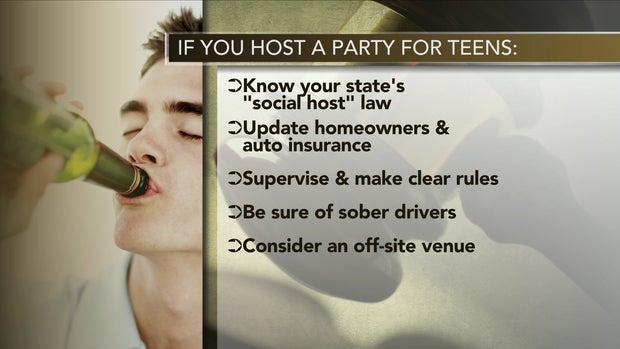
Klieman suggested holding the party at an off-site location, because liability would fall on that venue.
Otherwise, she said, it's critical to obtain as much insurance as you can afford and ensure there are chaperones.
"Hosts always need to be thinking, 'What's the worst that could ever happen?'" she said.
According to the Insurance Information Institute, "A typical homeowner's policy includes liability protection which covers you against lawsuits for bodily injury or property damage that you or family members cause to other people."
But parents should also be concerned about criminal consequences.
Punishments for contributing to the delinquency of a minor vary by state, but adults can face fines and even jail time -- especially if alcohol is served.
Klieman said the situation can become more complicated if problems arise after the guest leaves.
"In most cases, if there's an auto accident afterwards, a homeowner's policy excludes coverage. Then you have to look at the auto insurance policy," she said.
Her advice?
Number one, evaluate if having a party is a low-risk operation.
"If you're a good parent and your child wants a party, you can have the party," Klieman said.
Number two, understand the laws.
"You have got to know what your social host liability is, civilly, but you also need to know criminally," she said.