Pakistan PM vows to fight contempt charge
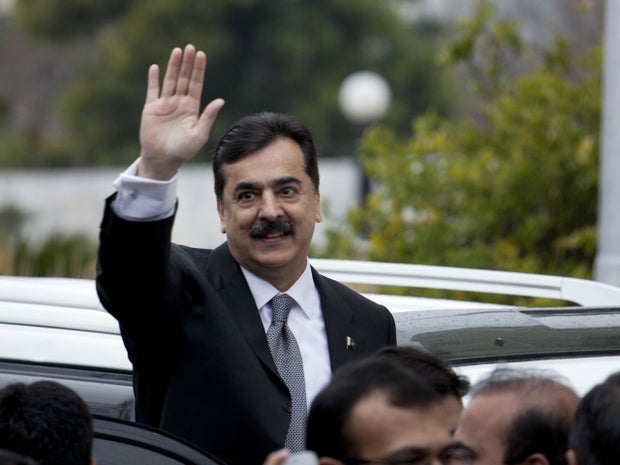
(CBS) ISLAMABAD - Pakistani Prime Minister Yusuf Raza Gilani was charged with contempt by the Supreme Court on Monday in a move which raises the specter of further instability across a country considered vital to U.S. security interests across the border in Afghanistan.
Justice Nasirul Mulk formally charged Gilani with contempt of court for his refusal to comply with an earlier court order stating that he must formally request Swiss authorities reopen an investigation into alleged corruption by President Asif Ali Zardari.
The issue goes back to accusations against Zardari for having allegedly received kickbacks from two Swiss companies, as well as money laundering allegations.
After Monday's hearing, the government indicated its intent to fight the charges rather than see Gilani step down and peacefully end the high profile legal battle.
"The prime minister is in no mood to step down. He will contest this case to defend himself," a senior leader of the Pakistan People's Party (PPP), of which both Zardari and Gilani are members, told CBS News on the condition of anonymity.
Pakistan PM's appeal in contempt case rejected
Pakistan: U.S. drone strikes picking back up
Video: Report suggests Pakistan encouraging Taliban
The PPP leader warned of "significant public protests on the streets of Pakistan if the prime minister is forced out," raising the possibility of unrest in areas of Pakistan where the PPP has influence.
For Western diplomats in Islamabad, the possibility of prolonged internal political turmoil also raises fresh questions over the re-opening of a land supply route for U.S. and NATO forces in Afghanistan.
Pakistan, which provides a primary route for supplies to landlocked Afghanistan, in November shut down the border crossings to coalition convoys after 26 of its soldiers were killed in a Western helicopter attack targeting two of Pakistan's army posts on the country's border with Afghanistan.
The future of the supply route is currently being debated by the Committee on National Security of the lower house of parliament known as the National Assembly.
"With so much squabbling inside Pakistan, I am concerned over the (Afghan supply) route. Will a government locked in so much acrimony internally, also risk the fallout from reopening the route?" wondered one European ambassador in Islamabad, who also spoke to CBS News on condition of anonymity. "I hope the authorities can re-open the route quickly."
In the past week, senior Pakistani officials from the country's ministries of Defense and Foreign Affairs have told CBS News that the authorities were looking at reopening the route within weeks.
"We want to begin normalizing our relations with the U.S. and other Western partners. No one wants to leave the route closed permanently," a senior Defense official told CBS News on Friday.
On Monday, however, a second Western diplomat warned that the political turmoil surrounding Gilani and Zardari "makes it very hard to know if the government will be willing to accept the criticism which will come when the route is opened. You need a strong government to pull through, especially if there is a strong resistance."
Islamic hardliners have already warned that a decision to reopen the supply route to Afghanistan would meet fierce resistance. In December, Qazi Hussain Ahmed, a high profile Islamic politician, publicly promised that he and his followers would, "lay down our lives if that's the price to be paid, but we won't allow this land route to be reopened."
On Sunday, an alliance of anti-U.S. Islamic groups known as Difa-e-Pakistan Council (DPC) or the Pakistan Defense Council led a gathering in the southern port city of Karachi, and promised to vigorously protest any attempt to reopen the supply route.
