Orchestral Manoeuvres in the Dark goes back to basics on latest LP
The British band Orchestral Manoeuvres in the Dark is sort of a rare breed these days in that it's one of the few surviving electropop groups from the '80s that is still recording and drawing an audience. In fact, according to OMD keyboardist/singer Paul Humphreys, the band has even drew younger people to gigs during its most recent American tour -- a testament to OMD's continued popularity after 35 years.
"I don't know if it's [because] a few newer bands are citing OMD as an influence," Humphreys told CBSNews.com last week, "so maybe some of their audience is coming to check us out. I think also 'Pretty in Pink' has transcended generations. For instance, we played Coachella Festival, and the demographic at Coachella was basically high school kids and college students. It was quite amazing. When we played 'If You Leave,' everybody knew it, the whole crowd was singing it. These are kids in their early 20s. I guess probably from airplay, but I think young kids they know about the movie."
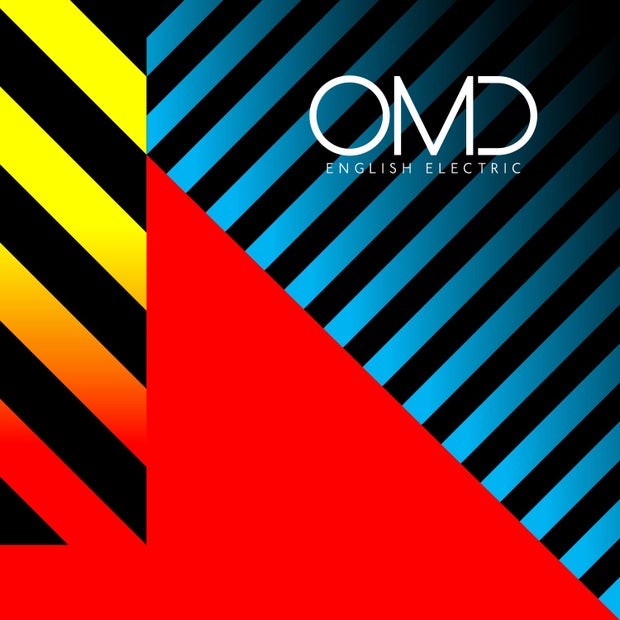
That example speaks volumes about OMD's enduring music long after the '80s synthpop explosion faded. Earlier this year, the popular band lineup of Humphreys, bassist/singer Andy McCluskey, keyboardist Martin Cooper and drummer Malcolm Holmes had released its 12th studio album, "English Electric." (The band just finished up its tour for the year sooner than expected when Holmes fell ill during a show in Toronto).
"English Electric" harkens back to the classic OMD sound from past recordings with its futuristic electronic feel and catchy melodies The catalyst for that sonic approach came when Humphreys and McCluskey performed a special show at Eric's Club, which re-opened two years ago in Liverpool where OMD did its first show in 1978. "We decided with 'English Electric' to look backwards to go forward," Humphreys said during a tour stop in New York. "So we thought, 'Let's just go back to our roots and make things really simple again.' With modern technology now...you got so many possibilities. We decided to go back to more simplistic, less conventional roots, but then try do it in a very modern, sort of 2013 way using a lot of modern technology and production techniques."
The record has the feel of an old-fashioned concept album with its quirky musical interludes and the fact that one of its opening cuts, "Metroland," clocks in at over seven minutes long. "We kind of did that as a statement track really, as a sort of statement of intent," Humphreys said. "And we're tipping our hat to Kraftwerk, obviously as well. There's some Kraftwerk-ian elements in it, but it sounds very OMD as well."
Speaking of Kraftwerk (the pioneering German electronic group that had influenced OMD and many synth-oriented bands), one of the songs from "English Electric" is "Kissing the Machine," a songwriting collaboration between McCluskey and former Kraftwerk member Karl Bartos from 20 years ago and has now been reworked for the record. "We thought lyrically it fits perfectly for the record," said Humphreys, "but it doesn't quite work musically with what we were doing. So Andy said, 'Paul, why don't you just take it, rewrite it, do what you think is right...you just do a completely fresh approach to it and see what you come up with.' So the version I've done is quite radically different from the version that he and Karl did."
And in somewhat of a nod to OMD's past, there is a song on the album called "Helen of Troy," which may make longtime OMD fans recall "Joan of Arc," another tune about a female historical figure that the band had previously recorded back for its 1981 album "Architecture & Morality." "We do seem to have a penchant for writing songs about historical figures," Humphreys mused. "However, 'Joan of Arc' was about the story of Joan of Arc, whereas 'Helen of Troy' is used as a metaphor for Andy's relationship."
Appropriately, given the tone and style of the group's music, the theme of the future is present throughout the record along with commentary about society and romance. Humphreys said the band saw electronic music as "music for the future." "We did a song on the first album called 'Pretending to See the Future,' and it's always been sort of a theme throughout our career. The mantra for 'English Electric' when we started was, 'What does the future sound like?' And that was our question to ourselves that we kind of referred to all the time. I'm not sure if we answered that question, which is probably a reason we have to make another album."
OMD has recorded since 1980, beginning with the self-titled debut album featuring the electropop song, "Electricity." The band gradually made inroads into America in the middle of that decade with singles such as "Secret" and "So in Love." But it was the song "If You Leave" from the "Pretty in Pink" soundtrack that cemented the band's popularity in America in 1986. Originally, it wasn't the track that Humphreys and McCluskey had intended for the soundtrack as they had already recorded a different one. They were in L.A. at the time and were two days away from a North American tour when director John Hughes commissioned them to write a new song when he changed the film's ending.
"We had to come up with something in 24 hours," Humphreys recalled. "So Andy and I walked into a studio, we had no sleep, we just got off a plane...and by four in the morning, we'd come up with this song. We did a rough demo of it and sent it over to John Hughes. We went to a hotel, slept for a couple of hours, we get a call from John saying, 'It's perfect. Get back into the studio and record it.' We got up after two more hours sleep and spent the day recording it, and that was it. I have no idea of how we came up with that song. But we did. And you know what? We got lucky."
A few years later after OMD broke through with "If You Leave," Humphreys and the other members departed, leaving McCluskey to carry on the band name into the '90s. But in 2006, the classic lineup reunited and four years later released the album "History of Modern." Humphreys said that being back in the band is better the second time around. "I was 15 and Andy was 16 and 'Electricity' was the first song we wrote together. So we had this writing partnership for years. We always felt that when OMD stopped [with] the original lineup -- that it was unfinished business -- but I never thought we'd ever get back together. Now that we're back together, Andy and I have a renewed love for each other -- we kind of love each other like brothers. In revisiting our writing relationship, we found a new friendship as well, so that's great."
These days, synthpop music has arguably become more appreciated than it had been 20 years ago and the same can be said for OMD's music. Humphreys admits he's still surprised that OMD has lasted this long: "We only intended to do one gig in 1978 supporting Joy Division and that was going to be it for OMD. That's why we chose such a preposterous name. Our friends were into prog rock and all that kind of music in the '70s at that time. Andy and I were listening to crazy German imports of Kraftwerk and all these abstract, interesting electro-bands coming out of Germany. Our friends thought it wasn't even real music. They thought what we were doing was just rubbish. Thirty-five years later, I'm playing a huge gig at Terminal 5 in New York City. And it's like, 'How did that happen?'"