Oracle And Sun A Marriage Of Heaven And Hell
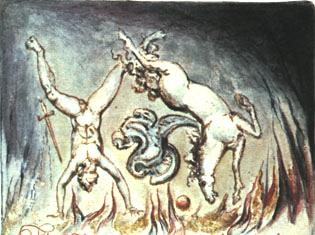 Oracle's acquisition of Sun Microsystems, should the deal close as expected, would be the conjoining of "two technology titans," in the words of Scott McNealy, chairman of Sun. It is also the marriage of two companies with reputations that couldn't be more divergent: Sun is seen as an idealistic company that has never figured out how to get properly rewarded for its legacy of innovation, while Oracle has earned a reputation as a cut-throat competitor that won't back away from a fight.
As has been amply covered by my colleague Erik Sherman, the adjunction of Sun's hardware, operating system and programming technology to Oracle's enterprise application and database businesses would seem to make Oracle a one-stop shop for IT administrators, and a frightening competitor for the likes of IBM, HP, Dell and Cisco. As Erik put it:
virtually every hardware company has to deal with Oracle, as it's the main force in databases. They can't walk away, and so will have to hold their noses to a large degree. After all, what are they going to do? Shift to IBM's DB2 and convince their customers to do the same?It would seem that Oracle has found a compatible partner in Sun, at least if you consider that both companies share a common hatred of Microsoft. Moreover, Cisco's decision to become all things to all people is a clear signal that old alliances no longer matter as platform vendors increasingly buy up as much of the technology stack as they can. But having a common enemy and needing to own more assets aren't necessarily foundations for a great relationship.
Indeed, despite parading high-ranking executives from both companies to the microphone, today's conference call announcing the deal left unanswered a host of important questions. Can the egos of McNealy, Sun CEO Jonathan Schwartz, and Oracle's CEO Larry Ellison and President Safra Catz co-exist, or will the hot air prove instantly combustible? Can Oracle learn how to run a hardware business, which it has never done before? How will the two companies reconcile their different approaches to open source software and openness in general?
Richard Ptak, principal analyst at Ptak, Noel and Associates, noted that the IT industry is littered with several very visible failures "as well as some papered-over successes," such as HP's difficult merger with Compaq and Symantec's acquisition of network management application vendor Veritas, which took almost four years for Symantec to digest. "I think it's going to be a tough one for Oracle to pull off," Ptak told me.
Ellison and Catz repeated that Oracle has a good track record of integrating products from acquisitions, which may be true from a marketing perspective. Joshua Greenbaum, principal analyst at Enterprise Applications Consulting, agreed that the product lines from acquisitions like Siebel and PeopleSoft "became Oracle products very quickly" and added to the company's revenue. "They have a very good methodology for doing M&A," he conceded. However, he added, "They haven't integrated to the extent of making a single rational portfolio of all those products."
Indeed, customers are still waiting for Oracle's much-vaunted Fusion middleware, still MIA despite years of promises, to stitch disparate product lines into a cohesive whole.
Greenbaum believes Oracle will ultimately swallow Sun successfully, but admits it "will present a bigger challenge [than earlier acquisitions] insofar as these are very different lines of business; there's a lot of stuff that Oracle can't rationalize into its existing business."
Redmonk analyst Stephen O'Grady noted important differences of opinion between McNealy and Ellison regarding open source that also "could present a problem."
O'Grady told me this "will definitely be a painful acquisition... I don't see any of these integrations happening quickly. There's a lot of moving pieces" that have to be reconciled.
There are so many unanswered questions because, in part, Oracle didn't allow for questions during its conference call discussing the deal. Perhaps the deal came together so quickly that management hasn't had time to sort through all its ramifications, but they would have been wise to heed the words of William Blake in The Marriage of Heaven and Hell:
Thus one portion of being is the Prolific, the other the Devouring: to the devourer it seems as if the producer was in his chains, but it is not so, he only takes portions of existence and fancies that the whole... These two classes of men are always upon earth, & they should be enemies; whoever tries to reconcile them seeks to destroy existence.