King Charles III says he'll scale back cancer treatment thanks to early diagnosis
King Charles III said Friday that his cancer treatment will be reduced in the new year because of early diagnosis, effective intervention and adherence to doctors' orders.
Charles, 77, revealed the information in a recorded message broadcast on British television Friday as part of a campaign to encourage people to take advantage of screening that can detect cancer in its early stages when it is easiest to treat.
Buckingham Palace made the announcement last year that doctors had detected cancer in the king.
"Early diagnosis quite simply saves lives," the king said Friday.
"I know, too, what a difference it has made in my own case, enabling me to continue leading a full and active life even while undergoing treatment," he added.
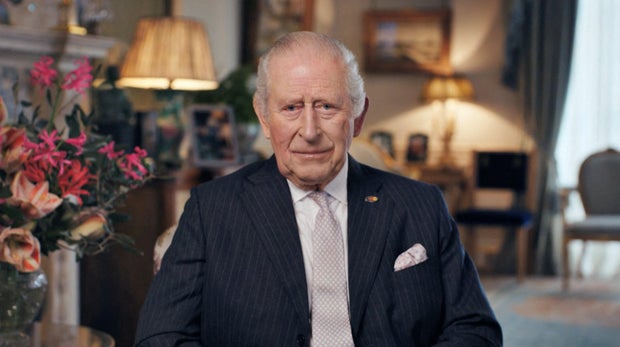
The recorded message gave Charles the opportunity to reflect on his experiences in the 22 months since he announced he would undergo treatment for an undisclosed type of cancer.
He said he had been deeply troubled to learn that at least 9 million people in the U.K. weren't up to date with the cancer screenings available to them.
"That is at least 9 million opportunities for early diagnosis being missed," he stressed.
He highlighted how when bowel cancer is caught at the earliest stage, around nine in 10 people survive for at least five years. "When diagnosed late, that falls to just one in 10," Charles said.
Royal sources said it should not be assumed the king was being treated for bowel cancer. While the palace hasn't specified what type of cancer the king has, officials said the cancer was discovered after treatment for an enlarged prostate revealed "a separate issue of concern."
Charles' decision to disclose his diagnosis was a departure for Britain's royals, who have traditionally considered their health to be a personal matter and shared few details with the public.
"His majesty has chosen to share his diagnosis to prevent speculation and in the hope it may assist public understanding for all those around the world who are affected by cancer," Buckingham Palace said at the time.
Since then, Charles has used his own story to highlight the need for early diagnosis and treatment. Cancer Research UK recorded a 33% increase in visits to its website in the weeks after the king's diagnosis, as people sought information about the signs of cancer.
The monarch suspended public engagements for about two months after his diagnosis so he could focus on his treatment and recovery. But he continued with state business and retained his constitutional role as head of state.
Charles returned to public-facing events in April of last year with a visit to a cancer treatment center at University College Hospital in central London, where he met with staff and shared stories with fellow cancer patients.
"It's always a bit of a shock, isn't it, when they tell you," he said at the time, sympathizing with one patient as chemotherapy drugs dripped into her arm.