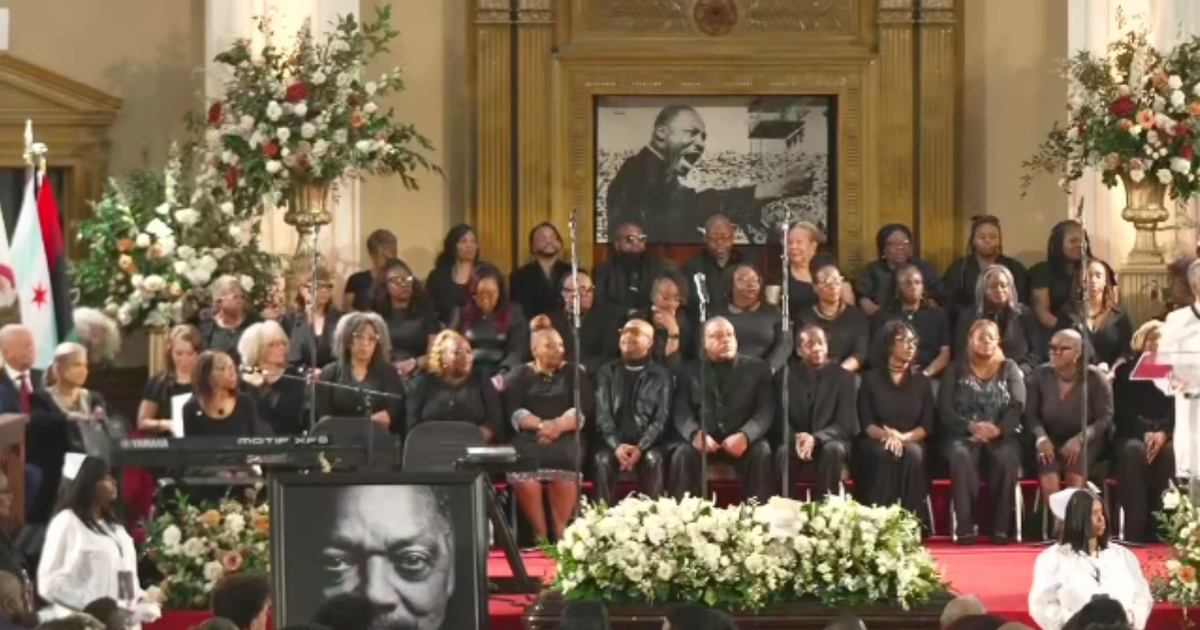
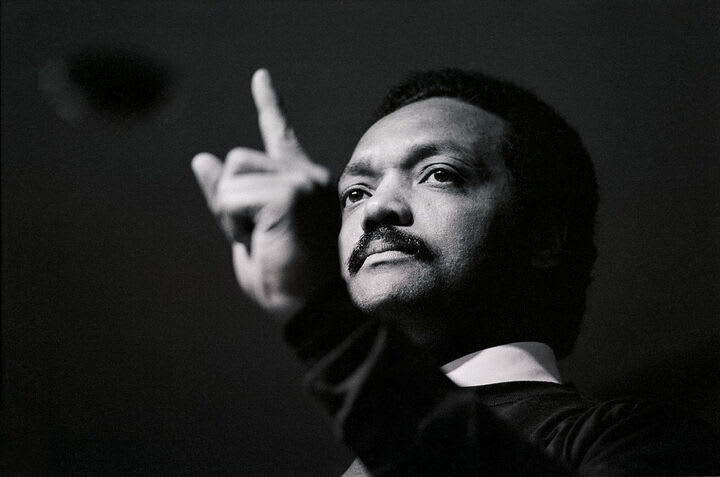
Jesse Jackson remembered as "a role model for a generation"
Rev. Jesse Jackson, who died Tuesday at age 84, is being remembered as "a role model for a generation," in the words of Marc Morial, the president of National Urban League, the civil rights organization that awarded Jackson a lifetime achievement award in 2018.
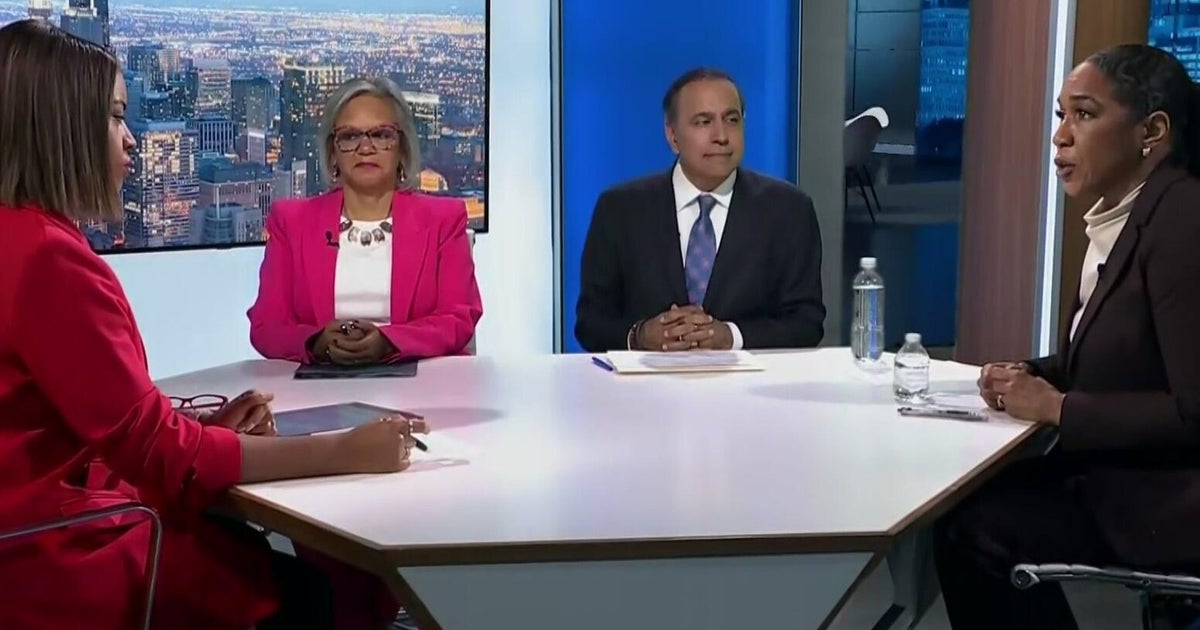
"I'm remembering him as a role model for a generation of us who ran for office in the '90s," Morial told "CBS Mornings." "His presidential campaigns of '84 and '88 were influential in how he conducted a campaign to really bring people who were locked out and left out, people who were not registered, but also because he was one of the first to really advance this vision of a multi-racial American democracy and make it essential to his campaign."
Jackson's family said he died peacefully, with his son, Rep. Jonathan Jackson, telling CBS Chicago that "my family was around his bedside." Jonathan Jackson described the atmosphere as"very intimate and personal, and family friends coming by, and an overwhelming amount of ministers who prayed for us, prayed with us."
"Some people see a political figure, and I just know him as a person that never gave up on me," Rep. Jackson said. "I would tell people, just as a son speaking of a father, never give up on your children."
Rev. Al Sharpton said on social media that Jackson had been a "mentor" to him, and said he had "prayed with his family" after Jackson's death. Sharpton called Jackson "a consequential and transformative leader who changed this nation and the world."
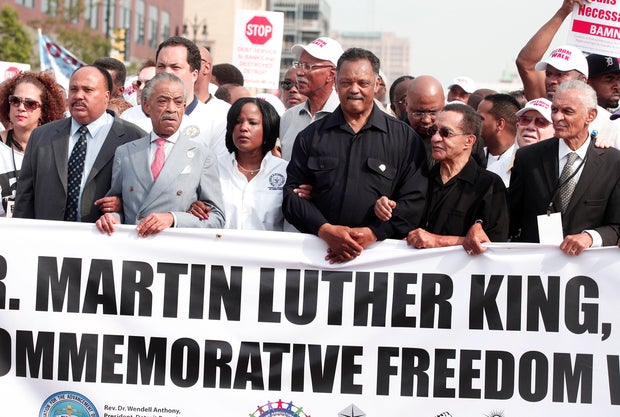
"He told us we were somebody and made us believe," Sharpton wrote. "I will always cherish him taking me under his wing, and I will forever try to do my part to keep hope alive."
Jackson won 18% of the vote in his 1984 Democratic run, and became the first Black American to be on the ballot in all 50 states. He had even greater success in 1988, when he won the Michigan caucuses and briefly had the lead among the Democrats.
Morial said Jackson "paved the way for both Bill Clinton and Barack Obama" in leading the effort to "change the way that Democratic candidates were nominated." Morial added that Jackson "expanded the size of the DNC to bring others into the party's decision-making apparatus."
Former President Barack Obama hailed Jackson for having "helped lead some of the most significant movements for change in human history."
"Reverend Jackson also created opportunities for generations of African Americans and inspired countless more, including us," Obama said in a statement. "Michelle got her first glimpse of political organizing at the Jacksons' kitchen table when she was a teenager. And in his two historic runs for president, he laid the foundation for my own campaign to the highest office of the land."
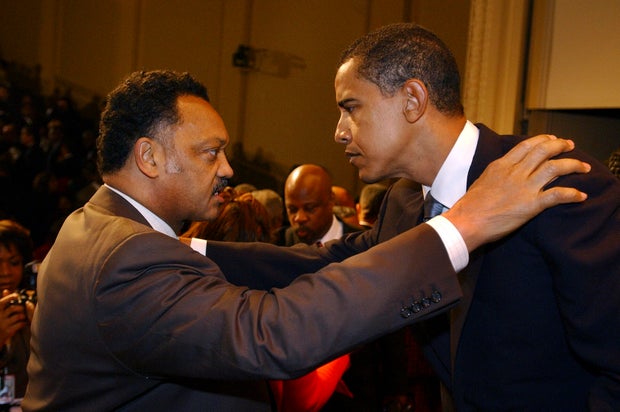
Former President Bill Clinton also shared a tribute to Jackson, saying they had been friends for 50 years after meeting at the 20th anniversary of the integration of Little Rock Central High.
Clinton noted many of Jackson's achievements in "working for a better America with brighter tomorrows," and said that "Hillary and I loved him very much."
"Our hearts and prayers go out to Jackie, their children and grandchildren, and all the people across America and around the world who were inspired by his service to humanity," Clinton added.
Historian Jon Meacham spoke about Jackson's campaigns on "CBS Mornings" as well, noting that they were a "vital part of the freedom struggle."
He called Jackson "an enormously important figure" between the 1960s era of the civil rights movement and the Obama era.
Former Vice President Kamala Harris, the first Black woman to serve as vice president, described Jackson in a social media post as a "mentor" and said that his "presidential runs in 1984 and 1988 electrified millions of Americans and showed them what could be possible."
"As a young law student, I would drive back and forth from Oakland, where I lived, to San Francisco, where I went to school," Harris said. "I had a bumper sticker in the back window of my car that read: 'Jesse Jackson for President.' As I would drive across the Bay Bridge, you would not believe how people from every walk of life would give me a thumbs up or honk of support. They were small interactions, but they exemplified Reverend Jackson's life work — lifting up the dignity of working people, building community and coalitions, and strengthening our democracy and nation."
Former Democratic National Committee chair Jaime Harrison wrote in a Substack post that his "first real political memory was watching the 1988 Democratic National Convention with my grandfather," and that "until that moment, I had never seen someone who looked like me command a convention hall with more than a thousand delegates behind him."
"Movements are not sustained only by victories," Harrison wrote. "They are sustained by expansions of belief. Reverend Jackson expanded what felt possible — inside the Democratic Party and across the country."
Other Democrats paid tribute to Jackson, with House Minority Leader Hakeem Jeffries honoring Jackson as a "legendary voice for the voiceless, powerful civil rights champion and trailblazer extraordinaire."
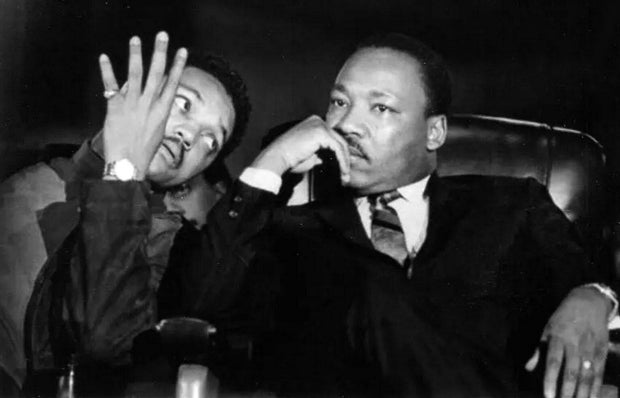
Jackson, who had been a member of Rev. Martin Luther King Jr.'s circle as a young man, helped lead Southern Christian Leadership Conference's Chicago chapter and spearheaded Operation Breadbasket, a community empowerment campaign with King's blessing. Jackson was with King in Memphis in 1968 when he was assassinated.
Morial called Jackson "one of the final remaining links to the work of Dr. King," and said that Jakcson's "most important contribution was to bring, I think, the ethos of civil rights into mainstream American politics."
Bernice King, King's daughter and the current CEO of the King Foundation, shared a photo on social media of Jackson and King together and wrote, "Both ancestors now..."
"My family shares a long and meaningful history with him, rooted in a shared commitment to justice and love," King wrote. "As we grieve, we give thanks for a life that pushed hope into weary places. May we honor his legacy by widening opportunity, uplifting the vulnerable, and building the Beloved Community. I send my love and prayers to the Jackson family."
Sen. Raphael Warnock, a Democrat from Georgia, wrote: "America has lost one of its great moral voices."
"With an eloquence and rhythmic rhetoric all his own, Jesse Jackson reminded America that equal justice is not inevitable; it requires vigilance and commitment, and for freedom fighters, sacrifice," said Warnock, who is the senior pastor of Atlanta's Ebenezer Baptist Church, King's former congregation. "His ministry was poetry and spiritual power in the public square. He advanced King's dream and bent the arc of history closer to justice."
Pennsylvania Gov. Josh Shapiro posted a photo on social media with Jackson and said they had shared a pulpit in 2016 at Sharon Baptist Church in West Philadelphia.
"Rev. Jesse Jackson was a change maker, a boundary breaker, and a passionate and unrelenting crusader for civil rights, equality and opportunity," Shapiro wrote. "To be around him felt like you were experiencing history."