It's Not Easy Being Cool
 Tight corporate budgets have some enterprise IT vendors looking longingly at the consumer market, no doubt inspired by the ease with which many consumer applications, from instant messaging to social networks, have crossed into the enterprise space.
One case in point is EMC, which is hoping its market leadership in enterprise storage translates to households looking to protect their digital document, image, music and video files, as well as share music among various entertainment devices. The trouble, though, is that EMC is at heart an enterprise company and doesn't understand that customers need either total simplicity or a lot of hand-holding if they're going to adopt a given product.
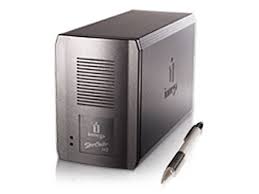
I recently had a chance to test its StorCenter ix2 network storage device, and it exemplified exactly the issues I'm talking about. Joel Schwartz, EMC's storage platform operations chief, told me he realized that simplicity was key to selling to consumers. "When the [product] guys told me it only took four clicks to hook it up, I knew that was our marketing message right there," he said.
Well, the four-click claim isn't hooey--there are two cables, one from the network hub to the device and the other from the device to the power source. The device is hooked to the home network hub, because the idea is that it not only stores everything digital, but allows any computer in the house to access those files. I followed the instructions and installed the software onto the PC connected directly to the network hub and then had it scan and store my files. But that's when my experience started to go south: the device stored all the files on the one computer all right, but not the others. I couldn't find any instructions on how to store files from other computers on the network, either in the online help or the documentation.
The answer turned out to be very simple -- install the software on all the other machines as well -- but I wouldn't have figured it out if I hadn't been able to reach out to EMC's media relations people. There wasn't a word about that on either the manual or the online help -- and this is one of the product's key features.
This is something a consumer-oriented company would have realized immediately. But EMC is used to dealing with customers with in-house IT departments or access to professional IT help, while the IT departments for most households is someone like me, who is adept at reading manuals but not necessarily equipped to deal with even slightly tricky technical issues that aren't covered in the documentation.
The alternative to complete instructions, of course, is having a product so simple that a monkey can use it. The Eos wireless iPod docking station, for instance, has speakers you plug into outlets so you can listen to your iPod in any room... and that's exactly what it does. Anyone who can stick an electric plug into an outlet can use it. It doesn't have much in the way of instructions, but it doesn't need them. A vendor used to dealing with corporate IT departments would doubtless have provided more along the lines of how much electricity each speaker sucks out of the wall, both when the units are powered up as well as when they're turned off. But Eos understands that all I want is to be able to unpackage the product and have it up and running before my daughter starts rocking back and forth impatiently on her heels.
Vendors of all stripes benefit from unofficial support from customers using online forums, but that only works if there's a critical mass of users for any given product. It won't help companies launching a product in a new market segment. This isn't to say that companies can't switch from enterprise to consumer markets, but they should realize that it's like starting up an entirely new business.