Strike on Thai tanker in Strait of Hormuz may be message to the U.S., analyst says

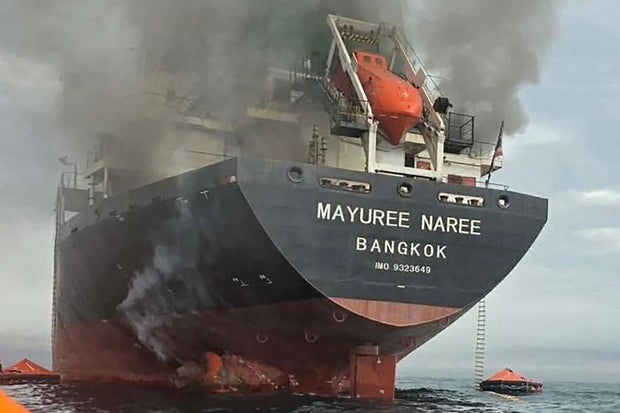
The Iranian regime may have been decapitated in the early moments of the war, but analysts say the second foundational moment of the conflict occurred Wednesday, when a Thai-flagged tanker in the Strait of Hormuz was struck by a projectile.
According to a former officer who designed missiles for the U.S. Navy, the ship was likely hit with a C-802 Noor missile just above the waterline near the engine room. Newer versions of the missile have a range of up to 200 miles and can be fired from ships, coastal batteries, aircraft or trucks.
The strike appears to have come without warning, and shows that Iran and its proxies can target ships even without mining the strait. Atlantic Council analyst Danny Citrinowitz told CBS News that this explains why U.S. warships have not entered the Strait of Hormuz or escorted ships through the waterway, even as President Trump claims the Iranian navy has been decimated.
Citrinowitz said that Iran likely has "thousands of those missiles of various variants and drones" that can strike ships passing through the Strait of Hormuz. Iran has sent hundreds, possibly many more, of these missiles to Hezbollah.
Iran also has speedboats manned with commandos, and CBS News reported Wednesday that the country may be preparing to deploy naval mines in the waterway. Mr. Trump said Tuesday afternoon that U.S. forces had "hit, and completely destroyed, 10 inactive mine laying boats and/or ships, with more to follow!"
About 20% of the global oil supply flows through the strait. The route has come to a virtual standstill amid the war, and major maritime insurers have warned they will suspend coverage for ships operating in Iranian waters and in parts of the Gulf. Oil prices rose over $100 a barrel on Thursday morning, and stock markets around the world are showing losses. Oil analysts emphasize that energy markets will continue to be volatile until there is meaningful progress made to show ships can sail safely through the strait.
Mr. Trump told CBS News on Monday that he is still "thinking about taking" the Strait of Hormuz over, even as he said the war is "very complete." He did not elaborate on what that would entail.
The strike on the Thai tanker came shortly after Iran threatened any ship passing through the Strait of Hormuz without its approval, and after Mr. Trump said the U.S. would respond with fire and fury if the vital waterway was closed. Iran's Islamic Revolutionary Guard Corps said they had struck the tanker because it had ignored "warnings." A Liberian-flagged vessel was also struck on Wednesday.
The strike on the Thai tanker caused a fire and damaged the tanker's engine room, ship operator Precious Shipping said in a statement. Three crew members were believed to be trapped in the engine room, the company said. The other 20 crew members aboard the vessel were rescued by the Omani navy, the Thai navy said Wednesday.
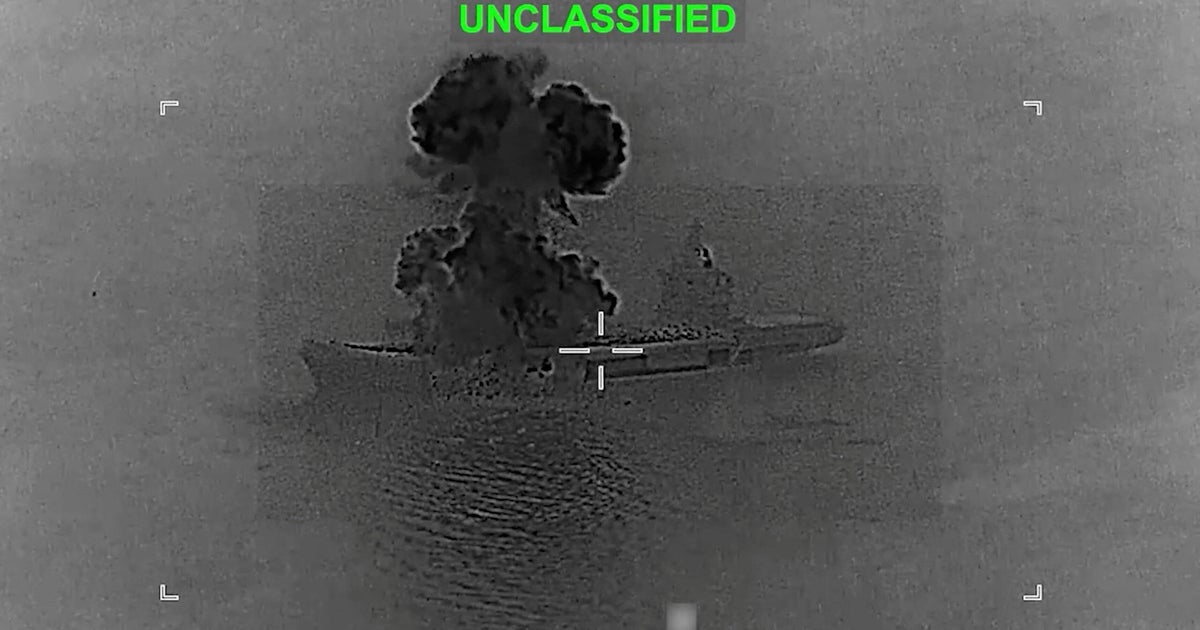
Iran's semi-official Tasnim news agency also released a dramatic video apparently showing a missile strike on a U.S.-owned tanker in the Persian Gulf. The video shows a massive explosion on a vessel that is then engulfed in flames as people aboard what appears to be an IRGC attack boat celebrate. CBS News Confirmed identified the vessel as the Safesea Vishnu, a crude oil tanker sailing under a Marshall Islands flag, but owned by the New Jersey-based company Safesea Group LLC. The crew were safely evacuated, according to the British military's U.K. Maritime Trade Operations agency.