Germany rearms as war in Ukraine threatens security and U.S. presses Europe to shoulder more of its defense
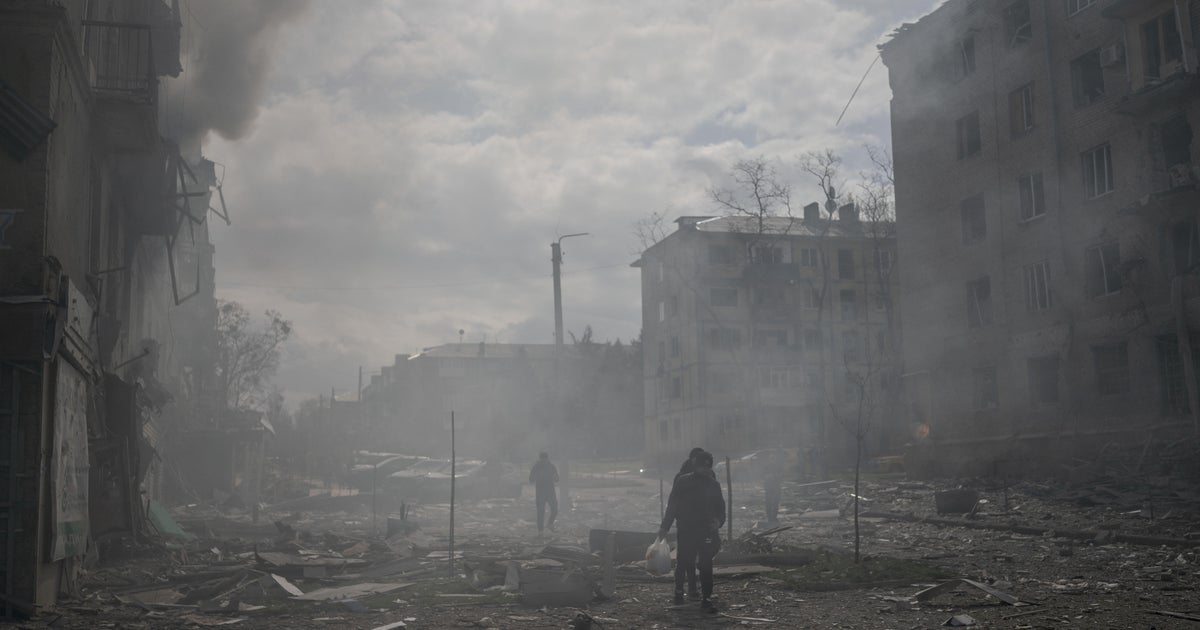
This past week, Ukraine's President Volodymyr Zelenskyy re-asserted he doesn't want to surrender any territory in exchange for peace with Russia – a declaration that followed earlier warnings from Russian President Vladimir Putin that if Europe engaged in a wider war, it would be defeated. Nearly four years in, the conflict continues to send shockwaves through the Western alliance. European nations are beefing up their defenses. Nowhere is the impact more profound than in Germany. Scarred by their country's Nazi past, Germans embraced pacifism after the Cold War. Defense spending collapsed to the point some soldiers were buying their own gear. But Russia's full-scale invasion of Ukraine – combined with persistent pressure from President Donald Trump for Europe to shoulder more of its own defense – transformed the landscape. Today, Germany is racing to rearm.
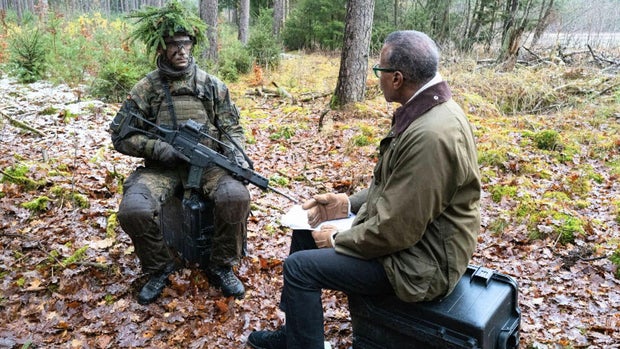
This past month, we were invited by the Bundeswehr, the German military, to observe basic training at the Munster Army Base in northwest Germany. A squad of recruits ran punishing drills, honing the skills they would need to defend their position against an enemy assault. The major in charge has been training troops since 2018. The Bundeswehr won't reveal his name to shield his identity from hostile actors.
Bill Whitaker: So have you seen a difference in the recruits of today versus years past?
German major: Yes– I think there's a huge difference. They know what they're here for, and it's getting more clear to them that everything we are training here for could be one day real. We don't hope that. But we're preparing exactly for that.
Bill Whitaker: Because of the war in Ukraine?
German major: Yes, of course, yeah.
The war in Ukraine has shaken Germany's sense of security but the country is also shaking off the shadows of its brutal military past. This Holocaust memorial in Berlin — a stark reminder of that history — stands close by the Reichstag, where the national parliament is moving to restore Germany's military as Europe's most powerful force. Defense Minister Boris Pistorius has overseen a 23% uptick in enlistments over last year.
Bill Whitaker: How is the war in Ukraine changing Germany's view of its own security?
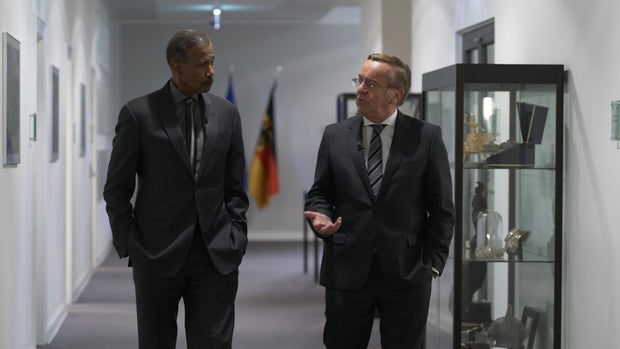
Defense Minister Boris Pistorius: I grew up in the Cold War. And since February 2022, we all experience in-- in Germany and in Europe that the war is back. We never expected that. And we were so hopeful that it would never happen again. But it does. And we have to do everything to be able to deter and defend.
Pistorius was appointed defense minister in 2023, almost a year after Russia's large-scale assault on Ukraine. When Conservative Friedrich Merz became chancellor this past May, he kept Pistorius, the blunt talking Social Democrat, in his post.
Defense Minister Boris Pistorius: I mean you- you have to be clear in what you want, what are you standing for.
We met him at the Bendlerblock. The Berlin building complex once housed the Nazi's army high command. Today it's Germany's equivalent of the Pentagon. When we spoke with Pistorius this past month, he didn't pull any punches on Russian President Vladimir Putin's ambitions.
Defense Minister Boris Pistorius: There is not only the war against Ukraine. This is a war against rule-based international order. And-- at the same time, he does not stop stressing what he's really longing for f-- like, a Renaissance of the Soviet empire. He wants to be the dominant power in Europe. And he wants to be the third-- of three world powers like China and the U.S. This is what he is-- what he is heading for.
Pistorius warns Putin is rapidly rebuilding Russia's military and he told us Russia could be in position to attack the west by the end of the decade.
Bill Whitaker: When does Germany need to be ready for war?
Defense Minister Boris Pistorius: We should do everything to be that in 2029. This is our objective. This is still a way to go.
Three days after Russia's 2022 invasion of Ukraine, then-Chancellor Olaf Scholz told the Bundestag, Germany's parliament, the incursion marked a zeitenwende – a turning point for Europe. He announced a special 100 billion euro fund to kick-start Germany's military buildup. Three years later in the run up to his election as chancellor, Friedrich Merz said he was troubled as well by President Trump's threats to pull back from NATO.
Friedrich Merz in February 2025 (English translation): "My absolute priority will be to strengthen Europe as quickly as possible so that, step by step, we can really achieve independence from the USA."
President Trump in February 2025: You're gambling with World War III.
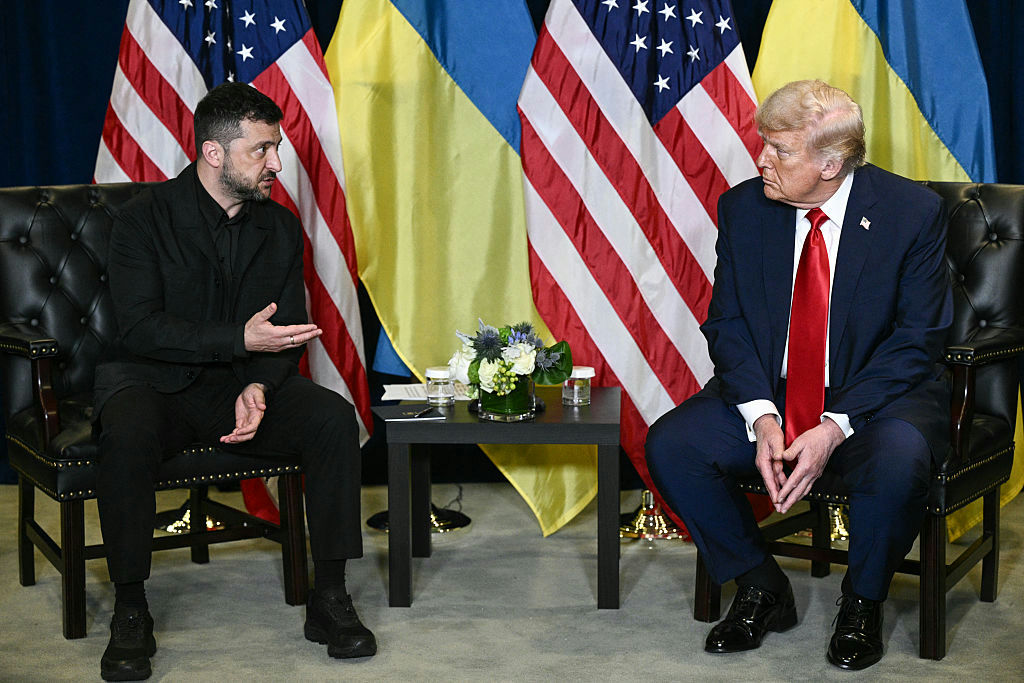
After this contentious Oval Office meeting with President Zelenskyy this past February, Friedrich Merz posted "we must never confuse aggressor and victim in this terrible war" and he pushed parliament to exempt defense spending from Germany's debt brake — the constitutionally mandated spending cap. The money started flowing. The defense budget is projected to rise almost 80% by 2029.
- Send a secure tip to 60 Minutes: Here's how to confidentially share information with our journalists
Bill Whitaker: How big should the German military be?
Defense Minister Boris Pistorius: Germany is third biggest-- economy in the world and the biggest one in Europe, of course. So everybody in Europe expects us to be the strongest ally in NATO in Europe.
With the surge of federal funding, the long-moribund German defense industry is springing back to life.
Sven Kruck: The drones are the future of warfare.
We met Sven Kruck in Berlin. He is co-CEO of drone manufacturer Quantum Systems. The company, with factories in Germany and Ukraine, just landed a 25 million euro contract with the Bundeswehr to produce up to 750 intelligence, surveillance and reconnaissance drones, ISR for short.
Sven Kruck: We have now more than 1,500 at the battlefront day by day in use.
Bill Whitaker: 1,500 drones--
Sven Kruck: Drones. Drones.
Sven Kruck: In use in Ukraine day by day, night by night.
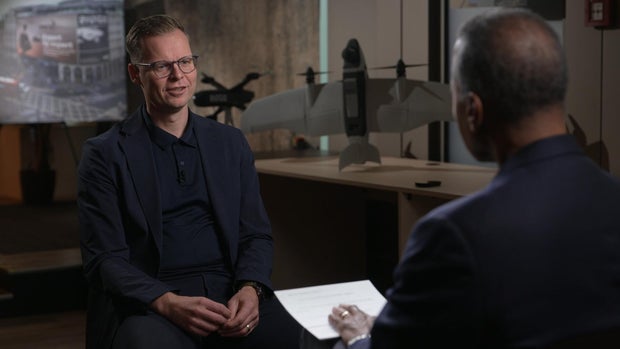
Drones, including Quantum's, have helped reshape the battlefield. A few months after the 2022 invasion, Russian forces tried to cross the Donets River in eastern Ukraine. Explosions and smoke obscured their movements. A Quantum drone, equipped with a thermal camera, helped Ukraine see, target and stop the advance.
Sven Kruck: And this actually was our moment where everybody has seen Quantum Systems and-- especially ISR drones can make a difference.
Kruck told us Germany isn't investing enough in cutting edge technologies. But we saw evidence the defense ministry is thinking outside the box … way outside the box. It's funding tests to see if these giant Madagascar hissing cockroaches can be repurposed from repulsive pests to miniature battlefield assets.
Stefan Wilhelm: This is a left turn and this is right turn.
Stefan Wilhelm's year-old startup, SWARM Biotactics in central Germany, is working with the Bundeswehr to develop technology that can steer the creepy critters autonomously and send them on reconnaissance missions. He let me take control.
Bill Whitaker: Wow.
Stefan Wilhelm: They're super resilient. And as you can see, I mean they can crawl through tiny spaces, can go up the wall-- into pipes, like underground and rubble.
Bill Whitaker: You know this is really bizarre?
Stefan Wilhelm: Is it?
SWARM's insect neuroscientists attach electrodes to the roaches' antennae – they insist this doesn't hurt – stimulating their natural ability to navigate. The electrodes are hidden in these bug-size backpacks, along with a battery and microchips. They're working to shrink the technology to soon look like this: SWARM's AI generated video shows how they might be deployed – carrying cameras, microphones, and Doppler radar into war zones.
Bill Whitaker: Right now we're hearing that Russia is rearming itself. They've got more tanks, more armaments. How does this compete?
Stefan Wilhelm: We have to be smarter. We have to use intelligence. We have to use autonomy-- because we wouldn't have enough personnel or enough equipment if you look at what Russia produces right now. So I think this is a shift you see in-- in-- in the German-- startups.
Still, Germany is placing a big bet on its biggest defense contractor, Rheinmetall. A major arms supplier to German troops in both World Wars, Rheinmetall and its subsidiaries have won a commanding share of recent government contracts.
Armin Papperger: We are the fastest-growing defense company in Europe at the moment.
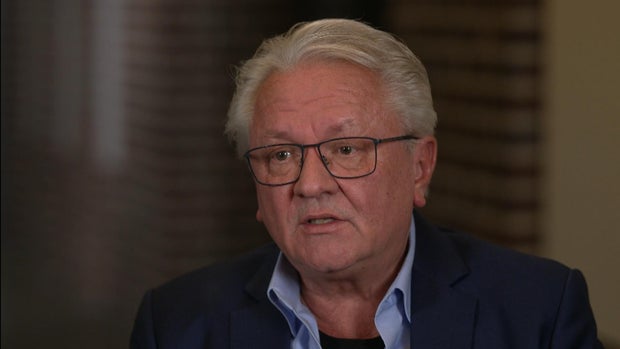
Armin Papperger has been CEO since 2013. Pragmatic, forceful, strategic, he built Rheinmetall into a pillar of NATO rearmament.
Armin Papperger: Rheinmetall was an ammunition company. It's going from ammunitions to vehicle platforms. But now we go to digitization. We go to satellite business. We go to Naval business.
His company's success and support of Ukraine made him the target of a Russian assassination plot, but that didn't slow him or the company down. Rheinmetall is building and expanding 13 arms factories across Europe.
Armin Papperger: We educated-- t-- two generations if something happens in the world we call Washington, and Washington will help us. That changed. President Trump said it very clear. America has her own problems. The Europeans has to help themself. And now with the Ukrainian-Russian war, it's very clear about that, that we have to do more.
In 2024, Germany began sending its 45th armoured brigade – 5,000 troops – to Lithuania, once brutally occupied by the Nazis. Lithuania now welcomes German troops bolstering NATO's eastern flank, Germany's first permanent deployment of a combat ready brigade abroad since World War II.
Despite the uptick in enlistments, the Bundeswehr faces a manpower challenge: it wants to add about 75,000 active duty troops to its all-volunteer force by 2035. History weighs on recruitment. The issue still sparks protests. A recent poll found an overwhelming majority of 15 to 25-year-olds would not take up arms. If volunteer numbers fall short, the government may reintroduce the draft.
Soldiers we met in basic training told us they find the reluctance of their generation to volunteer troubling.
Bill Whitaker: I think a lot of it must have to do with the history of World War II.
Private Lasse (English Translation): Yes, of course.
Private Lasse told us he's proud to serve.
Private Lasse (English Translation): Nobody wants to go to war. But if it happens, you have to be there to defend your country.
The week before we spoke to Defense Minister Boris Pistorius, he presided over a public swearing in of new recruits in Berlin.
Deutschland, they shouted. The world hasn't heard Germany assert itself like this since World War II. But times have changed.
Bill Whitaker: When you talk about rebuilding the German military, there are many people who recoil at that thought?
Defense Minister Boris Pistorius: I try to explain that, if you want to live in peace, in freedom, security-- with a right to go on the street and to demonstrate against or for whatever you want, to love however to want, and you to believe in any god you want, then you need to be willing to defend it. Because, otherwise, there might be people like Vladimir Putin who will take that kind of living away from us.
Produced by Marc Lieberman. Field producer, Anna Noryskiewicz. Associate producer, Cassidy McDonald. Broadcast associate, Mariah Johnson. Edited by: Craig Crawford.