Chicago surgeon operates on children victims of drone strikes in Sudan war
Imagine the logistics of forcibly displacing the entire population of Illinois 600 miles away from Chicago.
That is the reality for millions of Sudanese people, who are now facing the world's greatest humanitarian crisis.
As the civil war in Sudan has surpassed 1,000 days, there is "complete devastation in every sense possible."
Those are the words of a Chicago surgeon who was part of Medglobal's first team of doctors in years to be let into Sudan to provide lifesaving care.
Dr. Chandra Hassan is on the board of Medglobal, a Chicago-area medical nonprofit that works with local doctors and deploys international volunteers to conflict zones, like in Ukraine, Gaza, and Sudan.
"To see that level of suffering – it's not just displacement. A lot of them have witnessed the execution of a family member, and are not allowed to give them a burial," he said.
His words are echoed in the group's report, "Surviving The Siege: Voices From El Fasher," which found that civilians are being "deliberately and systematically targeted."
Their key findings included: pervasive, direct violence against civilians, blocking of humanitarian aid, collapsed local markets, mass destruction of homes and hospitals, and little to no access to the internet.
Dr. Hassan witnessed this first-hand. He conducted surgery on people who fled from El Fasher to Al-Afad, the largest gathering site for IDPs, or internally displaced persons.
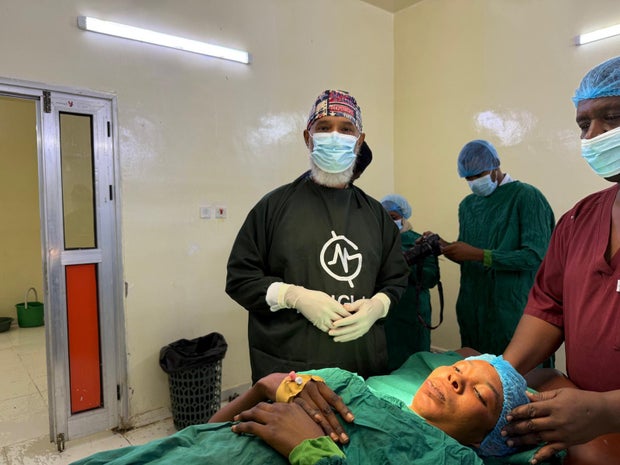
"Children can't get education, there is no nutrition, medical care is an issue, immunizations, you name it," he said.
Even once people reach the camp, which the majority do on foot, there is little refuge.
According to the report, only 33% of people received food aid, 24% received medical care, 22% received water, and 12% received shelter support.
"It's not like they comfortably tent and carry on with their routine – this is complete devastation of their lives," Dr. Hassan said.
There are only six toilets for around 10,000 people at Al-Afad.
That's where nonprofits like Medglobal come in. They also partner with agencies like the Sudanese Humanitarian Fund and the Sudanese American Physician Association to provide WASH: water, sanitation, and hygiene.
"Providing them clean water is restoring their dignity," Dr. Chandra said.
The journey out of El Fasher was the hardest moment for many families, according to the report. Civilians surveyed by Medglobal faced physical assault, harassment, extortion, communication blackouts, and checkpoints by RSF soldiers. These risks, combined with the physical toll of the journey, left some people unable to flee and even separated families.
It took months for the doctor's visas to be approved, let alone move around the country and reach Al-Afad. There were at least 10 to 12 checkpoints.
"Moving from point A to point B was not easy at all, even when we got out of the airport…we needed more permissions," he said.
The team traveled 230 miles every day, because the hospital was deemed too dangerous to stay in overnight. He said it was worth every mile to bear witness, provide aid, and bring advocacy to "suffering that's been ignored."
"We need to think about the children, being the future of the world, suffering so much," he said.
Like 14-year-old Fatima, who spent four months walking barefoot in the desert with "her bone jutting out," he said.
And 5-year-old Saida, who was playing with more than a dozen kids when she was injured.
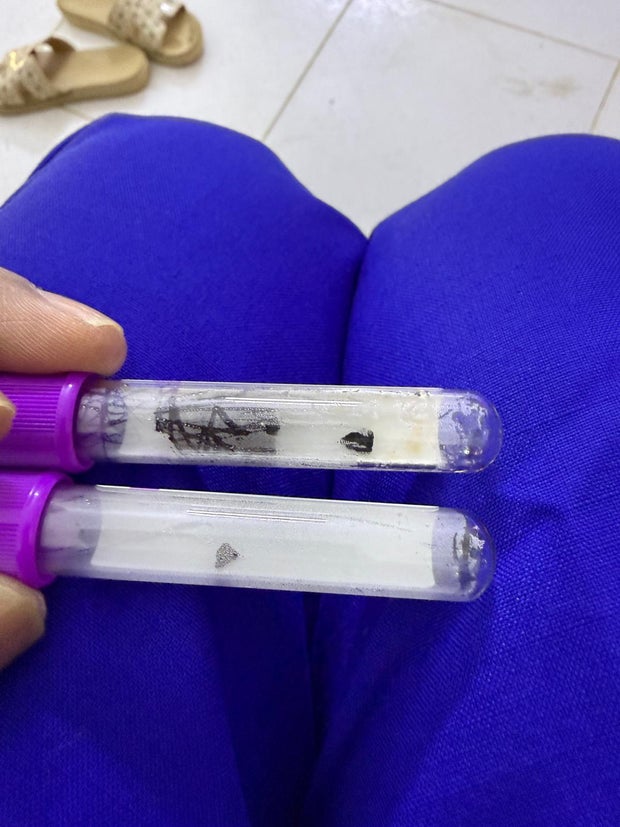
"Hot shrapnel was burning through her skull," when she arrived at the hospital. Her mother said a drone dropped a bomb on the children, instantly killing two of them, and the rest were seriously wounded.
Dr. Hassan was able to remove shrapnel from her chest, but the piece in her skull was too dangerous to touch, leaving a visible, pulsating gap on her head.
The sheer number of shrapnel-related injuries from drones in Sudan surprised him.
"You need a lot of internet connection because they operate from a remote place," he said.
Dr. Hassan has not only worked on drone warfare victims in Ukraine and Gaza, but he taught new surgical skills needed for frontline doctors dealing with complicated injuries.
Medglobal's new report, "Drones & Scalpels: Emergency Medicine in Ukraine And The Future of Drone Warfare," documents the training course that he and the team created for other trauma doctors.
The report focuses on the rise of polytrauma, or traumas across multiple parts of the body, such as burn-blast injuries.
According to the executive summary, "individual patients often suffer simultaneous blast, burn, and penetrating wounds, frequently complicated by infection. The unrelenting presence of drones in the air and patterns of attacks on emergency response teams have driven major delays in medical evacuations, further compromising care for patients."
This is exactly what Dr. Hassan experienced in Sudan.
"I even had one mother who had 12 wounds all over her body," he said. "The metal object in the body becomes colder [at night]. So that hurts them and prevents them from sleeping."
He has witnessed different types of shrapnel from missiles, from random metal objects to cubicles of lead or tungsten in Ukraine, Gaza, and Sudan.
"The war has gone from old-school guns to drones. That's where it's evolving all over the conflicts. The future is going to be the same. So these drones come and do surveillance, and then they drop the bomb," he said.
The biggest difference he noticed was "the minimum courtesy" of a safe corridor to exit was only in Ukraine.
"If I had to be blunt, the world is more interested in African resources than the reality of the people," he said. "Go to the bottom line of human suffering, in the countries I operated on, there is no difference in their pain," Dr. Hassan said.
Medglobal supports 72 health facilities in Sudan, as well as 27 water supply points. In 2024, their teams brought clean water to 1.6 million people and delivered 11 metric tons of medical supplies.
"The geopolitics is part of that conflict, and the ordinary people are paying the price," he said.