Appointment of controversial FDA official rocking agency like "an atom bomb," scientists there say
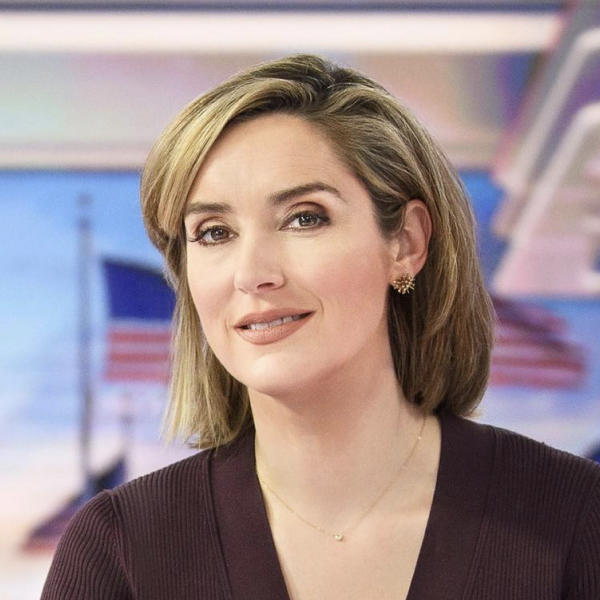
The Trump administration's elevation of a vaccine skeptic to lead a high-profile office within the Food and Drug Administration is raising alarm among multiple senior FDA officials, who told CBS News the appointment will harm the agency's reputation as a reliable steward of the nation's drug supply.
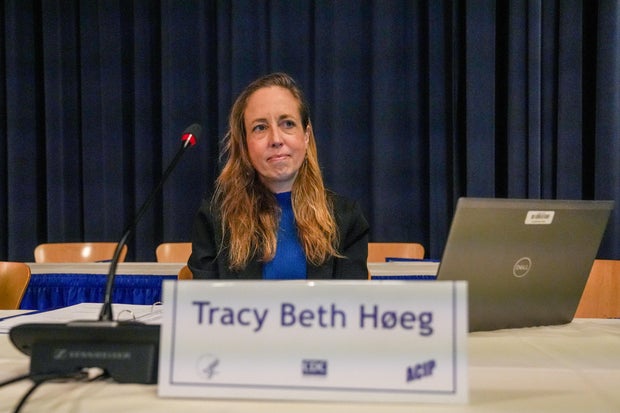
On Wednesday, Dr. Tracy Beth Høeg was tapped as acting director of the FDA's Center for Drug Evaluation and Research, which is responsible for evaluating new drugs and ensuring adequate supplies of existing ones. Her appointment came after the abrupt resignation of Richard Pazdur, a veteran FDA scientist who took over the office just three weeks ago.
"Putting Tracy Beth in charge is like dropping an atom bomb," one agency source said, adding that multiple top-level officials are preparing resignations. "It's an extinction level event. Tracy Beth Høeg has never supervised a drug review, never has conducted a clinical trial. She doesn't understand laws and regulations."
A spokesperson for the Department of Health and Human Services did not respond to questions about Høeg's qualifications. Høeg did not respond to a request for comment.
In a statement when she was appointed, Høeg said, "I am committed to transparency, honesty, and decisions based on rigorous science and ensuring important changes happen efficiently."
Høeg has been a controversial figure. This fall, she advocated making it more difficult for young men to receive the COVID vaccine because of the potential risks from a rare side effect, myocarditis, according to STAT News. Since joining the FDA in March, she has been advising Commissioner Marty Makary on the agency's vaccine policy, and helped write a recent memo claiming FDA leaders found at least 10 children had died "after and because of" receiving the COVID-19 vaccine. The memo, which was obtained by CBS News, offered no data to back that claim. HHS said it plans to release data on it soon.
That memo also outlined planned agency changes in handling COVID-19 and certain other vaccines and said that FDA staff who disagreed should resign. After it was made public, a dozen former FDA leaders denounced the proposed changes, writing in the New England Journal of Medicine that they "undermine a regulatory model designed to ensure vaccine safety, effectiveness, and availability" and "represent a major shift in the FDA's understanding of its job."
In her new role, Høeg will oversee an office charged with ensuring all over-the-counter and prescription drugs in America are safe and effective. The office is also tasked with approving new drugs that pharmaceutical companies are seeking to bring to market and providing guidance to health care professionals and consumers.
One senior FDA official said there is widespread fear that Høeg will politicize a science-focused office responsible for America's drug development and pipeline. As a result, the source said, companies might no longer view the FDA as a reliable partner and may choose to develop new products overseas, where the regulatory environment is "more stable."
Høeg, who is a sports medicine physician and epidemiologist, served as the FDA's representative on a Centers for Disease Control and Prevention advisory panel handpicked by Health Secretary Robert F. Kennedy Jr. that on Friday revised decadeslong guidance on when children should get their first dose of the hepatitis B vaccine.
During Friday's meeting, Høeg questioned the childhood vaccination schedule, saying the U.S. is an "international outlier" in the number of vaccines it recommends for children.
"Why are we so different from other developed nations, and is it scientifically and medically justified?" she asked, later adding, "just because the U.S. has a larger high-risk population of children, should the core childhood vaccination schedule be larger like this?"
"Scientifically, it doesn't make sense to make different recommendations for low-risk populations from one country to another," she said.
The American Academy of Pediatrics says the longstanding U.S. recommendations are based on "robust evidence" and are "largely similar across developed countries," with some variance due to factors like disease threats, demographics and health care systems.
Still, Høeg acknowledged the effectiveness of some vaccines, citing the recent measles outbreak.
"The increase is predominantly among the unvaccinated," she said. "This is reality. It's important to state, we know the measles vaccine does prevent measles, and that we are seeing measles cases among unvaccinated children."
In a statement announcing Høeg's appointment, Makary said she was "the right scientist to fully modernize" the drug regulator's office. He added "she advanced scientific rigor through her commitment to providing the public with the highest quality of evidence."
During Friday's advisory meeting, Høeg noted declining trust in the U.S. health care system during the pandemic and linked the erosion to vaccine mandates, continued masking and political polarization.
"I do think that that has contributed to a loss of trust when people are coerced to take vaccines," she said.
Høeg is the fifth person this year to head a drug office that has been rocked by sudden leadership changes. In November, George Tidmarsh resigned after federal officials began reviewing "serious concerns about his personal conduct," according to a government spokesperson. Tidmarsh has denied wrongdoing.
Pazdur, who was appointed director of the office less than a month ago, was a 26-year veteran of the agency who specialized in cancer drug approvals. He resigned after clashing with Makary, according to two sources familiar with the matter.
The sources said Pazdur agreed to do the job on the condition that Makary didn't intervene with the office's work. But within weeks, the FDA chief began interviewing candidates to fill roles Pazdur oversaw. One of the sources said Pazdur demanded Makary resign, and when he didn't, the cancer scientist stepped down.