Did cucumbers cause deadly E. coli outbreak? 5 life-saving facts (PICTURES)
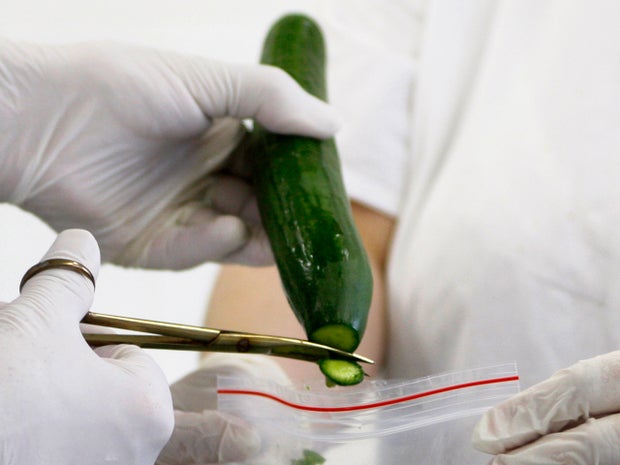
(CBS/AP) The E. coli bacterium responsible for a mysterious outbreak that has killed 18 and sickened hundreds in Europe is a previously unknown strain, the World Health Organization said Thursday.
PICTURES - E. coli: 5 life-saving facts you must know
Genetic sequencing suggests that the "super-toxic" strain is a mutant form of two E. coli bacteria, with aggressive genes that could explain the size and lethality of the outbreak, the agency said.
"This is a unique strain that has never been isolated from patients before," said Hilde Kruse, a WHO food safety expert. The strain has "various characteristics that make it more virulent and toxin-producing" than the many E. coli strains people naturally carry in their intestines.
But Dr. Robert Tauxe, a food safety expert at the CDC, questioned whether the strain is new, saying it had previously caused an outbreak in Korea in the 1990s. The genetic fingerprints from the two samples may vary a bit, he said, but not enough to say that the strain in Europe is new.
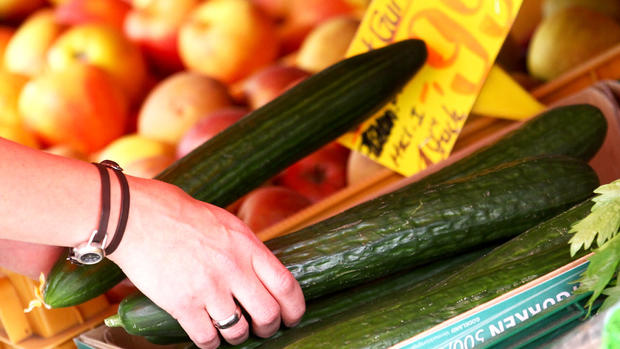
Scientists so far have been unable to pinpoint the cause of the illness, which has spread to at least 10 European countries and raised fears about eating tomatoes, cucumbers and lettuce. The strain has sickened more than 1,500 people, including 470 who have developed a rare kidney failure complication, and killed 18 - most of them in Germany.
Kruse said it's not uncommon for bacteria to mutate, evolving and swapping genes. It's hard to explain where the new strain came from, she said, adding that bacterial strains from humans and animals easily trade genes.
"One should think of an animal source," Kruse said. "Many animals are hosts of various types of toxin-producing E. coli." Some scientists suspect the deadly E. coli might have originated in contaminated manure used to fertilize vegetables.
Previous E. coli outbreaks have mainly hit children and old people, but the European outbreak is disproportionately affecting adults. Kruse said there might be something particular about the bacteria strain that makes it more dangerous for adults.
But she cautioned that since people with milder cases probably aren't seeking medical help, officials don't know just how big the outbreak is. "It's hard to say how virulent (this new E. coli strain) is because we just don't know the real number of people affected."
The WHO recommends that to avoid food-borne illnesses people wash their hands before eating or cooking food, separating raw and cooked meat from other foods, thoroughly cooking food, and washing fruits and vegetables, especially if eaten raw. Experts also recommend peeling raw fruits and vegetables if possible.
Paul Hunter, a professor of health protection at the University of East Anglia in England, said the number of new cases would likely slow in the next few days. The incubation period for this type of E. coli is about three to eight days, and most people recover within 10 days.
But he warned the outbreak could continue if there is secondary transmission of the disease, which often happens when children are infected. The disease can be spread when infected people don't take proper hygiene measures, like bathing or hand-washing.
So far, the outbreak is the third-largest involving E. coli in recent world history, and possibly the deadliest. Twelve people died in a 1996 Japanese outbreak that reportedly sickened more than 9,000, and seven died in a 2000 Canadian outbreak.