Elusive carnivore, once thought to be extinct, spotted by remote trail cameras in California
Researchers at Oregon State University have collected new data about an elusive forest carnivore "renowned for its cuteness" that was nearly driven to extinction in the 20th century.
The coastal marten, also known as the Humboldt marten, is about the size of a ferret and lives in coastal forests. Only four isolated populations of the species still exist, according to the U.S. Fish and Wildlife Service. Two colonies live in northwestern California. Another two live in western Oregon.
The species is listed under the federal Endangered Species Act and was threatened by mid-century trapping and logging, the USFWS said. They had been considered extinct before a small population was found in northern California in 1996, the OSU's Institute for Natural Resources said in a news release. Even today, the species remains at risk from rodenticides, vehicles, disease and habitat loss, the institute said.
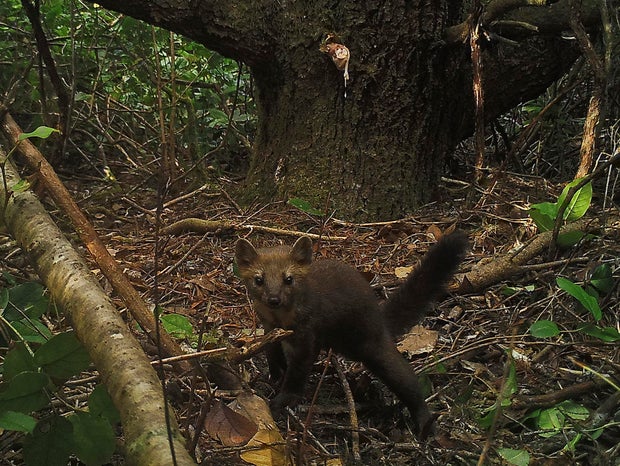
Scientists from the institute spent three months in 2022 collecting data about the marten's population and habitat near Klamath, California. The team used non-invasive survey tools, including 285 hair snares and 135 remote cameras, to collect the information from a 150-square-mile area, the institute said.
The data showed that the martens were most commonly found on forested ridgetops that received consistent snow, inside ravines and on riverbanks. Genetic analyses conducted on the snared hairs identified 46 different martens in the study area. Twenty-eight of the animals were male, and 18 were female, the institute said.
Study leader and OSU faculty research assistant Erika Anderson said the data showed martens tend to live in forested areas with lots of canopy cover, wide trees and hollow logs. The "coarse woody debris" helps them hunt and hide from predators, she said. A study analyzing how dense forest conditions influence the species was recently published in the scientific journal Global Ecology and Conservation.
OSU wildlife ecologist Sean Matthews said the new data highlights just how little humans know about coastal martens, which he said were "among the most adorable animals that call our Pacific Northwest forests home."
"There's a lot we don't know about this species, including information as basic as what forests do coastal martens still occupy, how many martens are there, and are these populations increasing," Matthews said in the news release.