New ICE memo gives deportation officers more leeway to conduct warrantless arrests

A new government memo disclosed in federal court granted Immigration and Customs Enforcement officers more leeway to carry out warrantless arrests of those suspected of being in the U.S. illegally.
The directive expands the grounds ICE agents and officers can cite to conclude that getting an administrative immigration arrest warrant for someone they encounter during an operation would give that person an opportunity to flee while a warrant is sought.
The memo suggests the rules are designed to give ICE greater flexibility to quickly arrest unauthorized immigrants who are not the original targets of an operation but are nonetheless encountered and found to have violated U.S. immigration law. Those detentions are known as "collateral arrests," and typically involve immigrants accused of civil immigration violations but who lack serious criminal histories or any at all.
The memo was issued by acting ICE director Todd Lyons on Wednesday and submitted to a federal court in Minnesota on Friday. Its contents were first reported by The New York Times.
Under U.S. immigration law, immigration officers typically need an administrative warrant before making an arrest. Those warrants are signed by employees of ICE, typically agency supervisors, and not judges, unlike judicial warrants.
But the law allows immigration agents to conduct warrantless arrests if they suspect someone is in the U.S. illegally and determine that person is likely to escape before a warrant can be issued.
Through his memo, Lyons broadened the interpretation of "likely to escape," dismissing a previous definition ICE relied on that he said was "unreasoned" and "incorrect." That prior interpretation of "likely to escape" was based on a determination that someone was a "flight risk," or unlikely to comply with immigration proceedings, like attending court hearings.
But Lyons said someone is "likely to escape" if they are unlikely to remain at the location where they were encountered.
"An alien is 'likely to escape' if an immigration officer determines he or she is unlikely to be located at the scene of the encounter or another clearly identifiable location once an administrative warrant is obtained," he wrote.
To make such determinations, Lyons said ICE agents should weigh different factors, including whether the subjects have refused commands or tried to evade officers; if they're in a car; if they possess documents that could be fraudulent; and if they could be prosecuted for illegally entering or re-entering the country.
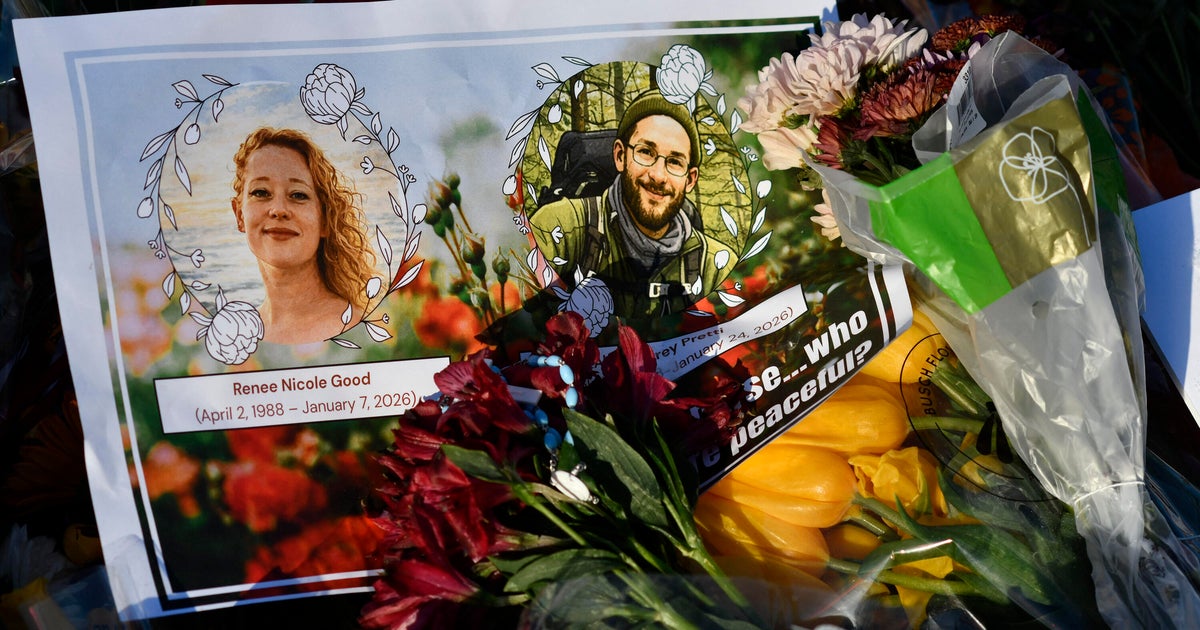
Backlash over ICE activity has intensified in recent weeks amid an unprecedented deployment of federal agents in the Minneapolis region, where local leaders and residents have denounced the agency's actions and operations as heavy-handed. Tensions there have been further inflamed by the fatal shootings of Renee Good and Alex Pretti, two U.S. citizens and Minneapolis residents, at the hands of federal agents.