How an underground fire turned into the Palisades Fire

With its announcement of an arrest in the Palisades Fire, federal officials also released new details on how one of the worst fires in Los Angeles County history began from the remnants of a week-old blaze.
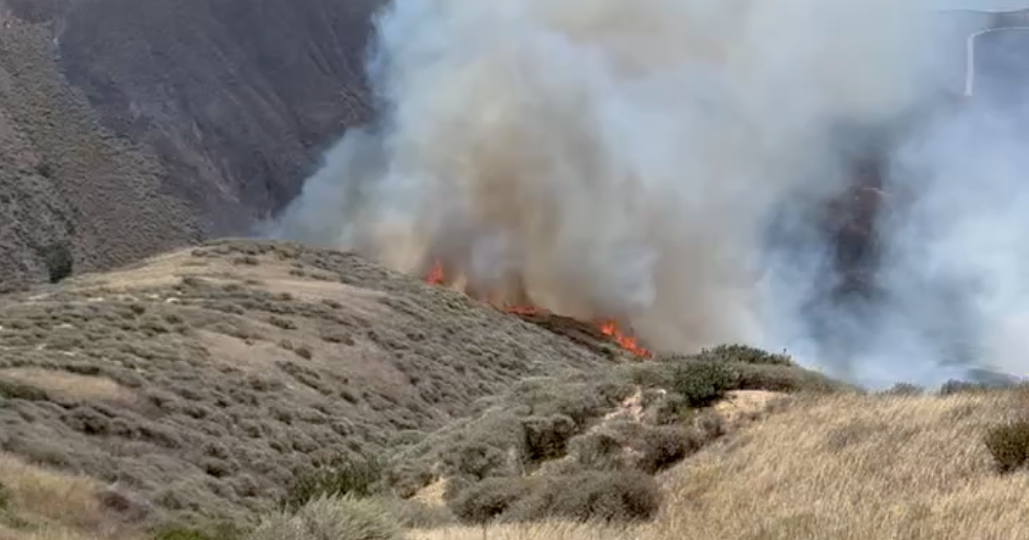
The Lachman Fire was initially limited to about eight acres and didn't destroy any structures, but investigations revealed that catastrophic Santa Ana winds may have rekindled embers that led to the Palisades Fire beginning near the same location.
"Although firefighters suppressed the [Lachman Fire], the fire continued to smolder and burn underground within the root structure of the dense vegetation," acting U.S. Attorney Bill Essayli said after announcing the arrest. "It smoldered underground for about a week until, on Jan. 7, heavy winds caused this underground fire to surface and spread above ground, causing what became known as the Palisades Fire."
Professor Craig Clements, a meteorology professor and director of the Wildfire Research Center at San Jose State University, described this process as a "ground fire."
"What happens is a surface fire, which is typically what we see, in the grass and the shrubs can get put out by firefighters and it's fully contained and everything on the surface has been extinguished," Clements said. "But, it can actually burn into the root system and burn underground, where you would not see any smoke and continue to smolder there for multiple days. A big wind event could then add more oxygen and cause the fire to reignite and bring the fire to the surface.
Detecting these fires can be very difficult.
"Potentially, you could use some infrared cameras at the surface, but again, they only see the surface and depending on how deep that area is smoldering, it may be hard to detect even with infrared imagery and imaging systems," Clements said.
For victims of the Palisades Fire, Wednesday's developments were a lot to process. Resident Chuck Peil was among those who lost their homes. He said he's still trying to make sense of how the fire could have smoldered for so long before turning into a raging inferno.
"All it needed was the other remaining element of fire, which is wind," Peil said. "You couldn't create that scenario even in a lab, I don't think."
A slew of lawsuits have been filed against the city, county, state and other agencies. James Franz, CEO of Frantz Law Group, represents 1,600 Palisades fire victims. He said his legal strategy has remained largely unchanged since the announcement, because he believes there is plenty of blame to go around.
"There's heavy fuel load in the whole area, that should have been cleared away," Frantz said. "If you have an arsonist, he would have nothing to burn. But, they didn't clear it away. The state didn't do it and LADWP didn't do it. It's right by their equipment, so it changes nothing in our view."