71-year-old is thankful for Cedars-Sinai HIV-positive organ transplant program

There's just been a major shift in organ donations as some HIV-positive patients in need of transplants can now get them from deceased donors who had HIV.
The change could help ease a donor crisis, and Cedars-Sinai in Los Angeles is helping to lead the charge.
Transplant recipient Billy Miller said the waiting was the hardest part as his liver began to shut down last year. "I didn't think it was ever gonna happen," he said. "I was dizzy and not feeling well."
The 71-year-old has lived with HIV since the 80s. His husband said that he was one of the first people to get HIV and he got it before there was even any testing.
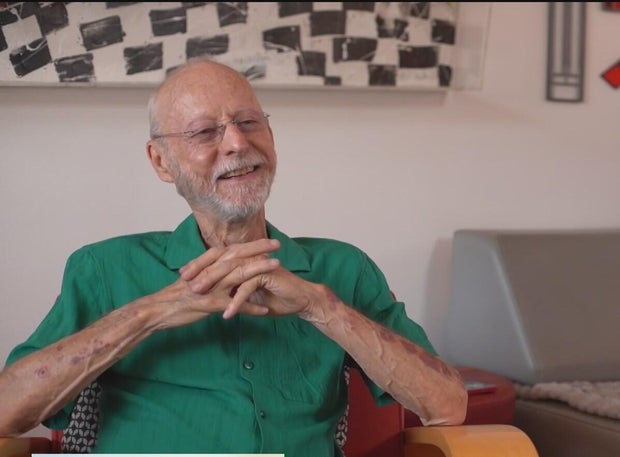
Miller knew that waiting for a donated liver through the national registry could take years, so he felt incredibly lucky when Cedars-Sinai asked him to be a pioneer.
"(They asked), would you accept an HIV-positive liver, and I said 'sure,'" he said.
Dr. Irene Kim, Cedars-Sinai Department of Transplantation chair, explained that offering Miller up to an HIV-positive donor pool allowed for the transplant to happen fairly quickly.
She said the program is the first for the LA region, as surgeons at Cedars-Sinai gave Miller and two other HIV-positive patients organs from deceased donors who were also HIV-positive.
"Right now, there is not a cure for HIV, so we would not want to put an organ transplant from someone who is HIV positive into someone who is HIV negative," Kim said.
"The data shows and the research shows that it is quite safe to do this matching profile."
Until just about a decade ago, federal law prohibited any kind of transplant from an HIV-positive donor.
Then, clinical studies allowed some organs to go to HIV-positive recipients. Last year, once those strict research requirements were dropped, Cedars-Sinai became one of the first hospitals to pursue groundbreaking transplants.
"We try to make in short, every donor work that we possibly can because there is an organ shortage crisis in the United States," Kim said.
Miller is recovering at home after receiving his new liver 10 weeks ago. "I'm feeling 1,000% better than before the surgery," he said.
The other two transplant trailblazers received kidneys and Kim said they are doing well. Thanks to major advances in HIV treatments, patients who need transplanted organs for unrelated health conditions are living longer.
"It means potentially, you know, another decade of life," Kim said.
Miller has now registered as an organ donor himself, after a stranger gave him the most precious gift there is. "I would love to know who she was and be able to thank her family," Miller said.


