Review: A 'Legacy' Of Courage Comes To W. Bloomfield
By John Quinn, EncoreMichigan
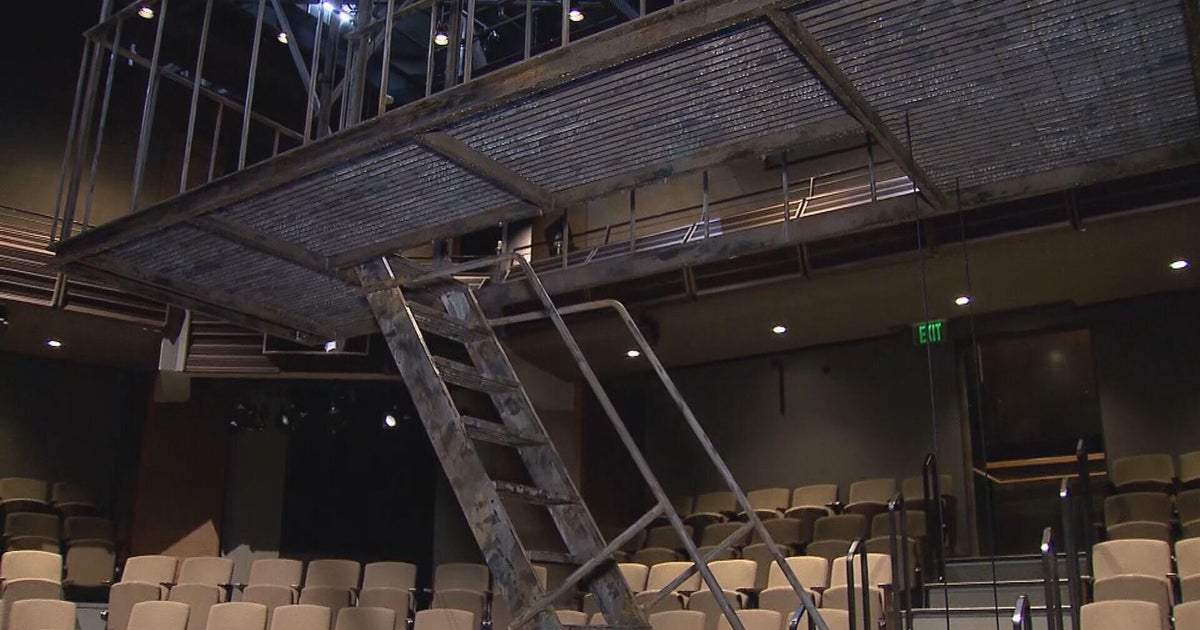
Playwright Shauna Kanter makes recurring references to playwright Berhold Brecht in her provocative work "Legacy," playing until Nov. 17 in the new Berman Center for the Performing Arts on the campus of the Jewish Community Center in West Bloomfield.
It's a fitting reminder; Brecht wanted to "re-function" the theater to a new social use. As Robert Leach comments in "The Cambridge Companion to Brecht," "Brecht wanted his theatre to intervene in the process of shaping society . . ." While "Legacy" is no Brechtian "Lehrstück" ("learning play"), many of the elements of the Epic Theatre he developed are at work in this project.
"Legacy" is not only unconventional theater; it also has an unconventional genesis. A chance outburst by Kanter's father on his death bed, that he had smuggled an endangered Jewish family out of Nazi Germany, was later supported by his passport and confirmed by a friend. The play explores the damaging effect the internal rot of prejudice has on the health of a society, as well as the undaunted courage necessary to stand up against injustice.
Each time "Legacy" is mounted, schools are invited to participate as a learning opportunity in diversity awareness. Students see the show and have the opportunity to meet Holocaust survivors. They are also asked to write their personal experiences with prejudice and hate.
Some of these monologues appear in the program, others are incorporated into the performance. One observer remarked to producer Evelyn Orbach, who has done signal service in bringing this endeavor to Detroit, "The play is the engine that drives the project." That's an apt statement of fact.
The play begins in 1968. Sarah Liben (Maggie Meyer) is at the bedside of her terminally ill father, David (Patrick O'Connor Cronin), when, raving in pain, he blurts out, "I got Brecht's children out. They're alive; they're living in California . . ." Intrigued, she follows up on the hint. Our scene shifts to 1937.
While in Monte Carlo, Gert (Clement Valentine), a total stranger, begs the idealistic American, David, to rescue his sister, Anna (Milica Govich), and her children from Berlin. She is photographing evidence of the Third Reich's atrocities and will likely be eliminated. Back in America, afraid of the consequences, David refuses to take action until his wife (Inga R. Wilson) passionately convinces him of the importance of involvement.
In directing her own work, Kanter's approach is highly stylized. There is a tension between the thoroughly realistic major characters and surreal blocking and voice techniques. Score one for Epic Theatre! While there is one beautifully choreographed scene in Act I in which the ensemble's nervousness reaches out to engulf the audience, we find ourselves hoping for even more abstraction, if for nothing else but insulation from the raw emotions of the play.
Act II is a sharp balancing act in Brecht's "distancing effect," including a scene of Nazi brutality interrupted at intervals by the charming, young Lexi Jackson, who recites monologues written by the high school students. The scene is a damning testament that the prejudices that allowed the rise of the Third Reich are still among us and inflicted upon the most innocent of our citizens.
Adding to the ambiance is Eric Maher's stark set, a combination of faux marble pillars and cubes that the actors move and stack as if playing with children's blocks. This thoroughly functional design highlights the floor to ceiling archival photographs projected on the backdrop.
In contrast, Mary Davis clothes the characters in attractive, authentic styles from both periods of the play. Add to this the haunting harmonies of live Klezmer music and "Legacy" holds attention both of eye and ear.
Ultimately, though, what one takes away from "Legacy" is not a renewed belief in the virtue of tolerance so much as a new understanding of the cardinal sin of apathy. Kanter powerfully develops the theme that one man or woman counts, that one person can make a difference.
The playwright she channels is not in the end Bertold Brecht, but Samuel Beckett, who wrote, "It is not every day that we are needed. But at this place, at this moment of time, all mankind is us, whether we like it or not. Let us make the most of it, before it is too late!"
For tickets and showtimes, go to EncoreMichigan.com.
John Quinn reviews local theater productions for http://www.encoremichigan.com/, the state's most comprehensive resource for news and information about Michigan's professional theaters. Follow them on Facebook @EncoreMichigan.com.