Colorado educators demand lawmakers refer ballot measure, allow vote on funding cap
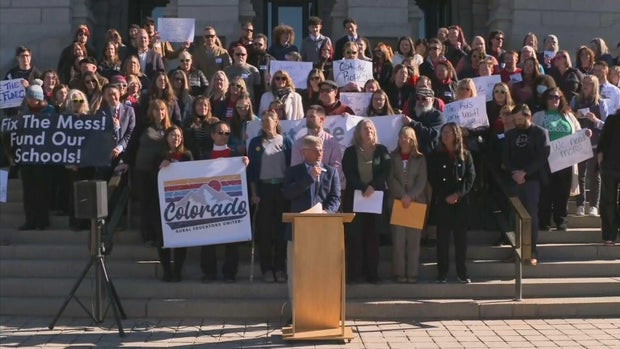
On Thursday, representatives of rural school districts in Colorado gathered at the state Capitol, calling on lawmakers to refer a measure to the 2026 November ballot that would allow voters to decide whether to raise the Taxpayers' Bill of Rights cap, thereby allowing the state to keep more tax revenue.
Educators say the TABOR cap is affecting their ability to provide adequate educational opportunities for their students.
"We all know what underfunded schools look like. It means bigger classes, fewer supports and less safety for our students," said Summit Middle School attendant secretary Naomi McMahon. "Schools cannot improve without stability and predictable funding. When funding is unreliable, districts can't hire or they can't keep the staff who support our students. They can't help educators focus on teaching and keep our school buildings safe and running smoothly."
The TABOR amendment to the state constitution was passed in 1992 and caps the amount of annual state tax revenue that can be used based on the state's population growth and inflation. Legislators are required to constrain the state budget within the cap. The excess, or TABOR refunds, must be returned to taxpayers.
The yearly increase in the cap raises the education budget, but some school districts say it's not enough.
Two studies commissioned by the state found that Colorado consistently trails other states on how much money is spent per public school student by around $4,000 each year. The Colorado Teachers' Association says that constitutes a shortfall of approximately $4 billion each year.
The proposed ballot measure would allow the state to keep an additional $4.5 billion a year in tax revenue instead of refunding the money to taxpayers. It would also provide a yearly increase in K-12 education spending of at least 2%, amounting to an additional $90 million in the first year.
In fiscal year 2023-2024, the state reported a TABOR excess of $1,354,500,000, far short of the amount needed to cover the education funding shortfall. But now the general fund is facing an $850 million shortfall.
Gunnison High School librarian and English teacher Lisa Danos says the education budget's shortfall means that educators can't afford to live in the communities where they work, making it difficult to retain quality educators.
"Educators in rural communities simply can't afford to stay. Too many of my colleagues are leaving the profession altogether to take higher paying jobs, or, if they do stay, they are trying to survive by working second and third jobs just to make ends meet so they can afford their rent and groceries. That's unacceptable," said Danos.
Although funding for K-12 education is provided by the state, teacher pay is determined by the individual school districts.
Summit County school counselor Brian Tracey said the lack of funding for mental health professionals like him is causing a growing crisis for students.
"Every day, I witness the growing and unprecedented mental health challenges students face and how impossible it's becoming for schools to keep up and support these students," explainedTracey. "Anxiety, depression, behavioral crises and trauma show up in our classrooms across the state every single day. For many students, school is the only place they can access support."