Colorado Congressman Jason Crow condemns President Trump's threats over video to troops
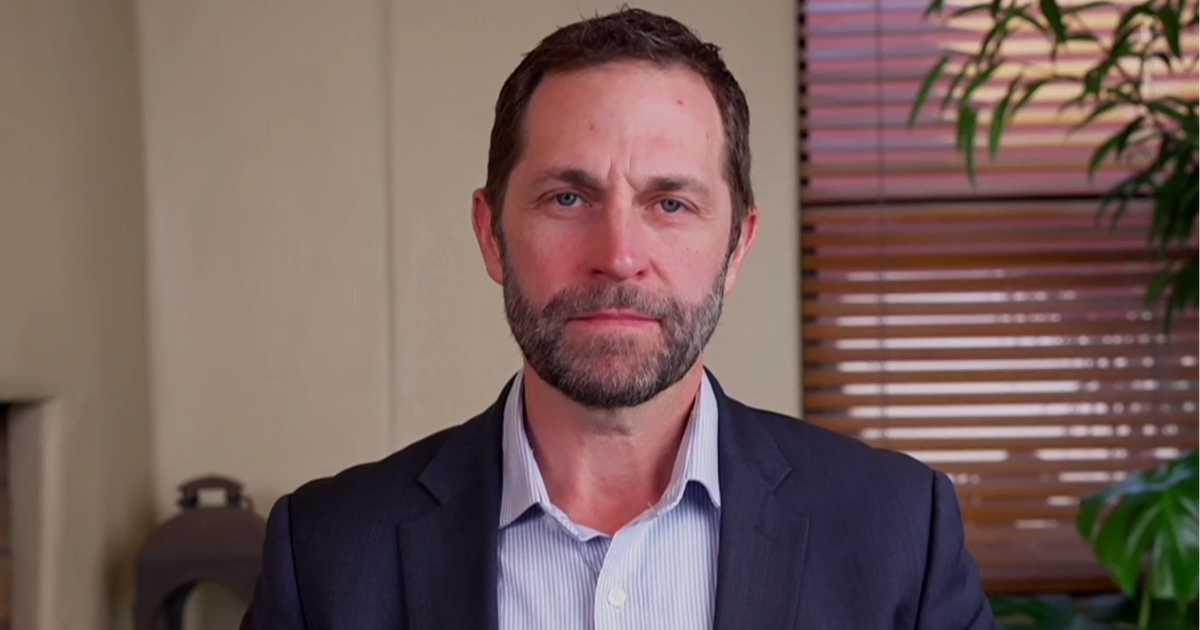
Colorado Congressman Jason Crow and five other Democratic lawmakers are responding to threats from President Trump on social media. He claimed they should be arrested for crimes punishable by death after the lawmakers released a video message to U.S. troops telling them they can "refuse illegal orders."
The video featured Crow along with Sen. Elissa Slotkin of Michigan, Sen. Mark Kelley of Arizona, Rep. Chrissy Houlahan and Rep. Chris Deluzio, both of Pennsylvania, and Rep. Maggie Goodlander of New Hampshire, all of whom are veterans or have served as intelligence and national security officers. They cited threats to the U.S. Constitution and encouraged service members to disobey unlawful orders.
The Congress members said that they posted the video because some troops have expressed concerns to them about the legality of recent strikes on Venezuelan drug boats and about the deployment of troops to U.S. cities.
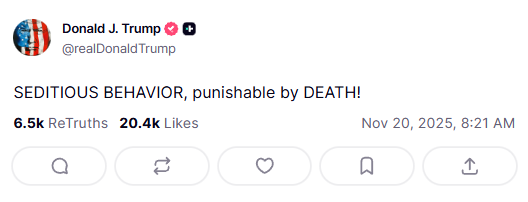
The president responded on Truth Social with a post stating, "SEDITIOUS BEHAVIOR, punishable by DEATH!" He also called for their arrests and shared multiple posts from other accounts calling for their indictment or capital punishment. On Friday, the president clarified that he was not threatening death to the lawmakers.
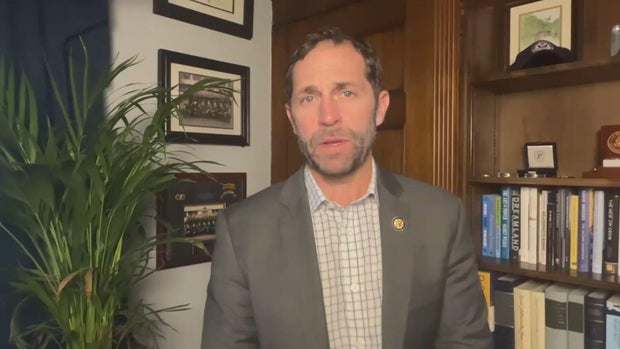
In an interview with CBS Colorado, Crow said he will not be intimidated.
"What Donald Trump wants to do is he wants to use fear and intimidation to get people to back away from their duty, to back away from their job," said Crow. "He wants to suppress dissent and silence people. Well, he picked the wrong person, because that's not how I play."
Senate Minority Leader Chuck Schumer said the rhetoric is dangerous and encourages political violence.
When CBS News Chief White House Correspondent Nancy Cordes asked White House Press Secretary Karoline Leavitt about the president's statements, Leavitt responded, "Let's be clear about what the president is responding to. They are literally saying to 1.3 million active duty service members not, to defy the chain of command. Not to follow lawful orders."
Cordes corrected Leavitt, explaining that the video explicitly stated it was addressing the refusal of unlawful orders under the Uniform Code of Military Justice.
Leavitt fired back, stating that the video is "suggesting that the president has given illegal orders, which he has not."
Defense Secretary Pete Hegseth shared the video on X with the caption "Stage 4 TDS." TDS stands for "Trump Derangement Syndrome," a derogatory term used to describe criticism of President Trump.
Crow said the idea that every order issued by the president is lawful is "unbelievably absurd."
"We don't have kings in this country; nobody is above or below the law in the United States of America, including the President of the United States. And the entire notion that the president can do whatever he wants, regardless of the law, would actually destroy our democracy. And I've taken many oaths to the Constitution throughout my life; first as a soldier and now as a member of Congress. That is a lifetime oath, and I will continue to uphold that oath until my last day," he added.
So what's at the heart of this argument?
Upon joining, all military members take an oath to "preserve, protect and defend the Constitution of the United States against all enemies foreign and domestic," implying their allegiance is to the rule of law.
Article 92 of the Uniform Code of Military Justice, the body of federal law that establishes the U.S. military justice system, dictates that service members must follow lawful orders and regulations. Failure to do so can result in disciplinary action, including a court martial.
Any person subject to this chapter who—
(1) violates or fails to obey any lawful general order or regulation;
(2) having knowledge of any other lawful order issued by a member of the armed forces, which it is his duty to obey, fails to obey the order; or
(3) is derelict in the performance of his duties; shall be punished as a court-martial may direct.
Part IV of the Manual for Courts Martial, paragraph 16 (c)(1)(c), explains the conditions an order needs to meet to be considered lawful. An order or regulation can't be contrary to the Constitution or U.S. law. It cannot exceed the authority of the person who issued it or contradict lawful superior orders. Following an unlawful order can expose service members to prosecution.
Sometimes, service members are unsure just what that entails. Paragraph 14c(2)(a) of Part IV of the RCM elaborates a little further, stating:
(2) Disobeying superior commissioned officer.
(a) Lawfulness of the order.
(i) Inference of lawfulness. An order requiring the performance of a military duty or act may be inferred to be lawful and it is disobeyed at the peril of the subordinate. This inference does not apply to a patently illegal order, such as one that directs the commission of a crime.
(ii) Determination of lawfulness. The lawfulness of an order is a question of law to be deter¬ mined by the military judge.
(iii) Authority of issuing officer. The commissioned officer issuing the order must have authority to give such an order. Authorization may be based on law, regulation, or custom of the service.
(iv) Relationship to military duty. The order must relate to military duty, which includes all activities reasonably necessary to accomplish a military mission, or safeguard or promote the morale, discipline, and usefulness of members of a command and directly connected with the maintenance of good order in the service. The order may not, without such a valid military purpose, interfere with private rights or personal affairs. However, the dictates of a person's conscience, religion, or personal philosophy cannot justify or excuse the disobedience of an otherwise lawful order. Disobedience of an order which has for its sole object the attainment of some private end, or which is given for the sole purpose of increasing the penalty for an offense which it is expected the accused may commit, is not punishable under this article.
(v) Relationship to statutory or constitutional rights. The order must not conflict with the statutory or constitutional rights of the person receiving the order.
(b) Personal nature of the order. The order must be directed specifically to the subordinate. Violations of regulations, standing orders or directives, or failure to perform previously established duties are not punishable under this article, but may violate Article 92.
(c) Form and transmission of the order. As long as the order is understandable, the form of the order is immaterial, as is the method by which it is transmitted to the accused.
(d) Specificity of the order. The order must be a specific mandate to do or not to do a specific act. An exhortation to "obey the law" or to perform one's military duty does not constitute an order under this article.
Many of the president's recent actions involving the military have caused controversy, largely along party lines.
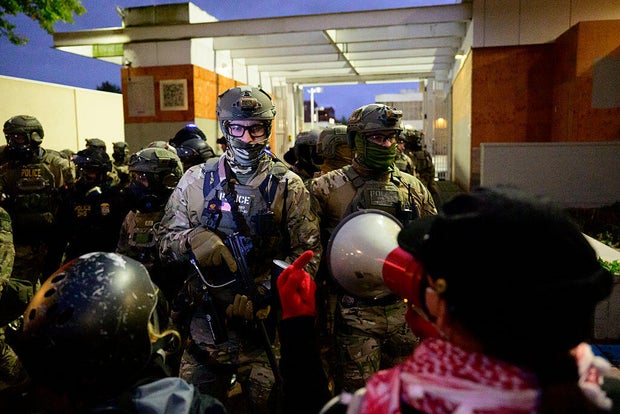
Hundreds of National Guard members have been deployed to multiple cities across the United States in recent months to protect Immigration and Customs Enforcement agents and facilities in ongoing ICE enforcement efforts. The White House invoked Title 10, which allows the president to deploy the guard in cases of rebellion or danger of a rebellion against the U.S. government.
The move prompted lawsuits by city and state officials in Oregon and California. A federal judge blocked the deployment in Portland, and another federal judge has blocked further deployment of the National Guard to the Chicago area until there's a decision from the Supreme Court.
Another point of tension has been over the crackdown against narcotics trafficking into the U.S. from South America. The military has conducted multiple strikes against boats suspected of bringing drugs in from Venezuela. Critics have expressed opposition to what they say are illegal extrajudicial killings of civilians.
There has been a recent military buildup in the Caribbean as the USS Gerald R. Ford Carrier Strike Group deployed to the area as part of Operation Southern Spear. The president has also stated his administration is considering taking military action and will not rule out sending U.S. troops into the country.
"This president has made numerous threats to use the military in lawless ways," Crow told CBS Colorado. "He's threatened to have the military shoot peaceful protesters in Lafayette Square. He's threatened to send the military to polling stations, which is a violation of U.S. criminal law. He's threatened to go to war and napalm the City of Chicago. This president has a long history of inciting rhetoric, and what we wanted to do is get out ahead of his misuse or abuse of the military and remind soldiers not only of what their oath is and what their duty requires, but that America and us as fellow veterans and members of Congress stand by them."
If any service member has questions about the lawfulness of an order, they can consult with their chain of command or a Military Defense Attorney.