Coloradan battling rare cancer fights against National Institutes of Health medical research cuts
As part of the Trump Administration's efforts toward government efficiency, the Department of Health and Human Services is working to eliminate billions of dollars in contracts with the National Institutes of Health.
The NIH is the primal federal agency for medical research, leaving many in the medical community concerned about the impacts of the cuts.
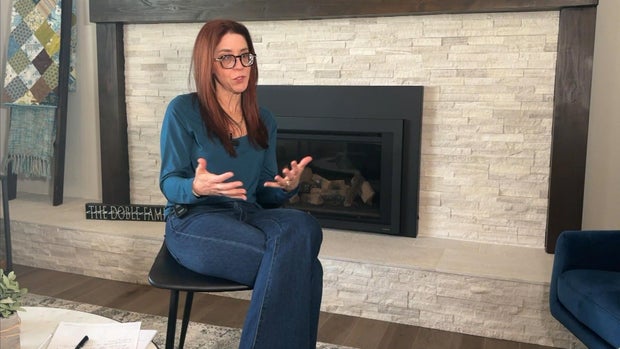
Every day, Katie Doble is on her computer looking to connect with anyone who might share her fight for clinical research, knowing her life and countless others depend on it.
"I do a lot of advocacy work," said Doble. "I share my story to give people hope and also to show people the importance of clinical research."
In 2013, Katie was diagnosed with an ocular melanoma, a rare form of cancer that spread from her eye to her liver a year later. There were no FDA-approved treatments available, meaning the diagnosis was terminal.
"My doctor told me I had basically 16 months to live," she said.
Just two days later, her now-husband proposed.
"When Nick got down on one knee, I was like, 'Okay, am I planning a funeral, or am I planning a wedding?' and Nick and I just made a commitment that we were just going to keep looking towards a future," she said.
With her husband and family by her side, Katie spent her 30s in and out of clinical trials all over the country.
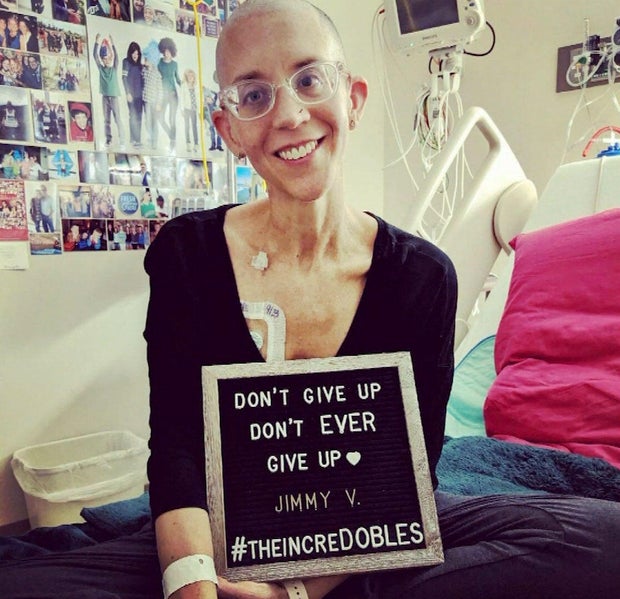
"My second two trials were here locally at (University of Colorado Anschutz Medical Campus), and I did a couple of different treatments. I actually had a really great response to that, and that ended up buying me quite a lot of time with my liver. In 2018 it spread to my brain. And in 2020 I had had about 4-and-a-half years of stability in my liver, and I had growth again, and that's when I ended up in my fourth clinical trial at UPMC in Pittsburgh," she said.
The treatment was a success. Since 2021, there's been no sign of cancer.
"Uveal melanoma is an incredibly rare disease. But to have metastatic uveal melanoma and then become 'no evidence of diseases' is unheard of."
However, the possibility of needing to participate in another clinical trial in the future still exists.
"Here we are 10 years later, and there are still no FDA-approved treatment options for my type of cancer and my specific biomarkers," she said.
Recent staff and looming spending cuts had made Katie's work even more important with the layoffs and proposed cuts to NIH, the world's largest source of funding for medical research.
"We need scientists to continue to do this research so that there are more options available for all of us. When someone leaves NIH, they don't take their years or decades of research with them," Katie said. "If no one is there to pick up and continue forward with that treatment ... all of that work, all of that research, gets lost."
"The continuity is important."
Katie is motivated now more than ever to share her story.
"I am someone who is alive today because of clinical research. It is important. And as patients, if our doctors can't speak up, we need to."