Avalanche incidents in Colorado's backcountry offer key lessons as danger lingers

Backcountry users across Colorado are being urged to remain cautious after several recent human-triggered avalanches, even as visible warning signs in the snowpack begin to fade.
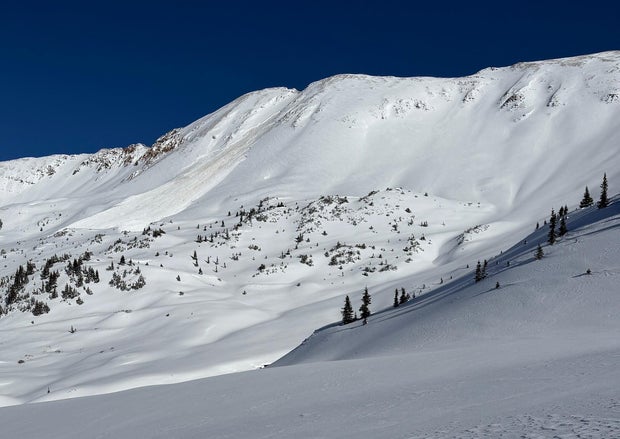
One of the latest incidents occurred on Jan. 10 in the Haiyaha Couloir in Rocky Mountain National Park, where a snowboarder was recording a video when a Wind Slab avalanche began, carrying one group member away. Fortunately, the backcountry user only dislocated his shoulder.
Brian Lazar with the Colorado Avalanche Information Center (CAIC) says the biggest takeaway from a recent incident is learning to recognize and respond to signals from the snowpack.
"You really want to pay attention to Mother Nature's signals," Lazar said. "If she gives you signs of instability, it's usually a good signal to move to less wind-affected terrain or move to slopes that are more sheltered from the wind and don't have those stiff slabs."
In this case, the group involved chose to submit a public field report detailing what went wrong. Lazar says that decision plays a critical role in avalanche safety statewide.
"Sharing your mistakes allows other people to learn from them," Lazar said. "We can't be everywhere. We rely on public observations to create better forecasts, and sharing mistakes like this is really helpful — not only for us at the Avalanche Center, but for the public at large."
CAIC reports an increase in human-triggered avalanches in recent days, with five people caught in four separate incidents since Friday. Fortunately, Lazar says all of the avalanches were on the smaller side, resulting in only a couple of minor injuries.
Looking ahead, Lazar says conditions remain concerning, even with a stretch of warm, dry weather expected. Colorado's snowpack is historically low, which will reduce wind slab avalanche problems but leave behind a more dangerous threat.
"That leaves us with a persistent slab avalanche problem, particularly on north- and east-facing slopes," Lazar said.
While the likelihood of triggering an avalanche may slowly decline without new snowfall, Lazar warns that the size and consequences of avalanches are not changing.
"There are very weak layers in the middle of the snowpack and near the ground," he said. "Those are hard to manage and can produce large, dangerous avalanches."
Complicating matters further, Lazar says the classic warning signs backcountry users rely on may become harder to detect.
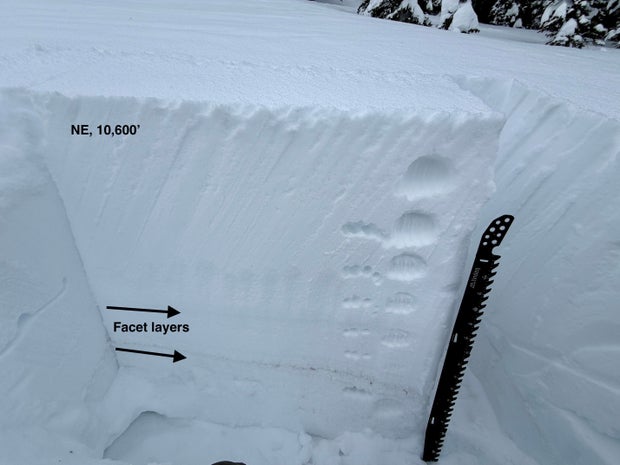
"We're going to see a decline in the signs Mother Nature gives us," he explained. "You may not see shooting cracks or hear audible collapses. Your first sign of instability might be triggering an avalanche."
That's because time allows weak layers to slowly heal while new snow and compaction bury them deeper, making instability less obvious but no less dangerous.
Lazar urges anyone heading into the backcountry in the coming days to carefully review avalanche forecasts and remember that quieter snowpack conditions don't always mean safer conditions.