An inside look at the Chicago DEA lab, which processes huge quantities of dangerous drugs each year

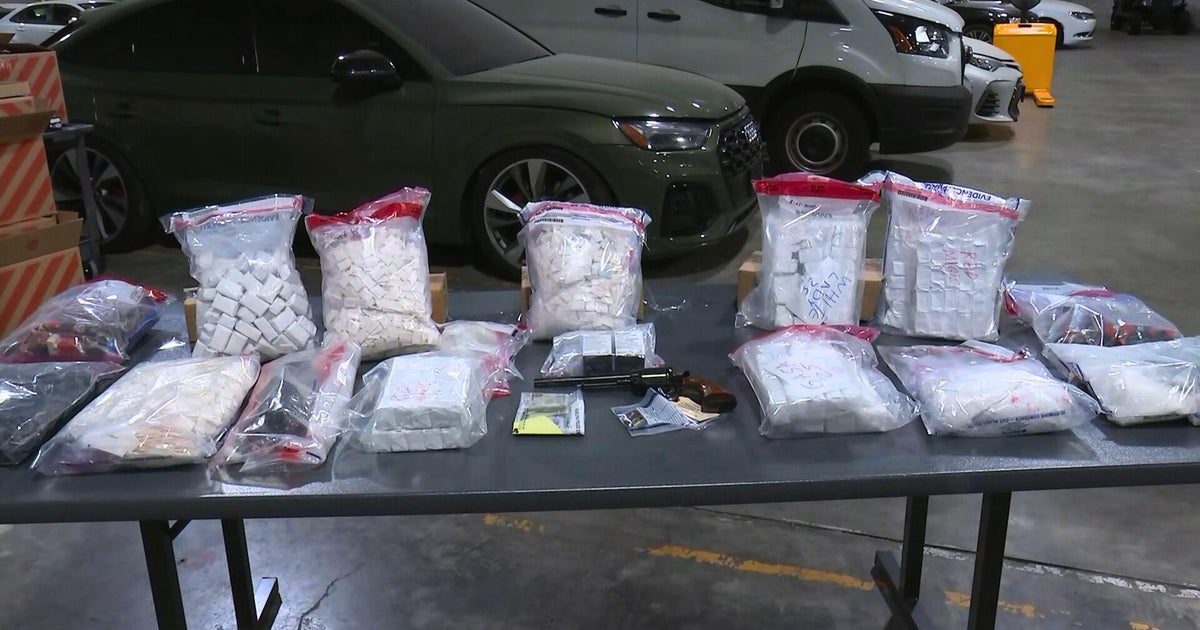
Every year, the U.S. Drug Enforcement Administration's lab in Chicago processes tens of thousands of pieces of evidence — dangerous drugs seized from our very own neighborhoods.
CBS News Chicago got an inside look at the lab recently. It has seven drug vaults, storing evidence from busts across 12 Midwestern states. Each vault holds buckets that contain 50 pieces of evidence—from the DEA itself; U.S. Customs and Border Patrol; the Bureau of Alcohol, Tobacco, Firearms and Explosives; the Bureau of Prisons.
Pamela Triplett, a senior laboratory evidence control specialist for the DEA, is in charge of protecting it all.
"Right now, we have about 46,246 odd pieces of evidence that we're holding," Triplett said.
Triplett said the evidence buckets are always full. Even when their contents are disposed of, there is plenty ready to fill them back up.
"As it's going out, it's coming in continuously," Triplett said.
To an outsider, the sheer quantity of drugs at the lab is overwhelming.
"I would actually venture a guess that the public watching would be astounded if they knew the amount of drugs that are seized throughout the country every year," said Sheila Lyons Dix, who was the first female special agent-in-charge of the Chicago division of the DEA and has since retired.
In just the first six months of the year, the Chicago DEA team seized 1.6 million pills of fentanyl. That is almost three times more than they did all of last year.
"The cartels are alive and well and pushing drugs into this area at record paces," said Lyons. "These guys — they're vicious and they're cruel, but they ain't dumb/ They're cunning in what they're doing and why they're doing it, and they don't care who lives or dies."
In the lab, chemist Victoria Barron weighed out two milligrams of sugar — a minuscule amount that looks like only a few barely visible grains when placed next to a penny. Two milligrams of fentanyl would be a lethal dose.
"You can barely see it," Barron said. "It's a small amount."
Inside the lab, chemists like Barron and Samantha Saracowski work tirelessly to identify every piece of evidence that comes through the building. One of their biggest concerns right now is fentanyl cocktails that are showing up on the streets of Chicago.
When CBS News Chicago visited, Saracowski was examining several different samples of drugs containing fentanyl — mixed with sugar, heroin, acetaminophen, medetomidine.
"We're seeing a lot more medetomidine in the samples now, and xylazine," said Saracowski.
Medetomidine and xylazine are veterinary tranquilizers, and are showing up in drugs on the street. When asked how the tranquilizers compare to fentanyl in terms of lethality, Saracowski's chilling answer was, "The difference is that NARCAN doesn't work."
Also being analyzed in the lab were pills that looked real, and could easily pass for actual oxycodone tablets. But 50% of the time, the pills have enough fentanyl to kill a person.
"It's Russian roulette every single time with any and all of these drugs — especially these pills," said Lyons. "1.6 million fentanyl pills seized in just the first half of the year throughout Illinois, Indiana, and Wisconsin."
Again, the lab said half of the pills that appeared to be oxycodone contained a lethal dose of fentanyl. If they had hit the street, 750,000 people could have died.
"This dope will kill you if it hits the street," Lyons said.
For some longtime DEA employees like Triplett, there is a reward in seeing the vaults at the Chicago DEA lab constantly full.
"The cycle never breaks, and we want it to break, but it hasn't yet," Triplett said.
But while the cycle persists, Triplett said it gives her some satisfaction to know the drugs the DEA seized will never hit the streets.
"It does, absolutely," said Triplett, "which is why I love working here, because I know that we're still doing something. It's still working, because we're still seeing it get off the streets."
Lyons retired shortly after CBS News Chicago's interview. Shane Catone has been named the new special agent-in-charge of the DEA Chicago Field Division.