Federal employees in Chicago brace for government shutdown impact, airports could be affected



Federal employees in Chicago are waiting to hear how they may be impacted by the 2025 government shutdown.
Lawmakers in Washington, D.C. failed to agree on a spending package to keep the government running by the Wednesday 12 a.m. deadline.
At the Environmental Protection Agency offices in downtown Chicago, employees are waiting to be told when they should close their laptops and head home. They were told to expect to be furloughed, but have no idea when it could happen.
"The administration has said we even have to take our laptops home tonight in order to see if we might be furloughed overnight," said Nicole Cantello, president of AFGE Local 704, the union representing about 1,000 EPA employees in the Great Lakes area and Chicago.
Cantello said her members are paid bi-weekly, and no one knows if their next paycheck will hit anyone's bank account on Friday.
"The longer the furlough goes on, the more difficulty people will have making ends meet," she said. "Our people live paycheck to paycheck."
She said the shutdown also undermines the work of public servants. At the EPA, employees are tasked with protecting clean air and clean water in our area, and are already operating with a smaller workforce after a round of DOGE cuts earlier this year.
"We have lost many employees, we believe perhaps 20% to 30%," Cantello said.
She said the EPA already has lost a third of their lawyers who prosecute cases against polluters. Now, additional layoffs, like the ones alluded to by the president and vice president.
"Because we are in a government shutdown, we are going to have to lay some people off if the shutdown continues. We don't like that, we don't necessarily want to do it, but we're going to do what we have to to keep the American people's essential services continuing to run," Vice President JD Vance said.
Cantello said additional cuts would be catastrophic.
"We're talking about severe, severe curtailing of protecting human health here in Illinois and throughout the Great Lakes region," she said.
During a shutdown, each agency decides which employees are nonessential. Agencies like the EPA are subject to those limitations.
Elected leaders like the president and members of Congress continue working, as do active-duty military, employees at federally funded hospitals, air traffic controllers, and TSA. And if your travel itinerary includes National Parks, those will also be affected.
Mail delivery, Social Security, Medicare and Medicaid continue as well, as they have separate revenue streams.
READ MORE: A history of government shutdowns: The 14 other times funding has lapsed since 1980
Agencies like ICE and the Department of Homeland Security also continue their missions, including Operation Midway Blitz in the Chicago area.
An ICE spokesperson said in a statement, "Thanks to the Trump administration's signature piece of legislation, the one Big Beautiful Bill, we will continue to hire, train and deploy law enforcement across the country to make America safe again...the deportations will continue."
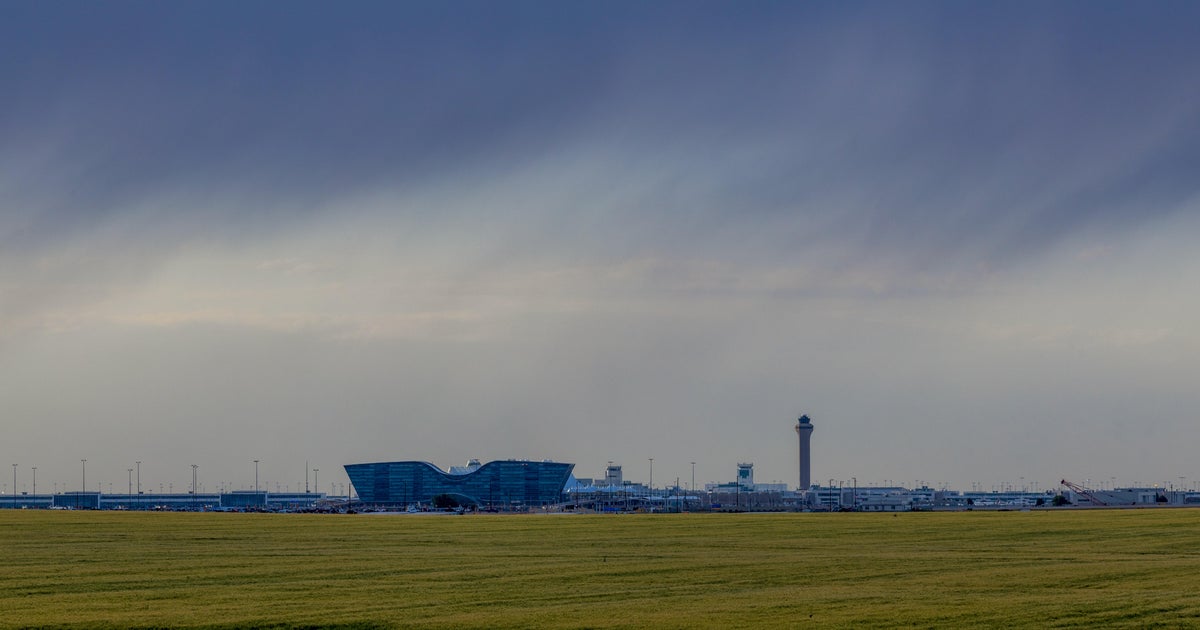
Domestic and international travelers could see longer lines at Chicago's airports as the effects of the shutdown trickle down to the travel industry.
"We already have a lot of delays lately, over the last couple of years, so I think it's going to have a huge impact on us traveling to work, you know, just trying to get to work every time, so I think it's going to be a it might pose a significant impact," said Frank Casado, who was at the airport for business travel Wednesday.
Other federal employees worry about being fired during this potential furlough period, after comments from President Trump and Vice President Vance.
"Because we are in a government shutdown we are going to have to lay some people off," Vance said. "If the shutdown continues, we don't like that or necessarily want to do that, but we're going to do what we have to do to keep the American people's essential services continuing to run."
Two unions which represent federal workers have waged a lawsuit against the possibility of firings during furlough, which is intended to be temporary though it's not currently illegal to fire someone with legitimate cause.
Why did the government shut down?
The stalemate over spending in congress comes down to a debate over health care provisions, specifically maintaining a tax credit that helps 22 million Americans lower health insurance costs and premiums when they purchase their plans through the Affordable Care Act marketplace.
Known as the enhanced premium tax credit, the subsidy has been authorized since 2021 under the American Rescue Plan Act but it set to expire at the end of the year. Democrats have said any spending package to keep the government funded must extend the credit.
Now, as workers are already furloughed without pay, President Trump is threatening mass layoffs and federal cuts directed at Democrats. House Minority Leader Hakeem Jeffries said that will lead to lawsuits.
Two Democrats, Senators John Fetterman of Pennsylvania and Catherine Cortez-Masto of Nevada, supported the House-passed bill in Tuesday's Senate vote, as did Maine Independent Angus King. Republican Rand Paul of Kentucky joined Democrats to vote against the bill.
Illinois Senator Dick Durbin said Republicans need to work with Democrats to get the budget passed. He said health care is critical and ending it for anyone should not be on the table.
"To say that we look the other way when it comes to cutting health insurance or raising the premiums to a point where families can't afford them is to ignore one of the very basics of family solidarity," Durbin said. "We believe in doing something for health care and doing it right as quickly as possible."
Durbin added that Republicans need seven Democrats to come to vote for their bill to get to 60 votes and said that number will require the GOP to come to the table for negotiations.
The Congressional Budget Office estimated roughly 750,000 federal employees could be furloughed each day of the shutdown.