Fireworks blamed for fire that destroyed 1 garage, damaged others in Chicago's Bridgeport neighborhood

Fireworks were to blame for a huge fire that spread to five garages on July 4th — and at least one of those garages was a total loss.
Anyone who lives in Chicago knows not a 4th of July goes by without fireworks booming across the city. However, it is illegal to light them except in displays with a permit — and the fire in Chicago's Bridgeport neighborhood amounted to a very visual reason why.
Neighbors said it was a miracle that no one was hurt.
A barrage of fireworks lit up Bridgeport on the 4th of July this past Friday. The celebrations kept people like Helen Geers awake.
"It's not just sparklers," Geers said. "They're bombs."
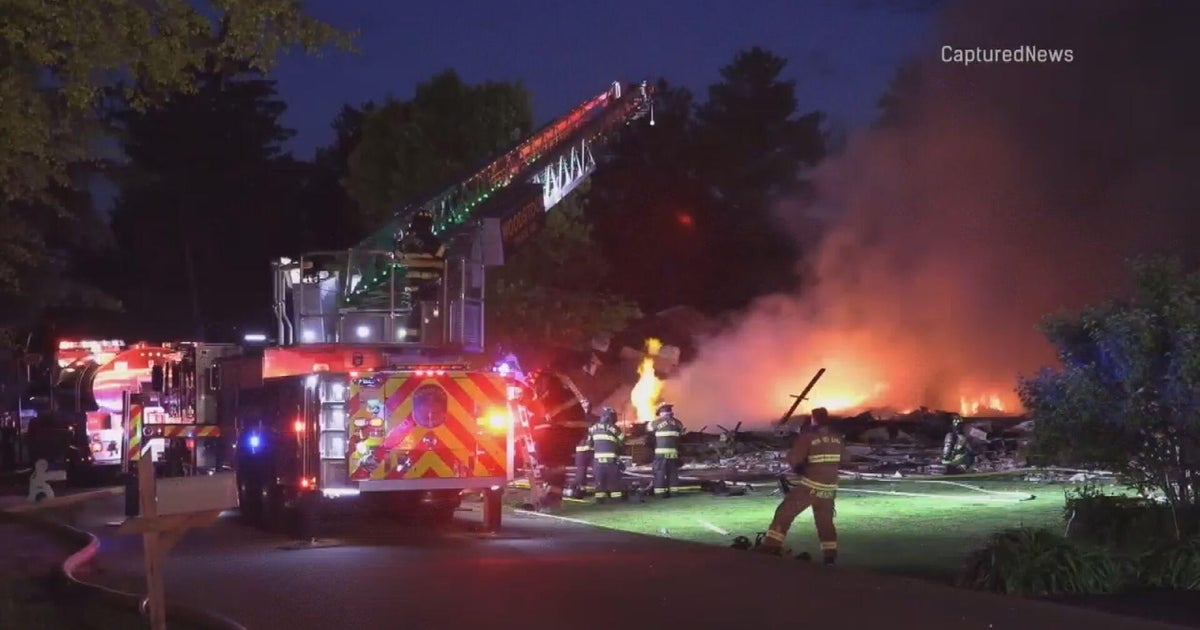
But being kept awake was hardly the only problem. The explosives' power was demonstrated by the destruction left in Geer's alley off Parnell Avenue — where her neighbor's garage, with a car inside, was burnt to a crisp.
The siding was melted right off Geers' own garage, and at least three others.
"All that damage over there is from the fire," Geers said as she showed CBS News Chicago the charred garages. "That's how high the flames went. It was so high, and so bright, and the whole thing — it was just a nightmare."
It was also an avoidable nightmare.
"The Fire Department observed a lot of fireworks remnants in the alley," said Ald. Nicole Lee (11th).
Lee surveyed the damage in her ward Monday morning, and shared an update from fire investigators.
"The speculation at this point is that someone disposed of a firework that was not extinguished," she said.
The improperly discarded firework apparently ignited a trash can, which lit up a light pole. This sent flames shooting to the nearby garages.
"It was all ablaze, and everything was orange," said Geers. "I was crying. I was so scared."
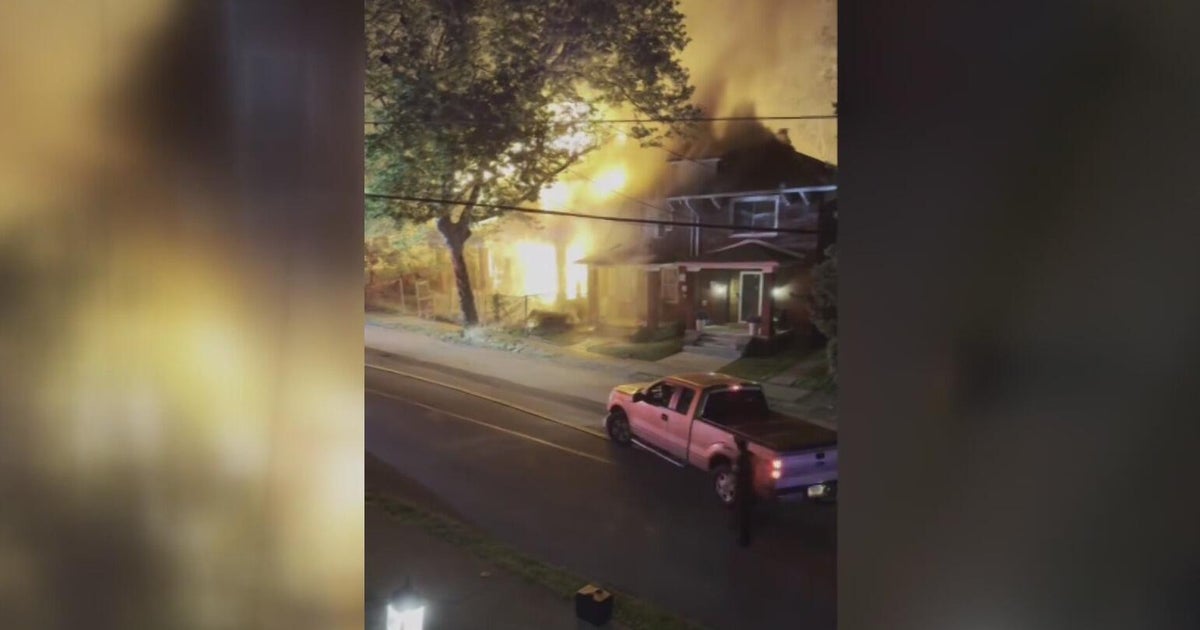
Also fearful was a River North family who shot video from their apartment on July 3 — showing what looked like embers turning into a full-blown fireworks display below them. The fireworks startled a sleeping baby.
Back in Bridgeport, Geers will have to fix both her garage and her fence. The fence was broken apart by firefighters who were trying to stop the flames from spreading to houses too.
"It was really scary," said Geers. "It was so scary, I'm telling you."
The fire in the Bridgeport alley also melted a recycling bin, and power and cable was out for more than a day.
No one was hurt.
CBS News Chicago asked the Chicago Office of Emergency Management and Communications for figures on garage fires this past holiday weekend. This figure was not available, but the office did provide a breakdown of the number of 911 calls for fireworks.
- Friday, July 4: 1,370
- Saturday, July 5: 831
- Sunday, July 6: 327
This is not much different from last year. For July 4, 2024, there were 1,496 fireworks calls.
Anyone can report illegal fireworks in their neighborhood in Chicago.
Meanwhile, United Policyholders had some advice on filing insurance claims after a fire caused by fireworks like the one in Bridgeport. Executive director Amy Bach wrote that if it is not clear who set off the fireworks, each homeowner with damage above their deductible should file their own claim under their insurance
If the damage does not exceed the policyholder's deductible, it is best for the policyholder just to eat the cost of repairs and not file a claim, Bach wrote. But in the case of the Bridgeport incident, Bach noted that melted siding would likely be a significant repair cost.
Bach wrote that one hitch could be "anti-matching" language that insurance companies put in policies to avoid paying for matching replacement siding with existing siding so a repaired garage has a uniform appearance. In 2018, a federal judge in Minnesota issued a ruling voiding such "anti-matching" exclusions.
Bach added that if the person who set off the fireworks is unknown and no identified person was negligent, it is each impacted homeowner for themselves. If an out-of-town neighbor should have brought their garbage cans inside before leaving town, that could bring some liability, but Bach noted that garbage cans are typically always out in many Chicago alleys.