"The power of the internet:" How a Chicago writer founded an international literary magazine from her bedroom
Saber-toothed tigers have been extinct for millennia, but for one Chicago writer, the name is alive with meaning.
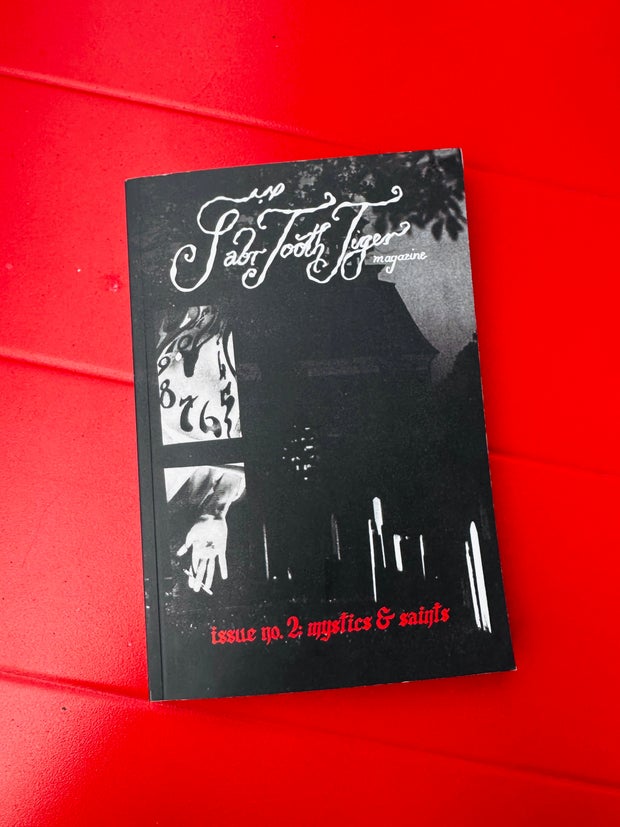
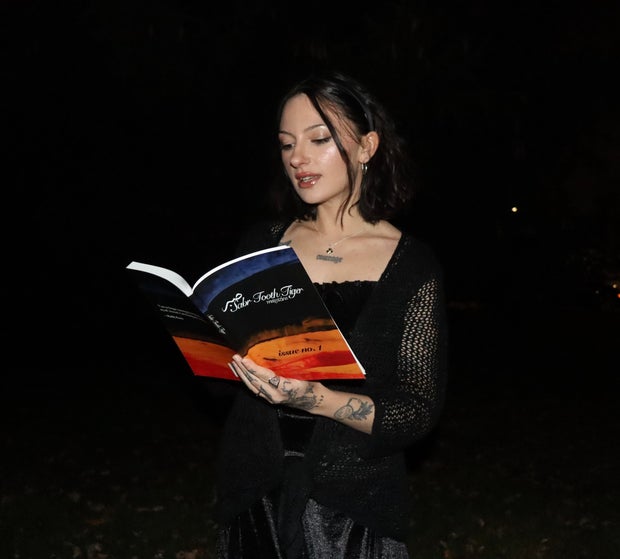
Sabr Tooth Tiger Magazine is a new Chicago-based publication with, as founder Madeline Blair describes it, "claws, teeth, and heart."
The name has a dual meaning. "The Arabic word 'sabr' means steadfastness, resilience, and patience," Blair said, which she learned as she began to explore Islam.
The 2023 University of Illinois creative writing graduate wanted the name to carry the magazine's mission.
"Saber-toothed tigers used to be a huge pinnacle of strength and ferocity, so I want that to exhibit our strength in writing," she said.
But strength and resilience aren't just themes in her magazine. They're a part of her own life. Blair had lived with long COVID for nearly a year after her first infection in 2022.
She described "strange" health issues: lung problems, blood vessel complications, "bruising so severe my arm would turn purple after blood draws," Blair said. "Doctors noted hazy opacities on my lungs, but couldn't fully explain."
Blair is one of at least 15 to 24 million Americans who studies have shown have experienced long COVID or currently live with it. It is a chronic, often debilitating condition that exists on a spectrum of severity after contracting COVID-19, according to the Centers for Disease Control and Prevention (CDC).
Her greatest fear is losing the ability to write.
"I, or any person, can be one or two infections away from never being able to write again," Blair said. "That's my livelihood. That's what I love to do the most."
Research supports her fear, showing that repeat infections can increase the risk of long COVID and cumulative health complications, according to the National Institutes of Health.
There is a growing number of COVID-cautious, more accessible nightlife spaces in Chicago, from concerts to film screenings. But Blair never found one dedicated to poetry.
"I need to do more if I want to see any change," she said. So she decided to make her own, and Sabr Tooth was born.
Her online call for submissions went worldwide — from Canada to Ghana, Norway, India, Japan, and of course, the Windy City.
"It was unbelievable," she said. "Literally because of Twitter, the power of the internet."
But Blair didn't just want a poetry magazine. She wanted to create an inclusive community around it.
"A lot of literary magazines don't really do community stuff. It's really just about the writing and getting published," Blair said. "I wanted a literary magazine that's also a community space, and to make sure that space is accessible."
Blair partners with disability justice organizations that have already laid the groundwork in Chicago for building more accessible events. Clean Air Club provides HEPA air purifiers, and Save the Night Chicago delivers high-quality masks. Blair said she feels a moral responsibility to keep it as safe as possible.
"I don't know how I first got COVID, and I don't want that to happen to anyone else," she said.
That same transparency and awareness are reflected in its publication.
The magazine's first issue included a poem called "Double Lines," written by a self-described ex-convict. The poem is about the similarities of grief he felt after catching COVID despite taking precautions, and his experience of being incarcerated.
"He likened the two lines on a [positive] test to pressing his face through two prison bars," Blair said.
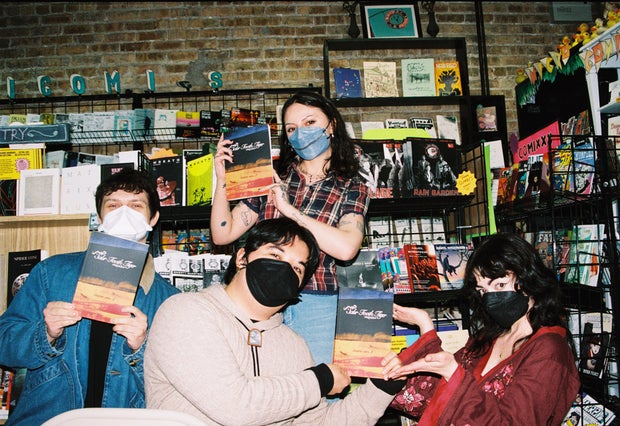
Sabr Tooth's first mask-required release party sold out on a cold December night at the Sleeping Village in Avondale. Even its events are going international as Blair hosted the second launch party in Dublin.
On Sunday, June 7, the magazine is set to hold another release event at Gallery Wrightwood in Logan Square, featuring readings, artwork, and an open mic night.
Copies of Sabr Tooth Magazine's second issue, "Mystics and Saints," will also be available.
"I want people to feel safe and comfortable and happy and healthy," Blair said. "I've never had a negative response to adding [mask requirements]. It's only ever been positive, and thank you for doing this. It makes me feel like I'm doing the right thing."