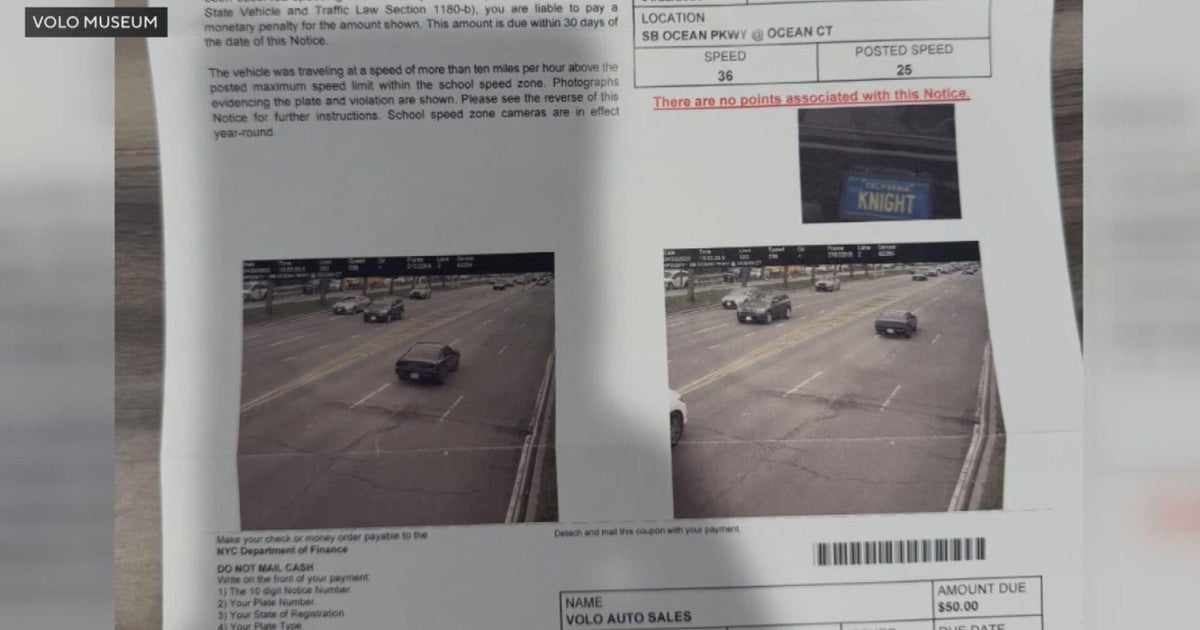
Public employees owe Chicago $23.5 million in debt for parking tickets, water bills, other fees

Even as Mayor Brandon Johnson has warned of possible mid-year city worker layoffs if revenue estimates in the budget fall short, city employees and workers at the city's sister agencies owe a mountain of outstanding debt to the city.
Records obtained through the Freedom of Information Act shows city employees and employees of the city's sister agencies owe at least $23.5 million to the city.
More than 1 in 10 Chicago Public Schools employees owe the city money, and more than 1 of every 3 CTA workers owe such debt.
As part of a heated budget battle at the end of last year, city leaders debated how aggressively Chicago should pursue billions of dollars in unpaid tickets, fees, and utility bills owed to the city by taxpayers.
But what kind of pressure is being put on the city's own employees who owe similar debts?
At least 13,000 current and former employees of the city and its sister agencies are behind on payments.
Some of the more ironic debts include employees of the Department of Water Management owing a combined $312,000 in debt to the city, including $61,000 in unpaid water bills.
Streets and Sanitation employees owe a total of $364,000 in debt to the city, with $279,000 attributable to parking fines and fees.
Chicago Department of Transportation employees owe $202,000 in total debt, most of which – $145,000 – stems from parking-related violations.
It's employees of two of the city's sister agencies who owe the most debt.
Employees of the Chicago Board of Education owe nearly $10 million, and CTA employees owe nearly $9 million.
"One of the things that they should be called upon to do is to pay up in the same way that regular taxpayers – who are paying their salaries – are being called upon to pay up," said Joe Ferguson, president of the Civic Federation, a nonpartisan government watchdog group.
Ferguson said the city has developed a reputation for not being "terribly ambitious" on debt collection, but employee debt would be some of the easiest to collect. The city not only has the authority to garnish employees' wages because of debts they owe, but can offer them payment plans available to the average taxpayer, which in some cases allows them to have some of their debt forgiven if they pay a certain amount, and don't incur any new debt for two years.
"Low-hanging fruit to the point where the fruit just fell off the trees and is ready to be picked up if you actually make the effort," he said. "No, it doesn't solve the overall problems that we have, but a lot of the solving is actually in small bits."
Ferguson and Better Government Association president David Greising said it's significant that the vast majority of the debt owed to the city by public employees comes from CTA and Board of Education employees.
"Oftentimes when somebody owes money, they kind of go underground. Well, they can't go underground if they're showing up for work," Greising said. "This would be a good way for the city to kind of show that it is serious about debt collection if they did collect from these folks."
City of Chicago Comptroller Michael Belsky said, of the $20 million owed to the city by CTA and school employees, about $7 million of that is already being collected through payment plans.
"To the extent that we can, we certainly will try to collect what's outstanding," Belsky said.
Down the road, Belsky said he might consider an intergovernmental agreement with the leadership of the CTA and the Board of Education to help collect the debt.
"I think, because they're independent, it just requires goodwill in order to cooperate," he said.
He noted that the city also offers several debt relief programs and amnesty programs. The Department of Finance has also launched a new online portal to consolidate debt information across the city.
Belsky also explained that the City of Chicago and sister agency employees are subject to routine debt checks, including during hiring, and must resolve outstanding obligations or enroll in approved payment plans before starting work.
The CTA did not provide any comment on its employees' debts, and Chicago Public Schools officials referred CBS News Chicago back to the city.
The Chicago Department of Finance provided the following statement:
Employees of the City of Chicago and its sister agencies are subject to routine debt checks conducted by the Department of Finance. As part of the hiring process, candidates must clear an indebtedness check. Outstanding debt by itself does not prevent someone from being hired, provided required obligations are resolved or placed on an approved payment plan before a start date is issued.
The City offers debt relief programs to help eligible residents manage unpaid tickets and utility bills, including Clear Path Relief (CLEAR) for parking, speeding, and red-light camera violations, and Utility Billing Relief (UBR) for unpaid water bills. Eligible participants may enter income-based payment plans with monthly payments as low as $25 or receive utility bill reductions of up to 50%. After 24 months of on-time payments, remaining eligible balances are waived under program rules. Employees of the City and its sister agencies are expected to satisfy City debt under the same standards applied to the public and may use the same debt relief programs.
More than $20 million, approximately 85% of outstanding debt, is associated with sister agencies. About $11 million of that total is currently being repaid through debt relief programs and wage garnishments. City Comptroller Michael D. Belsky is planning to engage sister-agency leadership to improve compliance and assess intergovernmental tools to strengthen collections.
The Department of Finance has also implemented technological improvements through a new portal that consolidates outstanding debt information for residents and businesses, simplifies online payments, includes an auto-pay option, and supports enrollment in debt[1]relief programs. Businesses with unresolved City debt may be restricted from receiving licenses or building permits until balances are resolved.