Sen. Raphael Warnock unveils voting rights plan calling for congressional investigations into redistricting after Supreme Court ruling

U.S. Senator from Georgia Raphael Warnock is calling for Congress to investigate whether states that redrew congressional districts after a recent U.S. Supreme Court decision illegally discriminated against Black voters, unveiling a broad proposal Wednesday aimed at expanding voting rights nationwide.
The Georgia Democrat's framework comes in response to the Supreme Court's Louisiana v. Callais decision, which Warnock argues has opened the door for lawmakers in several Southern states to redraw congressional maps in ways that weaken the political influence of Black communities.
"Across the Deep South, partisan actors have manipulated their maps to silence the voices of Black voters," Warnock said in a statement announcing the proposal. "Even this Supreme Court has made clear that intentional racial discrimination remains illegal. We owe it to voters to root out whether any illegal actions or discrimination occurred."
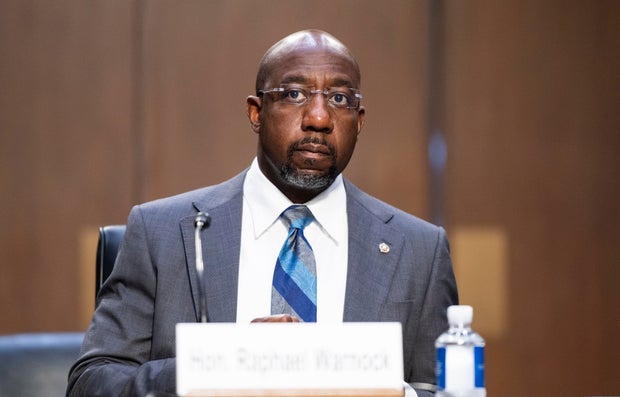
Under the proposal, Warnock wants Congress to investigate state officials who approved new congressional maps after the Callais ruling to determine whether they violated federal law by intentionally discriminating based on race.
Georgia is one of the few states that ultimately chose not to redistrict maps after Gov. Brian Kemp had called for a special session in June.
The voting rights agenda extends beyond redistricting. Warnock is also proposing:
- A nationwide ban on partisan gerrymandering.
- Measures to reduce the influence of wealthy donors in federal elections.
- Statehood for the District of Columbia and support for self-determination in U.S. territories.
- A constitutional amendment guaranteeing the right to vote.
Warnock said protecting voting rights should become a top priority if Democrats regain unified control of Congress and the White House.
"No more excuses: As soon as Democrats hold a trifecta, protecting voting rights must be at the top of the agenda," he said.
The senator also tied the health of American democracy to broader economic concerns, arguing that issues such as affordability and wealth inequality cannot be fully addressed without stronger protections for voting rights.
"Voting rights are preservative of all other rights," Warnock said. "So even as we talk about affordability, as we talk about growing wealth inequality, billionaires getting tax cuts while everyday people can barely afford their lives, all of that brokenness reflects the brokenness of the democracy itself. We have to repair it, and we have to do so with urgency."
Warnock's proposal is expected to face long odds in the Republican-controlled Congress but positions voting rights as a central issue heading into future federal elections.
The framework follows renewed national debate over congressional redistricting and the future of the Voting Rights Act after the Supreme Court's recent rulings.


