REAL ID enforcement is reshaping air travel — and leaving some Atlanta flyers scrambling

Kayla is a 28-year-old Atlanta resident originally from North Carolina who hopes to soon traverse the skies from Hartsfield-Jackson International Airport with her friends in 2026.
"It's kind of like a resolution thing- to travel more," she said with a chuckle.
But when she made plans to travel to Los Angeles for a friend's birthday in January, excitement quickly turned to uncertainty.
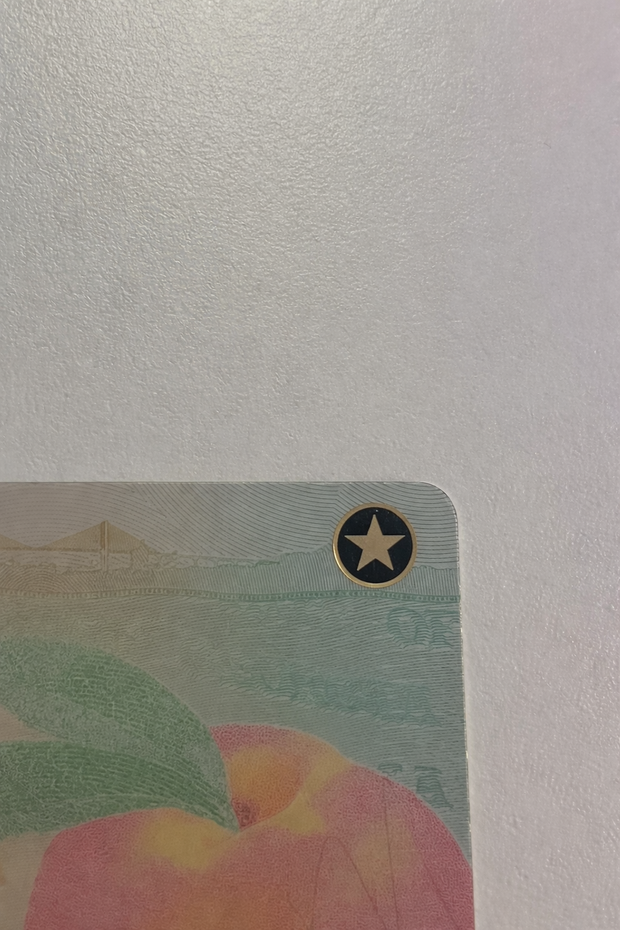
All Georgia driver's licenses and IDs issued after 2012 are REAL ID-compliant and feature a gold or black star in the upper right-hand, but her North Carolina driver's license did not have a REAL ID star, and she wasn't sure it would be accepted at the airport.
"I didn't know what I was going to do," she said. "I didn't know if I'd be able to use it, and that made me feel like I wouldn't be able to go."
And Kayla's concern reflects a growing reality for travelers nationwide as the federal government fully enforces REAL ID requirements, a shift that's now changing how Americans fly.
REAL ID: Old law, new enforcement
Despite renewed attention under the Trump administration, REAL ID is not a new law. It was passed by Congress in 2005 following recommendations from the 9/11 Commission, aiming to tighten standards for state-issued driver's licenses and identification cards.
What is new is enforcement.
After years of delays — including pandemic-era extensions — the Department of Homeland Security set May 7, 2025, as the firm deadline for full implementation. DHS also introduced a phased enforcement framework to reduce disruption at airports, while making clear the deadline would not move again.
Because the current Trump administration took office in January 2025, the public-facing ramp-up, messaging, and enforcement have happened under its watch — leading many to refer to it as a "Trump REAL ID push," even though the policy itself predates him by two decades.
What changed at airports
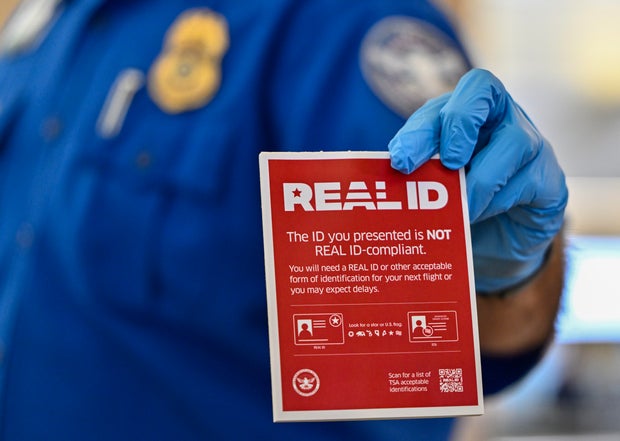
Since May 7, travelers using non-REAL ID-compliant driver's licenses can no longer rely on them to pass TSA checkpoints for domestic flights — unless they present another acceptable form of identification, such as a passport.
In practical terms, TSA's rule is now simple: Fly with a REAL ID, a passport, or expect delays, additional screening, or possibly being turned away.
Children under 18 are generally exempt from the ID requirement when traveling domestically with an adult, meaning the impact is felt most acutely by adults.
How flying feels different now
The changes are reshaping the airport experience.
Beginning February 1, 2026, TSA will introduce a new fallback option for unprepared travelers: Confirm.ID.
Under the program, passengers without a REAL ID or other acceptable identification can verify their identity for a non-refundable $45 fee, which covers a 10-day travel window — allowing for round-trip flights.
TSA expects the process to take additional time, meaning longer waits and slower screening.
For many travelers, the message is clear: REAL ID compliance is no longer optional — and noncompliance now comes with a price tag.
CBS News Atlanta reached out to TSA for comment. They responded:
"The Acceptable Form of ID (AFOID) rate at the Atlanta airport's TSA checkpoints is 93.5%. TSA Confirm ID will start on February 1, 2026.
The identification process takes an average of 10-15 minutes but could take up to 30…so we suggest those individuals who do not possess an AFOID get to the airport early (2-hours-Domestic) and (3-hours International).
A REAL ID isn't the only ID passengers can use to avoid the $45 fee. There are other acceptable forms…like a Passport."
State guidance tightening
States are also adjusting their messaging. Georgia's Department of Driver Services, for example, warns that temporary or paper licenses are not accepted by TSA for air travel, a common misconception among travelers waiting for permanent cards.
Privacy and equity concerns
Civil liberties groups have long raised concerns that REAL ID could function as a de facto national identification system, particularly as airport screening increasingly incorporates biometric and digital identity technologies.
There are also equity concerns. DHS has acknowledged that people without easy access to DMVs, stable documentation, or time off work are more likely to be caught off guard by enforcement — especially now that it has shifted from "eventually" to "now."
Airlines and airports have responded by increasing pre-trip messaging, urging flyers to check their IDs well before heading to the airport and to bring passports if they're unsure.
The bottom line
REAL ID may be a decades-old policy, but its enforcement is now reshaping air travel in tangible ways:
- May 7, 2025: Noncompliant state IDs stopped working at TSA checkpoints for domestic flights.
- Today: Travelers without proper ID face increased screening and delays.
- February 1, 2026: TSA's $45 Confirm.ID option adds a paid workaround for last-minute noncompliance.
For flyers like Kayla, the takeaway is simple: check your ID now, not at the airport.
"I just don't want my trip ruined over something I could've fixed ahead of time," she said.