Ole Miss student found dead identified as 20-year-old Atlanta man as investigation continues
A 20-year-old Atlanta man has been identified as one of two University of Mississippi students found dead this week as investigators work to learn what happened.
Authorities say the students were found Monday afternoon in different locations, one on campus and the other off campus.
On Thursday, the university identified the students as Robert Strang, a 20-year-old junior from Atlanta, and Aidan Hamilton, an 18-year-old freshman from Englewood, Colorado.
"The families have asked for privacy as they grieve," University of Mississippi officials wrote in a message to the campus community. "We offer heartfelt condolences to the families, friends and classmates of Aidan and Robert. While there are no words that can alleviate the tremendous sorrow they are experiencing, please keep them close in your thoughts and prayers during this time of immense grief."

Lafayette County investigators say they are currently treating the cases as two separate death investigations, writing in a statement that they have no confirmed evidence that the cases are connected.
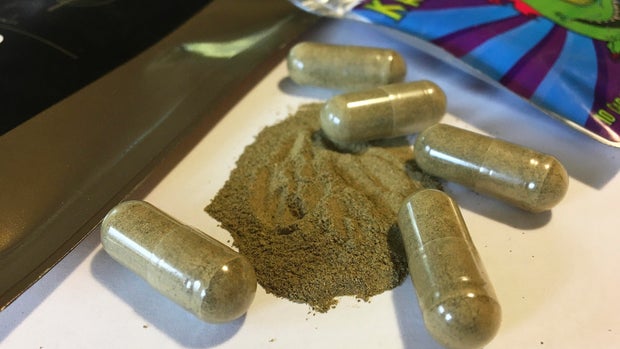
Officials did note that found packages of kratom, an herbal extract that acts as a stimulant at low doses and a sedative at high doses, were found at both scenes. While authorities said they did not have any confirmed information that kratom contributed to either death, they urged people to avoid using the substance.
Two state agencies were working to expedite toxicology reports for the students, Mississippi Gov. Tate Reeves said in a statement Wednesday.
"Mississippi is praying for the families and friends of the two Ole Miss students during this incredibly difficult time," Reeves said.
Officials have not said whether any criminal charges would be filed in connection with Strang's or Hamilton's deaths.
Closer scrutiny of a gas station product
U.S. health officials and states have increasingly scrutinized kratom over the past decade. Kratom is legal at the federal level, but some state and local governments have banned the substance and federal authorities have issued warnings about its risks.
It is used in capsules, powders and liquids that are often sold in gas stations or smoke shops. Proponents say that in its pure form, kratom is a safe, natural herbal supplement that can help manage pain, anxiety and depression and ease the effects of opioid withdrawal.
Doctors who treat addiction, however, say people can quickly become dependent on it, leading to withdrawal symptoms. The U.S. Food and Drug Administration webpage said kratom carries the risk of serious adverse effects, including liver toxicity, seizures and substance use disorder.
In rare cases, it's been associated with deaths, though kratom was usually used in combination with other drugs in those cases, and the contribution of kratom in the deaths is unclear, the agency says on its website.
Last year, the FDA recommended a ban on products with concentrated levels of 7-hydroxymitragynine, a chemical found in only trace amounts in natural kratom.
Despite some bans and restrictions, use of kratom in the U.S. has increased, according to researchers at the University of Michigan and Texas State University.
In a paper published this year, they found kratom use in the U.S. was at an all-time high, with more than 5 million people saying they had used it in their lifetime. The group includes more than 100,000 children ages 12-17.


