Metro Atlanta's Israeli and Palestinian communities reflect on Oct. 7 attack amid Gaza ceasefire talks
It's been two years since Hamas-led terrorists stormed army bases, farming communities, and an outdoor music festival in southern Israel.
Some 1,200 people—mostly civilians—including women, children, and older adults, were killed. Two hundred and fifty-one others were abducted.
Israel, in response, launched an offensive into the Gaza Strip that has razed entire cities and towns and killed tens of thousands of people.
On Monday, the Hamas-run Gaza Health Ministry said the Palestinian death toll in the Israel-Hamas war reached more than 67,000.
As the United States works to broker a ceasefire, metro Atlanta families with close ties to the region are sharing the emotional toll of a war half a world away.
Despite having different views on the politics of the war, there is a shared grief and humanity. Both are feeling the pain of being away from loved ones.
Two years on, the emotions Dov Wilker felt on the morning of Oct. 7, 2023, are still raw. He and his wife have family in Israel.
"That whole day was really a day that I'd rather not relive. We went through all of the emotions, questioning whether our friends and family were still alive, not knowing the extent of the attack and how far Hamas had penetrated into the country. Feeling of helplessness by being so far away," said Wilker, the regional director of the American Jewish Committee in Atlanta.
Since then, Wilker said his faith helped him cope with the anxiety of war.
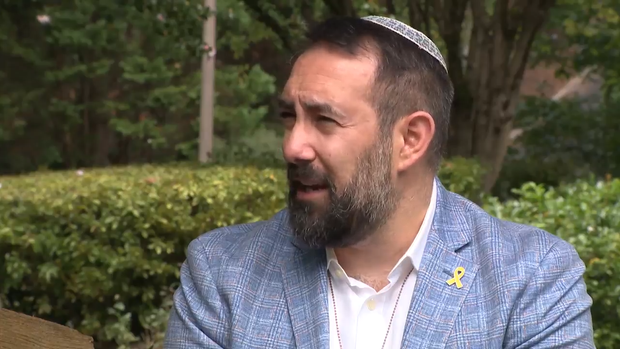
"To me, the biggest thing really is about the hostages. I think that most people have forgotten that there are still 48 hostages being held captive in Gaza," he said.
He said that the hostages weigh on him every single day.
"For us, it sort of was the complete range of emotions," said Wilker. "I gave a talk the first Saturday after Oct. 7, and I shared that I probably hadn't gone more than an hour without crying over that first week. There was a feeling of helplessness and really an overall sort of anxiety for what the future was going to bring."
Those emotions are ones that Hamza Arman understands. His family lives in the occupied West Bank.
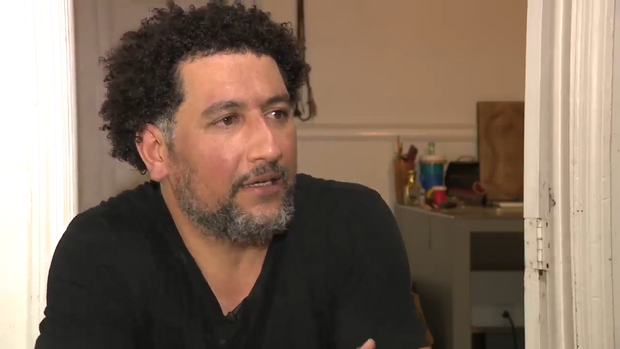
"It's disappointment, you know, it's anger, of course. Frustration, sadness, all of that. It's like a blender of so many types of emotions," Arman said. "And I don't think anybody should be watching all of this stuff. No one. You know, we shouldn't, but we have to."
Arman is an artist and has turned to his craft to work through his feelings. He's watched from Johns Creek as the war leveled the place he called home.
"It's easier to ignore because it's far away, but we don't have that luxury," he said. "Human life should not be, like, something that's taken lightly."
Atlanta Attorney Ibrahim Awad also has family in the Palestinian territory. Reflecting on the somber milestone of two years since October 7th, 2023, he said, brings him great sadness.
"What I grieve most are the children, children that have had no, say in what is going on whatsoever," Awad said.
Both men hope the future can look different.
"We need the voices of moderation to be much louder," Wilker said. "It's important that people understand the human story on the Israeli and the Jewish side, so that they can have a better sense of what our community is experiencing today."
"There's always hope is the bottom line. There is always hope, but there has to be justice," said Awad. "I think there needs to be, re-humanization of Palestinians. It's 'they have dignity. They are human beings. They have the same aspirations, loves and dreams that we have,' right. So, I think that's what's missing."
"I think we need justice first," Arman said. "We need accountability for what's going on before we can even talk about any type of, you know, peace."
The solution both men see? Conversation.
"Just be open-minded and talk to a Palestinian," Arman said. "Because this is a hard conversation to have. It's not easy, right? And put all your biases aside. Let's just put it, let's just keep it at a human level, right?"
"Members of the Jewish community are concerned. They're concerned about how we fit into society," said Wilker. "If we are to truly create a society that is accepting of one another and not just tolerating one another, then at our own pace, we need to engage in those conversations, to hear from them, to allow us to share our story, what we believe. And, just listen."
"As the younger generation, us speaking up about it, daily," said Awad. "Not normalizing what is going on, you know, not being desensitized to what is going on, being upset and being disappointed is a reflection that we still have a soul, and we still have humanity, right? It's the indifference. It's the callousness that's really the evil."
These perspectives are just a small part of a much larger conversation. There are, of course, many more layers to the emotions felt by these families, and others across metro Atlanta.