Georgia Tech students build anti-drone system designed to detect hidden threats

Two Georgia Tech students are betting on something new, turning an idea into a defense technology company with help from a university program designed to bring startups to life.
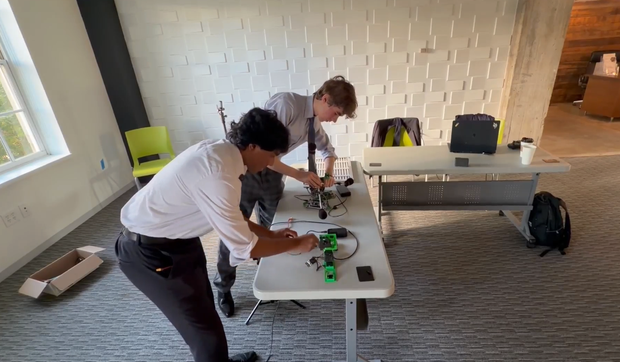
"This is the cradle. We live and die by this box," said Tejas Balaji, the company's co-founder.
After years of dreaming and months of building, the hard work is beginning to pay off for Balaji and fellow Georgia Tech student Maxwell Hadaway. The two founded Sokol Technologies, a company developing anti-drone technology and autonomous defense systems.
The founders say their system uses sound and cameras to detect drones, including those that can evade traditional detection systems such as radar.
Balaji and Hadaway hope to fill a gap by providing military and security personnel with another way to detect drones.
"We are here to fill that puzzle piece," Hadaway said.
Building the technology is only half the challenge. The other half is building the business.
"Nothing worth doing comes without effort," Balaji said.
That is where Georgia Tech's CREATE-X program comes in. The program connects student entrepreneurs with mentors, resources and investors.
"That really helped us address the problems we faced just getting this off the ground," Balaji said.
Those ideas are becoming real companies. Georgia Tech says more than 700 students have created startups through CREATE-X, with a combined valuation of more than $4.5 billion.
Margaret Weniger, the program's director, said the work begins with investing in each entrepreneur.
"For us, it's really about investing in the person," Weniger said. She said the program helps students develop professional and entrepreneurial skills while connecting them with resources to move their startups forward.
For Balaji and Hadaway, the project is about more than making money. They hope their business can save lives.
"It means guys who are out there defending us and our allies have the slightest bit of clarity when there are threats coming in that are today relatively invisible," Balaji said


