Elusive long-tailed weasels spotted in South Georgia for 1st time in decades by UGA researchers
Researchers at the University of Georgia have used a new detection technique to spot an elusive mammal in parts of the Peach State that it's never been reported seen before.
In a new study, the UGA researchers were able to locate what the university called the "mammal equivalent of a needle in a haystack," the long-tailed weasel.
The researchers say that these particular weasels are rarely detected by standard conventional survey techniques, so they used detection dogs to help them strategically place cameras.
Through the new detection technique tested in North Georgia, the researchers say they confirmed long-tailed weasels in other parts of the state, including documenting weasels for the first time in 30 years in South Georgia.
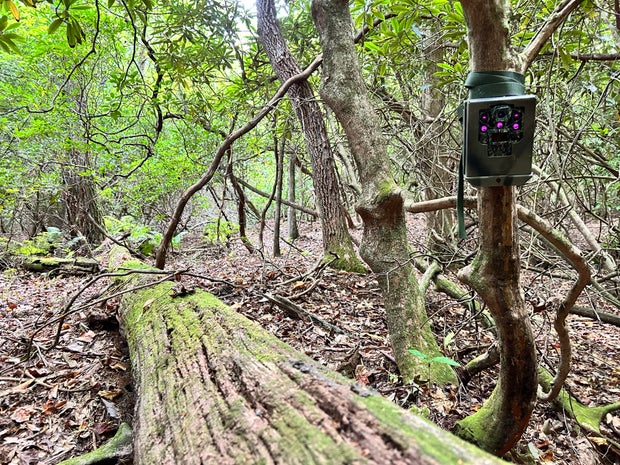
Researchers say they also learned more about how weasels live, including how they stay near water sources with dense forest cover or downed logs.
Peaks in detection happened in April and May, which researchers believe is because female members of the species are hunting and storing food to have and raise children.
"If you don't detect an animal, does that mean that they're not there or is that just absence of detection? More reliable detection methods can help us distinguish between the two," said Jenna Myers, corresponding author of the study and a doctoral candidate in UGA's Warnell School of Forestry and Natural Resources. "Weasels are so hard to find, but this also works great for coyotes, bobcats, raccoons, opossums and other small predators. So, increasing detections of difficult-to-detect species like weasels means we can use cameras to get an idea of what's going on with the entire predator community."
The technique is also 30 times more effective and 10 times cheaper than stand-alone monitoring, the study found.


