Atlanta families call for safer streets after data shows traffic deaths outpace homicides

New findings from Propel ATL reveal a sharp and troubling trend: in 2024, more people died in traffic crashes across metro Atlanta's five core counties than were killed in homicides.
According to the nonprofit's "The Human Cost of Mobility: 2024" report, 425 people died in vehicle crashes in Clayton, Cobb, DeKalb, Fulton, and Gwinnett counties last year — surpassing the region's homicide count.
Of those deaths, more than 61% occurred in predominantly Black neighborhoods, though those neighborhoods make up only about 43% of all census tracts in the region.
The report underscores the lack of safe pedestrian infrastructure in many of those communities — from missing sidewalks and crosswalks to unsafe bus stops where many transit-dependent residents rely on walking.
The heartbreaking tragedy of traffic crashes
For some families, the data reflects a heartbreaking personal tragedy. One of the last projects Allen London worked on was creating artwork for a book — a legacy his three sisters say exemplified his resilience and spirit.
"I call him the Comeback Man because he's had great challenges. And each time he would come back and do more with his life," said Qur'an Shakir, London's sister.
London had survived a traumatic brain injury in 1996, following a hit-and-run while walking on a street that lacked pedestrian protections. His family describes a harrowing hospital stay.
"He was just hooked up to life support. Nothing had been done. Barely the blood from the accident had been washed off of him. We could even see glass still in parts of his body," said his sister Aleathia Shakir.
Doctors told the family he would never walk or care for himself — but he recovered and later painted murals, volunteering his art throughout the community.
"The doctors told us that he would never walk again. He would never be able to do anything to care for himself. He would just be a vegetable. And the 'Comeback Man' came back," sister Jamilah Shakir recalled.

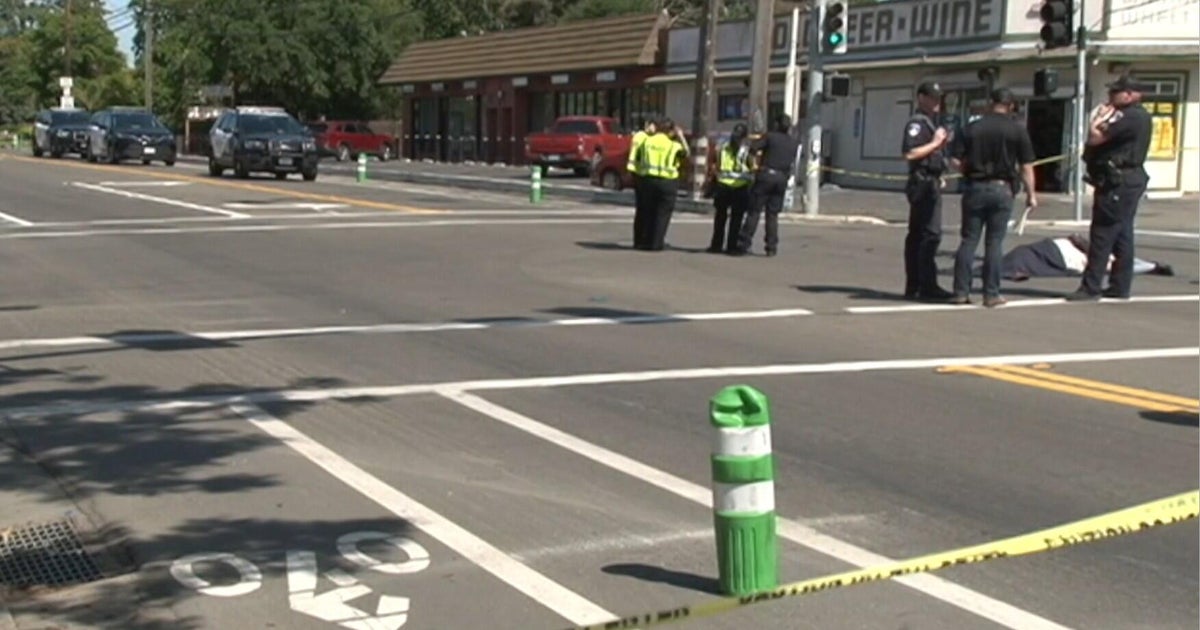
But last year, while waiting at a bus stop on Candler Road in Atlanta, London was struck and killed by a vehicle — a tragic endpoint that illustrates how unchanged street design continues to end lives.
"The impact is traumatic for us. And at the same time, it's an opportunity for us to be reminded of our civic duty," Qur'an Shakir said.
Atlanta's deadly crash numbers
The disparity is not just a matter of tragic individual stories. The "Cost of Mobility: 2024" report provides a stark, data-driven snapshot of how dangerous mobility remains, especially in communities lacking investment in safe pedestrian infrastructure. Among its findings:
- Across the five-county area, there were more than 157,000 crashes in 2024.
- Of those, 1,961 crashes involved people walking, biking, or rolling (e.g., using a wheelchair or scooter).
- There were 138 pedestrian or cyclist deaths — a 3.8% increase compared with 2023.
- In the overall region, the 20 most dangerous roadways — just 1.2% of all roads — accounted for nearly 11% of all fatal crashes.
- For context, average traffic-death rates in the five-county metro region have consistently exceeded peer cities; over the recent decade, the region averaged around 10.7 traffic deaths per 100,000 people — nearly double rates in larger, more walkable cities.
Rebecca Serna, the executive director of Propel ATL, points to design failures as root causes.
"Humans make mistakes, but those mistakes don't have to become deadly if we can design for safer streets," she said. Simple fixes — like narrowing lanes, adding clearly marked crosswalks, building protected bike lanes and safe bus-stop zones — are not costly and could dramatically reduce fatalities and serious injuries.
Serna added that in several corridors where such improvements have been made, crash rates and deaths have already declined — showing that change is possible with political will and community pressure.
For surviving family members like London's sisters, this is more than policy: it's personal, and it's a call to action to ensure no other community loses someone due to preventable design failures.