Colt Gray sentencing: State and defense make closing arguments after resting their cases

The state and defense have rested their cases Tuesday in the sentencing hearing for Apalachee High School shooter Colt Gray after the court heard new testimony about the teen's behavior while in custody and his upbringing before the 2024 attack.
The proceedings are now one step closer to a decision on whether Gray, 16, will spend the rest of his life in prison with or without the possibility of parole. Gray is expected to have an opportunity to address the court before Superior Court Judge Nicholas Primm announces his sentence.
Gray pleaded guilty Friday to 55 charges, including four counts of malice murder, in the Sept. 4, 2024, shooting that killed two teachers and two students and wounded another teacher and eight students. Because Gray was 14 at the time of the shooting, he is not eligible for the death penalty.
The defense called Steven Baker, a counselor with Georgia's Department of Juvenile Justice who worked with Gray while he was in custody.
Baker testified that Gray participated in social skills classes, life-skills programming and other counseling designed to prepare juveniles for life after detention. He described Gray as cooperative, saying he generally got along with other youths, followed rules and consistently attended psychiatric appointments.
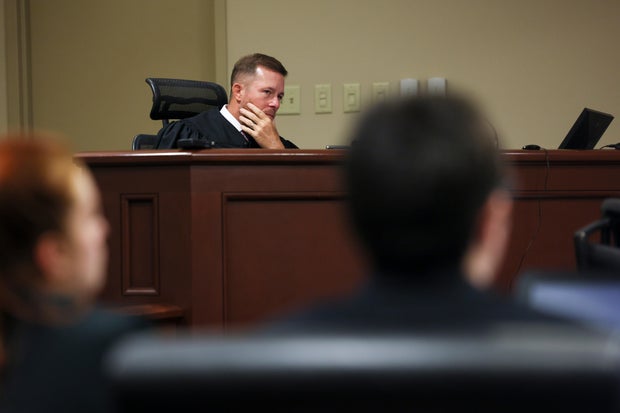
Baker also testified that Gray was transferred to another juvenile facility after his original facility lost its mental health counselor.
During cross-examination, prosecutors questioned Baker about restrictions placed on youth in detention. Baker testified that residents are prohibited from possessing offensive or violent images, including photographs of school shooters, and said personal belongings are screened by security and rooms are routinely searched. Baker said he could not recall any incident reports indicating Gray possessed prohibited materials or displayed offensive images in his room.
The defense also called Candice Broce, commissioner of Georgia's Division of Family & Children Services, who testified about the agency's history with the Gray family.
Broce said DFCS had significant concerns about the family before the shooting, including allegations of physical abuse involving Gray and concerns about his well-being. She testified that Gray struggled with sleep and engaged in self-harm while in state care, prompting medication adjustments.
Broce also testified that after Gray no longer had contact with his mother, his behavior improved. She said he slept better, ate more and appeared to become "a different child." Broce testified she believed Gray's mother was fueling his ongoing obsession with school shooters while he was 14.
During cross-examination, prosecutors highlighted prior DFCS records documenting repeated concerns about the household, including excessive school absences by Gray and his siblings, concerns about the children's hygiene, reports of domestic violence between Gray's parents, allegations of physical abuse and records indicating Gray's mother tested positive for drugs during the agency's involvement.
Earlier Tuesday, Barrow County District Attorney's Office Investigator Ashley Gilliland concluded the state's case after prosecutors played recorded jail phone calls between Gray and his mother.
In one recording, Gray can be heard saying, "Can you believe it, Mom? I took over Thomas Crooks in popularity. Take that," referring to the gunman who attempted to assassinate then-presidential candidate Donald Trump at a Pennsylvania campaign rally weeks before the Apalachee High School shooting.
In another call, Gray told his mother he was "in the big leagues," a comment prosecutors argued reflected his desire to be associated with other high-profile mass shooters.
The defense brought up multiple witnesses who discussed Colt Gray's home life, saying that a combination of financial problems and moving around quite a bit led him to having a lonely and neglected childhood.
Candice Broce, who is director of the state Division of Family & Children Services and commissioner of the Georgia Department of Human Services, testified that Gray had suffered abuse and neglect and that her agency had opened investigations into the family several years before the shooting. During her initial assessment, she tried to find health records for Gray but said he was unable to recall ever going to a doctor.
"I was really surprised by the complete absence of care," Broce said.
She testified that Gray appeared to show improvement while being treated. After Marcee Gray was barred from speaking with her son by a July 2025 no-contact order and he started taking medication, staff at the youth detention center later told Broce it "changed him essentially into a different child," she said.
Gray's grandmother, Debra Polhamus, echoes the sentiments, saying that the time in prison was beneficial for her grandchild and that his parents failed him.
"I wouldn't call them terrible but they were pretty close," she said.


