AP/The Austin American-Statesman
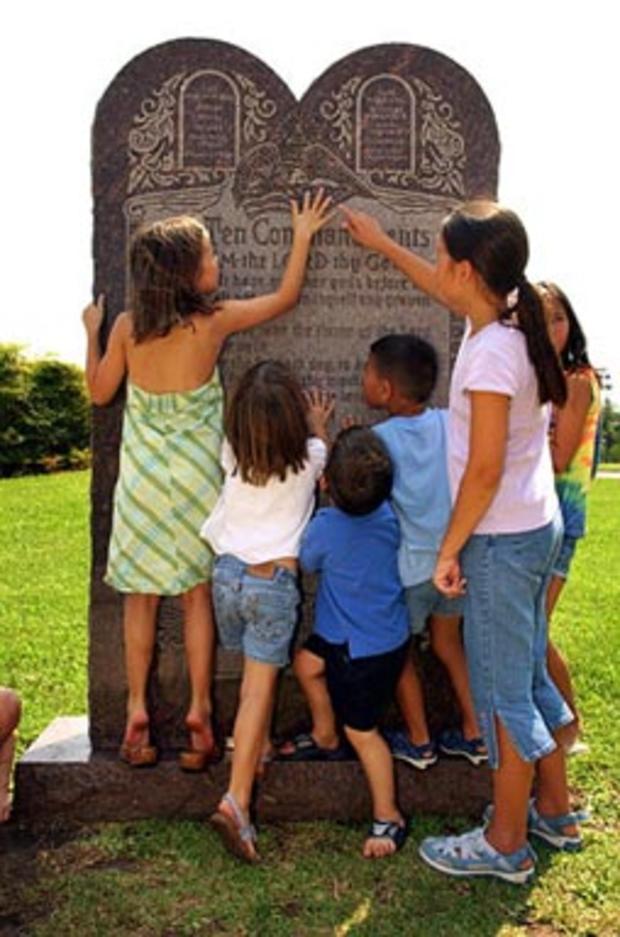
Children view the Ten Commandments monument outside the state Capitol in Austin, Texas, June 27, 2005.
Sending a mixed message, the Supreme Court ruled June 27, 2005, that the Ten Commandments may be displayed outside the Texas state Capitol but not inside Kentucky courthouses. The court said each religious exhibit on public property demands scrutiny to determine whether it amounts to a governmental promotion of religion.
AP
Veterans and supporters watch as Paul Worthington, commander of the local American Legion post, hangs a copy of the Ten Commandments the McCreary County courthouse in Whitley City, Ky., Oct. 10, 2000. McCreary County Judge Blaine Phillips said he will abide by the ruling of the Supreme Court, but he encouraged residents of the county not to give up the fight.
AP/The Independent
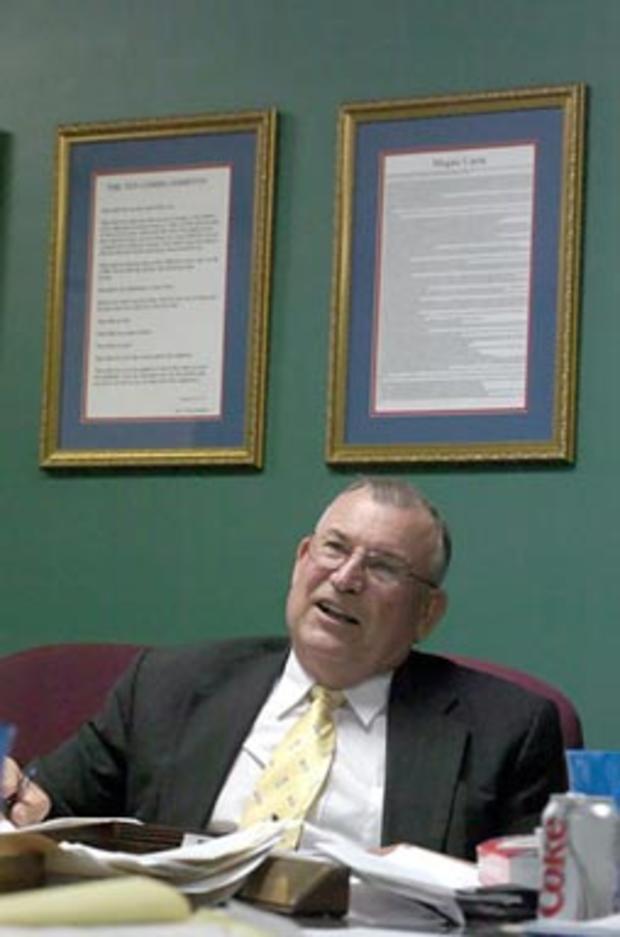
Rowan County Judge Clyde Thomas conducts a meeting under a display of the Ten Commandments, left, and the Magna Carta, June 27, 2005, in Morehead, Ky. Thomas said they would remain on the wall until the court received official word as to how the Supreme Court ruling applied.
AP
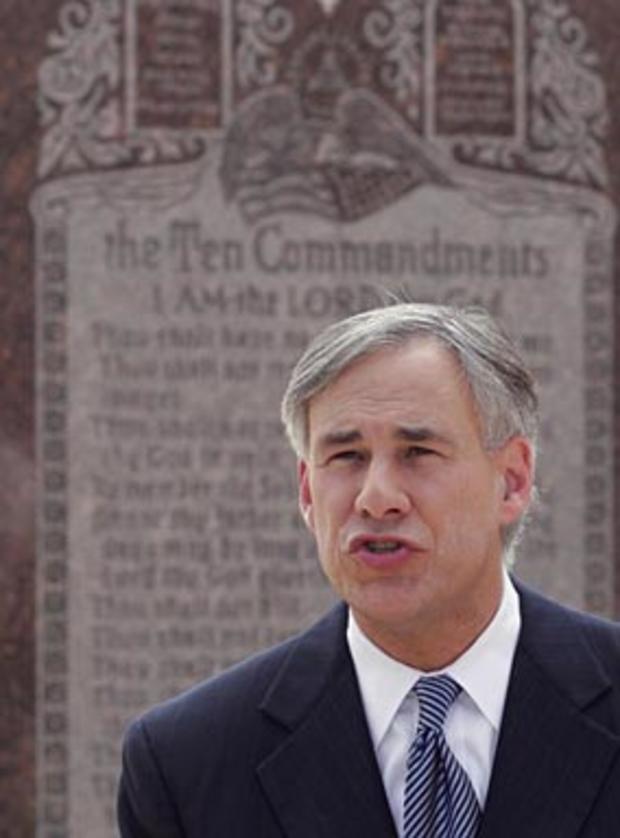
Texas Attorney General Greg Abbott hails the decision by the U.S. Supreme Court that upheld the right to display the Ten Commandments on government land, at the Capitol grounds in Austin, Texas, June 27, 2005. The top court said the 6-foot-granite monument - one of 17 historical displays on the 22-acre lot - is a legitimate tribute to the nation's legal and religious history.
AP
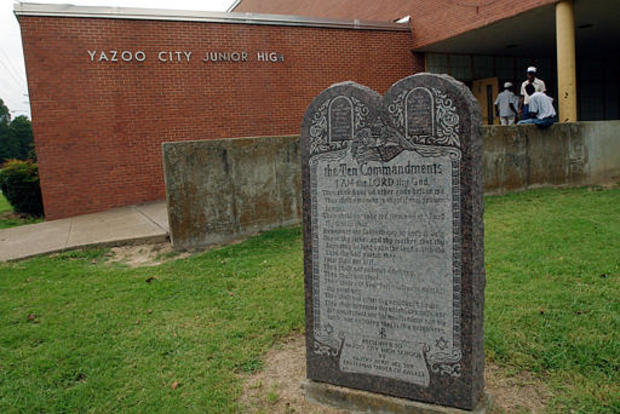
The rulings were the court's first major statement on the Ten Commandments since 1980, when justices barred their display in public schools. Pictured here is an engraved ornamental tablet bearing the Ten Commandments in front of what was the Yazoo City Junior High School, in Yazoo City, Miss., Aug. 5, 2003. The facility, which has not been used as a school for several years, is still used as a public building.
AP
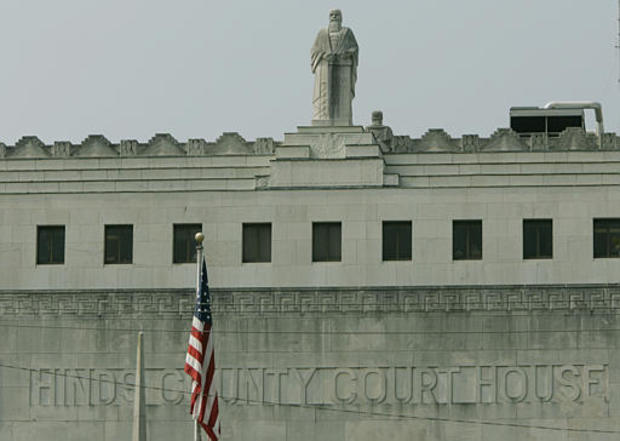
An imposing statue of Moses holding the Ten Commandments looks down from the roof of the Hinds County Courthouse in Jackson, Miss., June 27, 2005.
AP
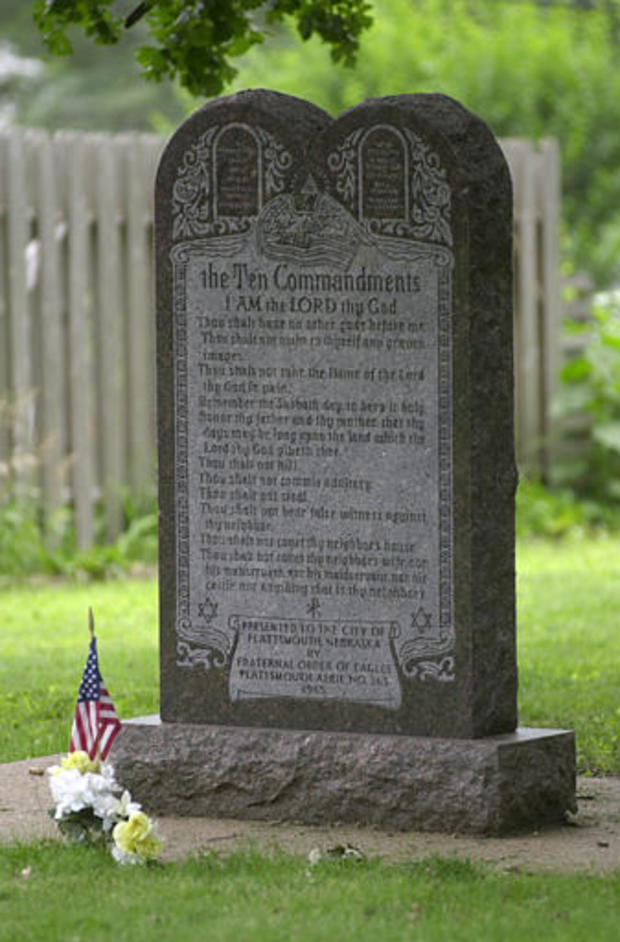
A marble monument with the Ten Commandments etched on it is seen in a Plattsmouth, Neb., park, July 11 2000. Though the monument is in a city park and not in from of the courthouse or other government building, a legal expert and opponent of its placement said the June 2005 Supreme Court rulings bolster the argument for its removal. In 2004, the 8th U.S. Circuit Court of Appeals vacated an earlier decision that the monument must go; a review of the decision was pending.
AP
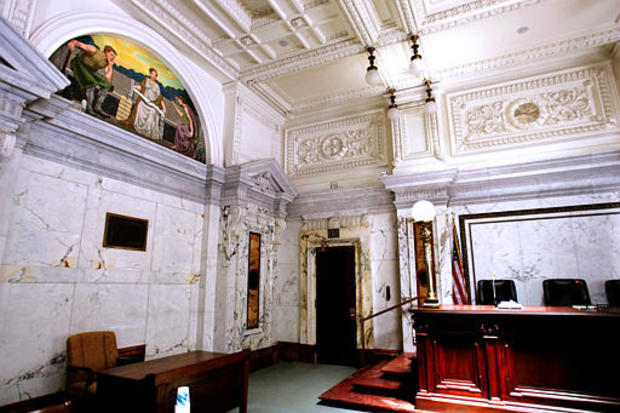
A mural showing the Ten Commandments is seen in a U.S. Circuit Court of Appeals courtroom in San Francisco, May 24, 2005. Hours after the Supreme Court ruled against displays of the Ten Commandments at two Kentucky courthouses, interests groups were split as to whether the artwork could stay.
AP
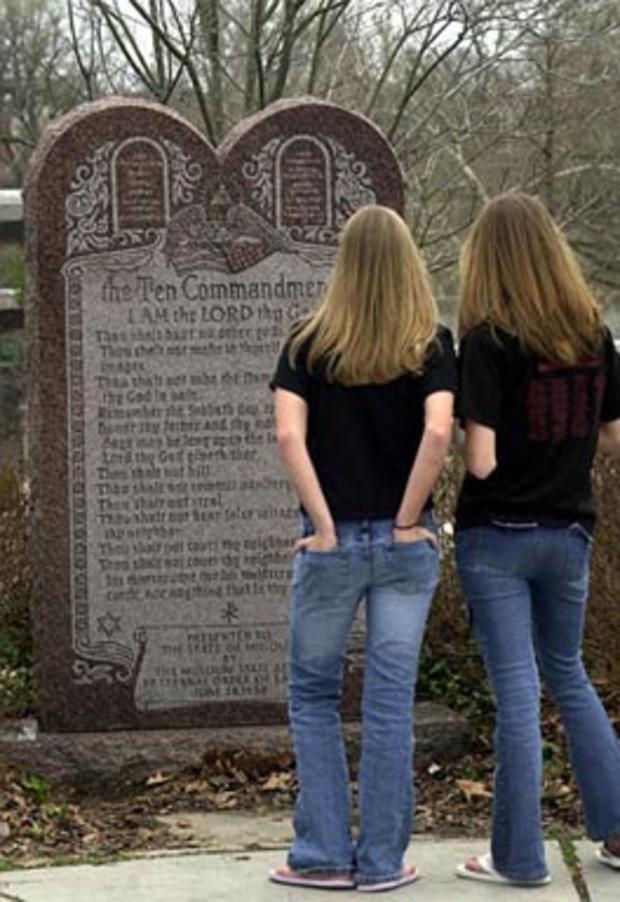
Megan Brown, left, and Shannon Fitzpatrick pause at a Ten Commandments monument, March 25, 2004, on the Missouri State Capitol grounds in Jefferson City, Mo. The Supreme Court ruling regarding a similar monument at the Texas Capitol apparently meant this one in Missouri could also stay in place.
AP
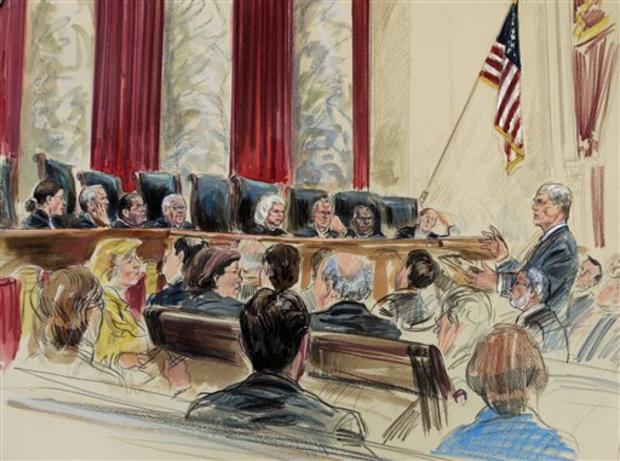
In this courtroom sketch, Matthew Staver, President and General Counsel of the Liberty Legal Counsel, presents an oral argument in McCreary County v. ACLU, the Kentucky Ten Commandments case, March 2, 2005, at the U.S. Supreme Court in Washington. The case was one of two heard by the Supreme Court in March involving Ten Commandments displays, in a courtroom boasting a wall carving of Moses holding the sacred tablets. The justices left themselves legal wiggle room, saying that some displays inside courthouses - like their own courtroom frieze - would be permissible if they're portrayed neutrally in order to honor the nation's legal history.