AP
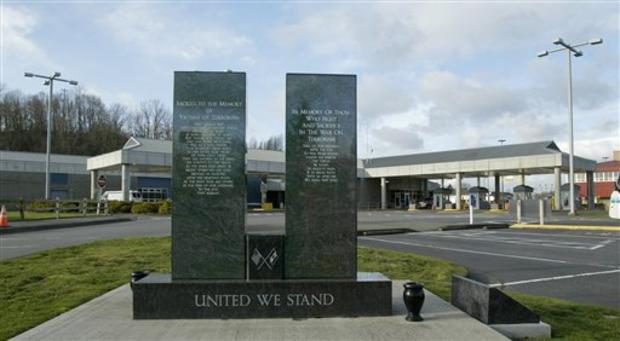
A monument to the memory of victims of terrorism and those who have lost their lives fighting against it stands near the U.S.-Canadian border checkpoint at Sumas, Wash., Jan. 31, 2005.
Debate continues about whether security has improved along America's borders since the Sept. 11 terrorist attacks. Much has been done, yet tightening rules is rarely easy.
AP
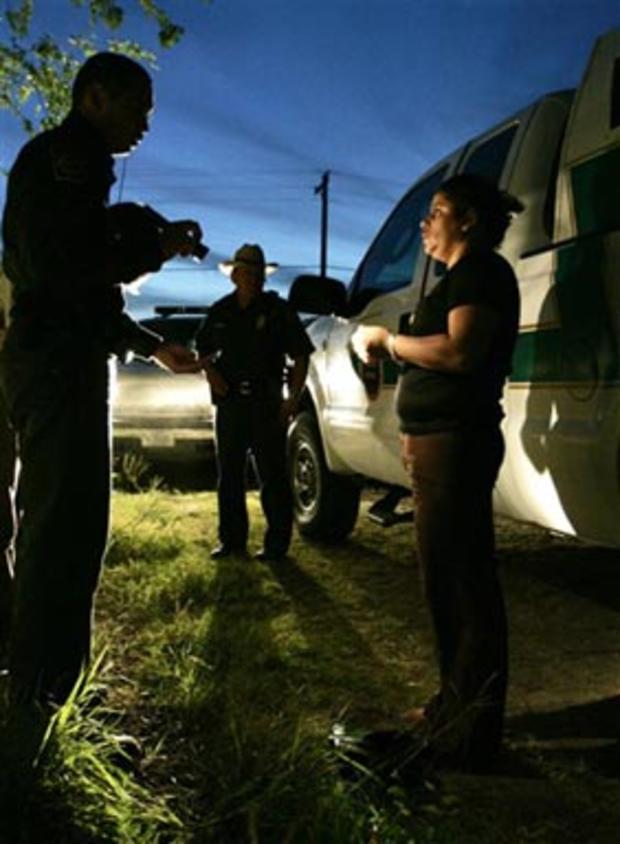
Border Patrol agents talk with an illegal immigrant after she was caught crossing the Mexican border near Harlingen, Texas, April 12, 2005. About 9,600 U.S. Border Patrol agents work the Mexican border, which stretches 1,900 miles.
AP
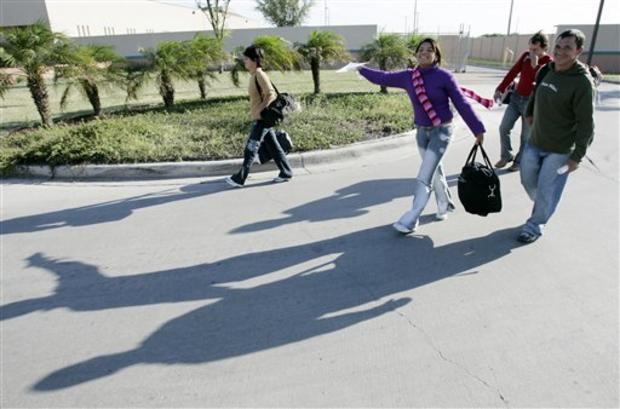
Illegal immigrants smile after being released in Harlingen, Texas, April 13, 2005. Over 100,000 undocumented migrants caught crossing into the U.S. have walked right out of custody. They are the so-called OTMs, or "Other Than Mexicans," too far from their homes to be shipped right back. With no place to hold them all, they are released with a notice to appear in court, though thousands have failed to show up.
AP
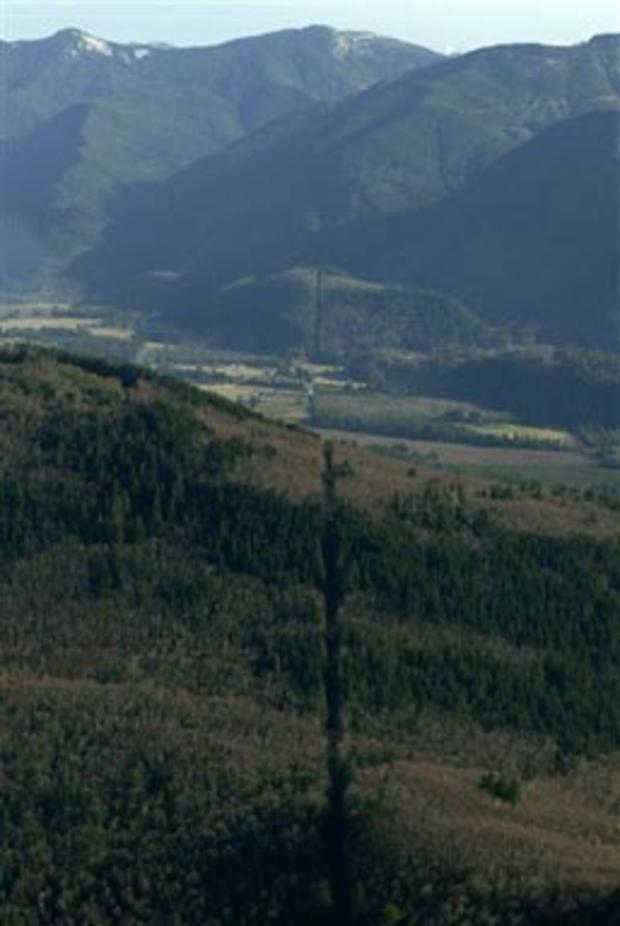
The U.S.-Canadian border is marked by a cleared line through a forest in the mountains near Sumas, Wash., and Abbotsford, British Columbia, Feb. 1, 2005.
From Blaine, Wash., at the western edge of the boundary, to Houlton, Maine, on the eastern end, the 4,000-mile northern border is a labyrinth of mountains, prairies and waterways.
AP
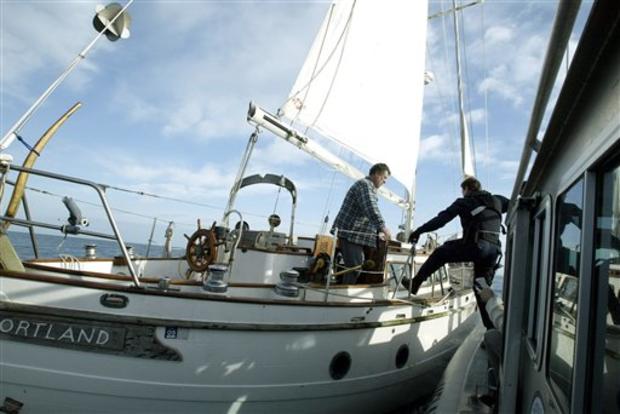
Mitch Pribble, an officer with the U.S. Customs and Border Protection Air and Marine Operations, boards a sailboat for an open water inspection near the U.S.-Canadian border, Feb. 1, 2005, near Blaine, Wash. The area's immense waterways provide abundant routes for smugglers. No problems or violations were found with this boat or its operator.
AP
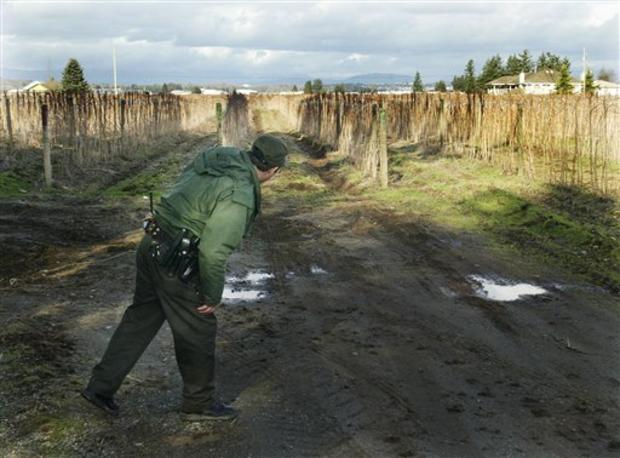
U.S. Border Patrol Agent Candido Villalobos looks at tire tracks that lead through a patch of rasberry bushes to a paved Canadian highway, on the U.S. side of the U.S.-Canadian border near Blaine, Wash., Jan. 31, 2005. In this border sector, 32 new camera surveillance systems are online and 133 agents on staff, two-and-a-half times the number prior to Sept. 11.
AP
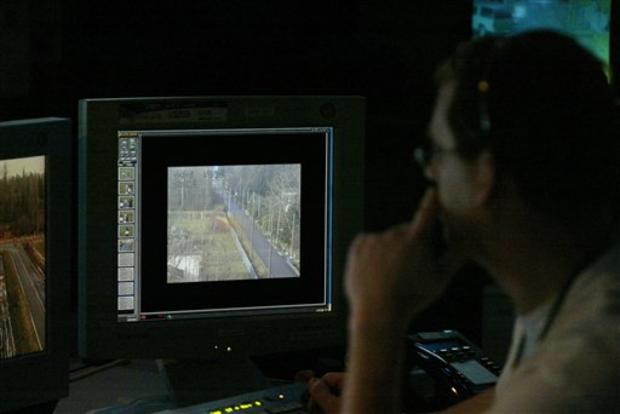
Daniel Hafich, a law enforcement communications assistant at the Blaine Sector Communications Center in Blaine, Wash., monitors a video image of a road that runs along the U.S.-Canadian border, Jan. 31, 2005. The video comes from one of 32 border monitoring cameras that can record and transmit day or night. The cameras went online two years after the Sept. 11 terror attacks.
AP
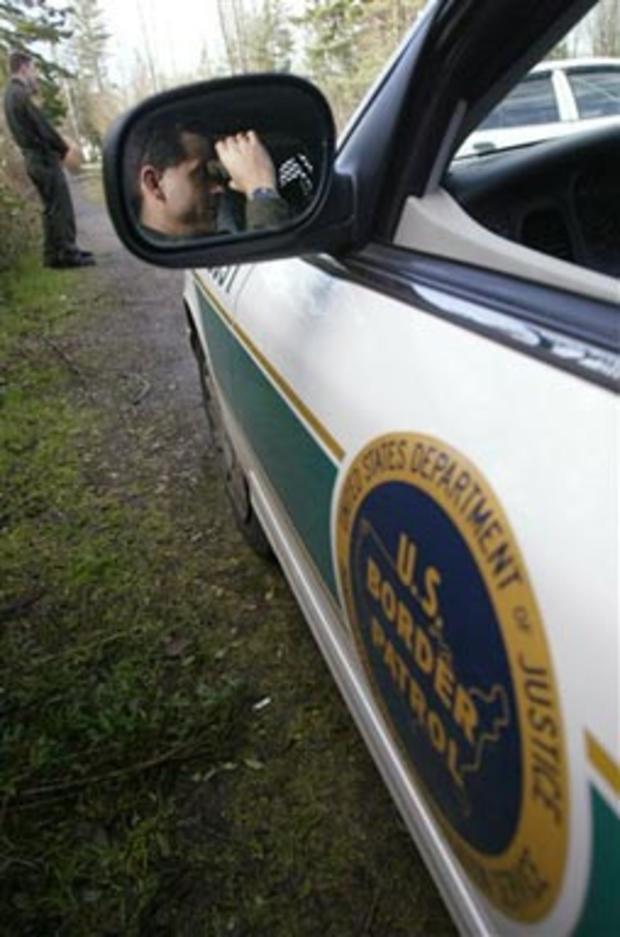
U.S. Border Patrol agent Paul Nordstrom peers through binoculars as he observes a well-known smuggling and border-jumping spot near Blaine, Wash., Jan. 31, 2005.
Canada's welcoming immigration policies and limited border enforcement have long been the subject of scrutiny from Americans, who fear a terrorist claiming refugee status could lie in wait to carry out a mission down south.
AP
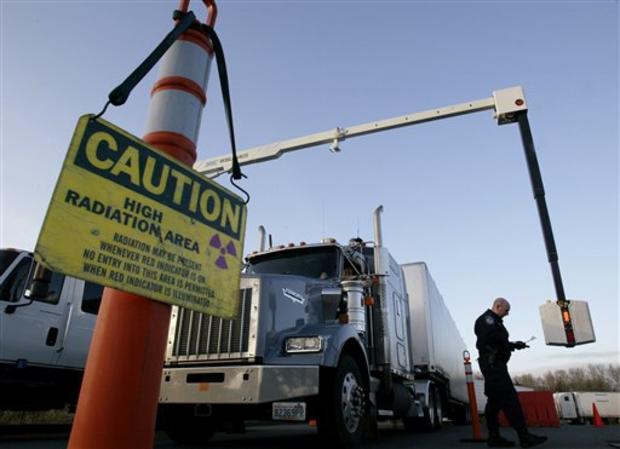
Todd Hoyt, a U.S. Customs and Border Protection officer, checks paperwork from a truck that has just been inspected by the VACIS (Vehicle and Cargo Inspection System), a powerful portable X-ray device mounted on a moving arm, right, that can quickly provide an image of what is inside, at a border crossing in Blaine, Wash., Jan. 31, 2005.
AP
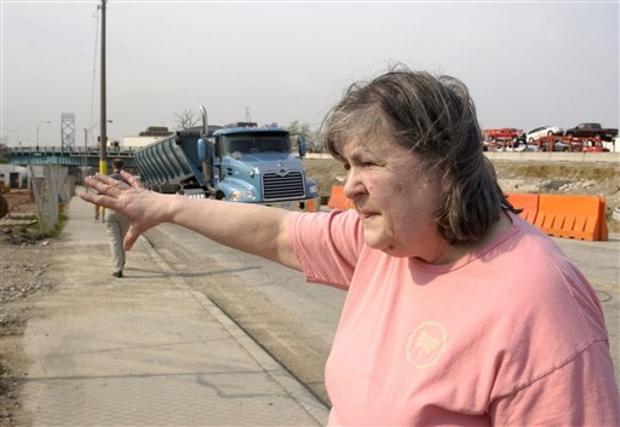
Mary Ann Cuderman talks to reporters about traffic congestion and security near the Canadian end of the Ambassador Bridge in Windsor, Ont., Canada, May 9, 2005. Cuderman's bakery overlooks the bridge, the busiest trade crossing between the U.S. and Canada. A citizens group she heads wants closer scrutiny of the thousands of trucks that cross it daily.
AP
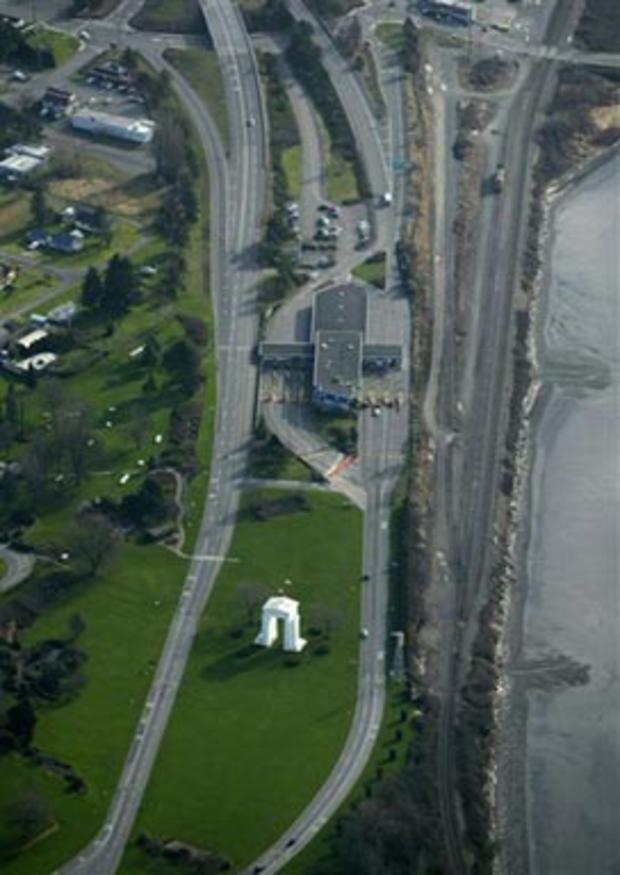
The 20-acre Peace Arch Park, bottom, and the passenger vehicle border crossing station that leads to it, straddle the U.S.-Canadian border, Feb. 1, 2005, in Blaine, Wash. Within park boundries, people can freely spend time on both Canadian and U.S. soil, as long as they go home at day's end. Many don't.