Why Montana fought to protect federal public lands and what's at stake if they were sold off

The old license plates read "Big Sky Country," but inside Montana, there's an unofficial state motto: "the last best place." Hemmed by the Plains and the Pacific Northwest, Montana is a patchwork of golden prairies and green mountains, with rivers that run through it. And the last best place suggests a warding off of the onslaught of outside forces. So this year, when Washington, D.C., politicians suggested selling off public lands for development as part of the so-called "big beautiful" budget bill, Montanans of all political stripes stood in opposition. Is this a rare example of modern bipartisanship, proof that there are some issues that can knit Americans together? Or are these frontierfolk just delaying the inevitable?
Montana's landscape beguiles as it unfolds: the kind of sheer beauty that could stop traffic, if there were traffic to stop.
The scale is hard to exaggerate. It's a state roughly the size of California with, roughly, the population of Greater Fresno — just north of one million. Montanans speak fondly of their neighbors, who might live 50 miles away.
As for the land itself, it's not mere real estate. It's there for recreation, a corridor for wildlife, it's symbolic, too: the open frontier as an emblem of freedom and possibility. It's something deeper, sacred even.
Bryan Mannix: …Like, spiritual, right? So like, some people find that in church or in other ways. And for me it's just being out where your feet are on the ground and actually connecting with this space. And then if you spend enough time in those spaces and on that landscape it's like land is kin, right? It starts to feel like--
Jon Wertheim: Land is kin?
Bryan Mannix: Yeah.
Bryan Mannix is a rancher who, along with his uncle Dave and cousin Logan, raise cattle in western Montana. They've been on this plot since 1882, when their forebears first homesteaded here. With lineage comes perspective.
Jon Wertheim: As ranchers, you guys have talked about f-- feeling like you're-- you're stewards of the land more than you're owners of the land. What's-- what's the difference?
David Mannix: It's not ours; it's just our turn.
Bryan Mannix: …you're gonna steward that land, you're gonna treat that land in a way that maybe doesn't maximize your life, but is better for multiple generations of human beings. Because this place is going to outlast all of us by a long ways.
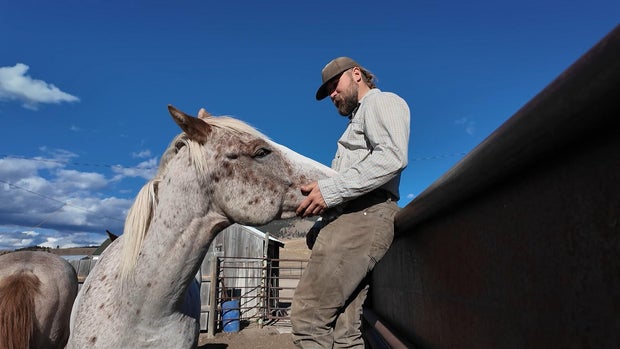
The Mannixes' operation relies on a mix of land, around 55,000 acres all told, more than three Manhattans. It's land they own; private land they lease from others; plus federal plots they pay a relatively small fee to use. So earlier this year, when members of Congress proposed the wholesale selloff of tracts of public land, the first serious effort of its kind in more than four decades, the Mannixes, well, bridled.
Bryan Mannix: Yeah, to me it's worrisome because I think that you can have a very nuanced conversation about management. But whether or not should we have these lands as public lands to me is a no brainer.
The federal government owns and manages about 640 million acres of American land, most of it in the West and Alaska. Yes, those breathtaking national parks, but also huge tracts for conservation, recreation, and money-makers like ranching, mining, and logging.
The Trump administration, including Interior Secretary Doug Burgum, have made clear: federal lands could be generating much more value, if there were better management, fewer regulations and more vigorous extraction.
But Utah Sen. Mike Lee went further this year, putting forward his measure as part of the "big, beautiful" budget bill that proposed selling public land — as much as three million acres — across the West.
Lee's proposal did not list specific parcels. But he and some Republican colleagues reasoned: selling land would address America's housing shortage and also help pay down the nation's debt.
Jon Wertheim: If the public land that you use were sold off, could you run your business?
David Mannix: The answer is yes, but it would be something less than what it is now.
Logan Mannix: If we lost our public leases we would lose a significant amount of income. So absolutely, it would impact us.
- Send a secure tip to 60 Minutes: Here's how to confidentially share information with our journalists
In Montana, selling public land was perceived as an attack on a way of life already under stress. In recent years, the moneyed class has descended – westward-ho! Exclusive enclaves like the Yellowstone Club — studded with eight-figure residencs — have been proliferating. In the last five years alone, home prices in the state have vaulted nearly 70 percent. So much private land is being sold and developed. Construction, sprawl, for sale signs — they're everywhere: in Big Sky; in Bozeman — Bos Angeles, they call it; in the remote Ruby Valley…
Donna McDonald: When we all come together…
Which is where we met Donna McDonald, a hunting and fishing guide; John Helle, a sheep rancher; Chris Edgington, a fly fisherman; and river health advocate Emily Cleveland, a conservationist. They come from across the state and across the political spectrum. They find common cause in a devotion to public lands.
Jon Wertheim: Could you run your business if the public lands were sold off?
Donna McDonald: No. There p-- would not be a business to run.
John Helle: From the ranching community to the guiding community to-- the wildlife that-- the hunters and the anglers use, spend a lotta time on-- on public lands.
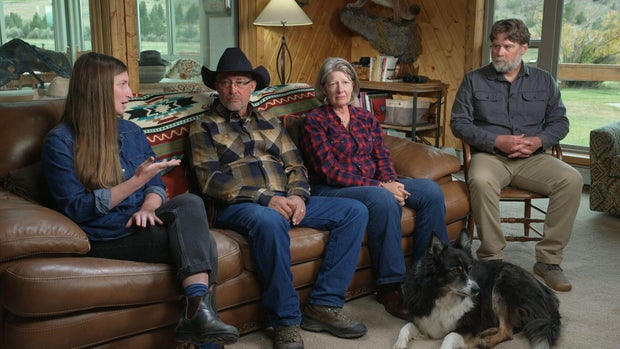
In some states, the vast majority of the territory is federally owned. Montana is about 30 percent. How did we get here? As the nation expanded in the 1800s — and as Native Americans were forcefully removed — some land was settled by homesteaders or sold to industrialists. But much fell to the federal government.
Donna McDonald: Further out that way… Good work. Good work.
McDonald, who grew up in this valley, makes a living taking guests out on the private and public lands that surround her property. She invited us to do some fishing.
Jon Wertheim: How l-- how long have you been doin' this?
Donna McDonald: I can't remember not doin' it, Jon.
Jon Wertheim: You're out on the river. It's--
Donna McDonald: You know--
Jon Wertheim: --a nice day. You're in nature.
Donna McDonald: Right. And it's worth saving.
Preservation is often, literally and figuratively, a grassroots endeavor.
Donna, John, Chris and Emily sit on the Ruby Valley Strategic Alliance, one of many local land management groups across the state and the West.
At a time of hyper-polarization, these folks — the Birkenstock crowd and the cowboy boot crowd—do something radical: they respect their differences, and get along.
Donna McDonald: Well, it's kinda like when neighbors get together to build a fence. We can stand there and argue about where to put the post or we can roll up our sleeves and build the fence together.
Jon Wertheim: Little glimpse into Montana?
Donna McDonald: Yep.
John Helle: Well I think we finally came to realize that we all had kinda the same goals in mind you know, save the-- some of the last best places here.
Donna McDonald: And now we have more tree growth…
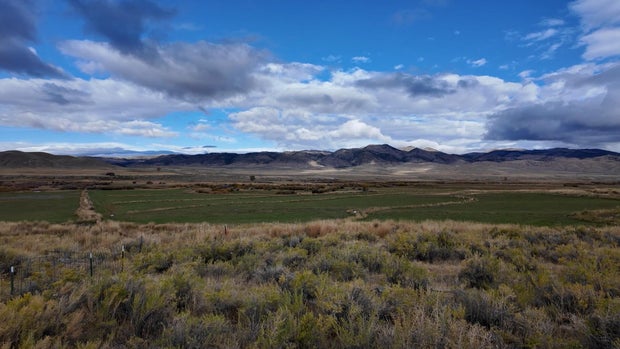
In response to the land sale proposal, hunters and hikers locked arms. 'Not one acre' became a rallying cry. The Ruby Valley Group spoke out publicly, and lobbied Montana's two senators and two congressmen, all Republicans.
Donna McDonald: That was an easy one to all come to agreement on…
Jon Wertheim: Not-- not a lot of dissent.
Donna McDonald: No, no. We all realize the importance of the public land. And once it's gone, it's gone forever.
Jon Wertheim: I suspect there's some people saying, "Wait a second. You've got all this land. What's wrong with converting that into housing and using it in other ways?"
Emily Cleveland: Yeah, I think a lot of our public lands aren't-- really close to infrastructure that would be necessary for wide-scale housing developments. And selling public lands to generate income and revenue is just-- is just not something that makes sense.
Chris Edgington: I think it's a slippery slope.
Donna McDonald: It is.
Jon Wertheim: What do you mean?
Chris Edgington: I mean-- if we sell this chunk or that chunk, I mean, where d-- where would it end?
Which is precisely the case they made to their representatives, like Ryan Zinke.
Jon Wertheim: We kept hearing you-- you have zero political future in this state unless you oppose the-- the sale of public lands.
Rep. Ryan Zinke: I think Montanans are very passionate about the public lands, because we live out here.
Jon Wertheim: You heard pretty clear on this one.
Rep. Ryan Zinke: I think it's absolutely crystal clear.
Zinke grew up in Whitefish, Montana and served as a secretary of the interior during President Trump's first term. Now, he represents western Montana in the house. He called the land sale proposal his San Juan Hill, a nod to Teddy Roosevelt, noted conservationist… Rough translation: over my dead body.
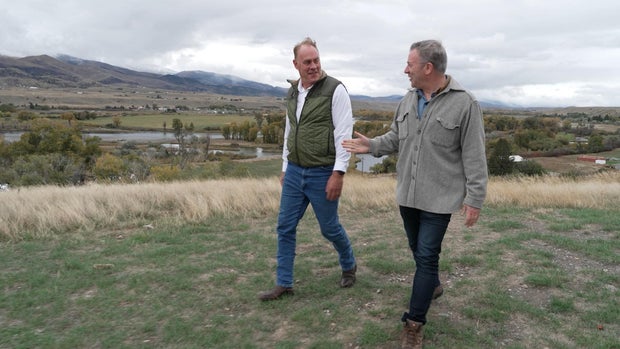
Rep. Ryan Zinke: Public lands is not, to me, on a balance sheet. Public lands is our inheritance- of this great nation. And we're blessed with it. There is no other country on the face of the planet that has the public land experience that we do.
On this issue, Zinke's no ideologue. On a case-by-case basis, within the existing laws, he says he's open to rethinking public land use. What he does oppose: wholesale selloff.
Rep. Ryan Zinke: You could sell the entirety of the federal estate, it's not gonna get you out of debt.
Rep. Ryan Zinke: If you have a hotel, and the hotel is being mismanaged, you don't sell the hotel. You get new management. And then if you sell the public land, you sell it all, right? Have you changed why you're in debt? No, you've just sold your assets.
Jon Wertheim: People supporting this say, "What's the harm of unlocking some of this so we can build affordable housing?" Why-- why are those people wrong?
Rep. Ryan Zinke: If we wanna discuss, you know, reality-- you know, selling all our public land for housing one it doesn't-- won't solve the housing crisis. And secondly-- you know, public land itself… if it's managed well, you should be able to bring timber off of it. You should be able to graze. Energy-- oil, coal, gas, all-- a lot of that comes from our public lands.
Zinke was instrumental in getting the land sale proposal killed in the House. He then coordinated with his colleagues in the Senate, where Mike Lee had crafted a special carve out exempting Montana. But that didn't win over the state's delegation. The measure was abandoned.
In a statement to "60 Minutes," Sen. Lee said in part, quote, "the federal government controls more land than it can manage, hurting the growth and prosperity of American families and their communities."
Perhaps more than any other state, Montana stood in the breach, thwarting the sale efforts, though there is widespread expectation public land sales will come up again in Congress.
Jon Wertheim: This is an era where party unity in-- in the Republican party is strong. You-- you went against the grain here. You stuck your neck out.
Rep. Ryan Zinke: It's a red, white, and blue issue. It's not a Democrat or Republican issue. This is an American issue. And once you sell land, you're not gonna get it back.
On this point in particular, Zinke has seen his state transformed.
Rep. Ryan Zinke: Well, behind us is the Yellowstone River and below us, the Yellowstone dumps into the Missouri.
Jon Wertheim: What's changed?
Rep. Ryan Zinke: When I grew up, you know, there were less people. You see all these houses in there. There wasn't maybe one or two houses in this whole valley along the river.
Zinke knows, changes to land bring changes to culture. Locals complain they no longer know their neighbors. No trespassing signs suddenly abound. Montanans, like the Mannixes, are tracking the public lands issue closely. If an unsentimental government gets in on the sale, there really goes the neighborhood.
Logan Mannix: Often what we see is the most valuable thing to do with this land probably forever now will be to chop it up, and sell it in small chunks for people to have a little piece of paradise. And I think that's gonna be true whether it's a ranch that sells or public land that sells.
To borrow a phrase, this land is your land; this land is my land … people here just hope it stays that way.
Produced by David M. Levine. Associate producers, Kate Morris and Meghan Lisson. Broadcast associate, Mimi Lamarre. Edited by Sean Kelly.