North Korea launches ballistic missiles hours before South Korean president's trip to China
North Korea launched multiple ballistic missiles toward its eastern waters Sunday, according to South Korean officials. The launches took place just hours before South Korea's president left for China for talks expected to cover North Korea's nuclear program.
South Korea's Joint Chiefs of Staff said in a statement it detected several ballistic missile launches from North Korea's capital region around 7:50 a.m. It stated that the missiles flew approximately 560 miles and that South Korean and U.S. authorities were analyzing the details of the launches.
The U.S. Indo-Pacific Command, a branch of the U.S. Armed Forces operating in that region, stated that there was no "immediate threat to U.S. personnel or territory, or to our allies."
"We are aware of the missile launches and are consulting closely with our allies and partners," the command said in a statement. "Based on current assessments, this event does not pose an immediate threat to U.S. personnel or territory, or to our allies. The United States remains committed to the defense of the U.S. homeland and our allies in the region."
Meanwhile, South Korea's Defense Ministry noted the launches violated U.N. Security Council resolutions that ban any ballistic activities by North Korea. It urged North Korea to cease provocative actions immediately and respond to South Korea's push to restart talks and restore peace on the Korean Peninsula.
Japanese Defense Minister Shinjiro Koizumi said that at least two missile launches by North Korea have been confirmed. "They are a serious problem, threatening the peace and security of our nation, the region and the world," Koizumi told reporters.
The launches were the latest weapons demonstration by North Korea in recent weeks. Experts say North Korea is aiming to show off or review its achievements in the defense sector ahead of its upcoming ruling party congress, the first of its kind in five years. Observers are watching the Workers Party congress to see whether North Korea will set a new policy on the U.S. and resume long-stalled talks between the two countries.
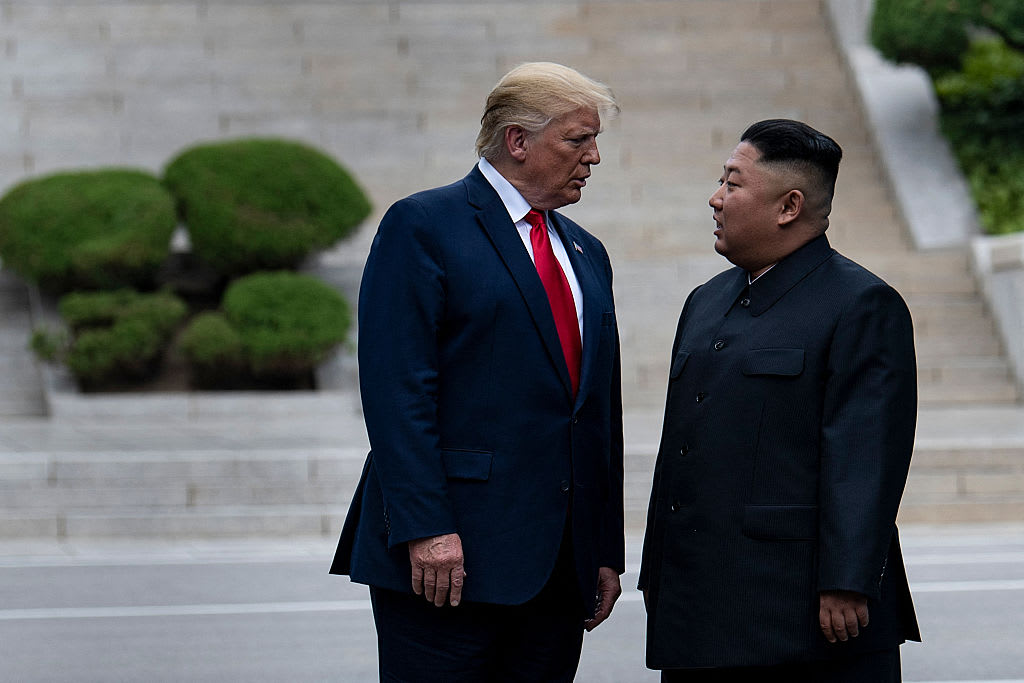
North Korea has been focusing on testing activities to enlarge its nuclear arsenal since its leader Kim Jong Un's summitry with U.S. President Donald Trump fell apart in 2019. Kim has also boosted his diplomatic credentials by aligning with Russia over its war in Ukraine and tightening relations with China. Observers say Kim would believe his leverage has sharply increased to wrest concessions from Trump if they sit down for talks again.
North Korea hasn't announced when it will hold the congress, but South Korea's spy service said it will likely occur in January or February.
Sunday's launches also came hours before South Korean President Lee Jae Myung departed for China for a summit with President Xi Jinping. During the four-day trip, Lee's office said he would request China, North Korea's major ally and biggest trading partner, to take "a constructive role" in efforts to promote peace on the Korean Peninsula.
South Korea and the U.S. have long asked China to exercise its influence on North Korea to persuade it to return to talks or give up its nuclear program. But there are questions on how big of a leverage China has on its socialist neighbor. China, together with Russia, has also repeatedly blocked the U.S. and others' attempts to toughen economic sanctions on North Korea in recent years.
Later Sunday, South Korea convened an emergency national security council meeting to discuss the North Korean missile launches. The council reported details of the launches and unspecified South Korean steps to Lee, according to the presidential office.
The launches followed Saturday's dramatic U.S. military operation that ousted Venezuelan leader Nicolás Maduro from power and brought him to the U.S. to face narco-terrorism conspiracy charges. It represented America's most assertive action to achieve regime change in a country since the nation's 2003 invasion of Iraq.
North Korea's Foreign Ministry on Sunday slammed the U.S. operation, saying it again shows "the rogue and brutal nature of the U.S." A ministry statement said it denounces the U.S. act as "the most serious form of encroachment of sovereignty."
"Kim Jong Un may feel vindicated about his efforts to build a nuclear deterrent, as he likely did after Trump's strikes on Iran," said Leif-Eric Easley, professor of international studies at Ewha Womans University in Seoul. "However, leaders of hostile regimes will probably live with greater paranoia after seeing how quickly Maduro was extracted from his country to stand trial in the United States."
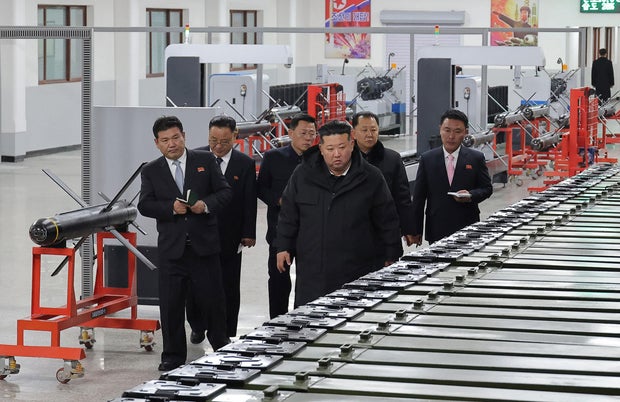
The official Korean Central News Agency said Sunday Kim visited a weapons factory on Saturday to review multipurpose precision guided weapons produced there. KCNA cited Kim as ordering officials to expand the current production capacity by about 2.5 times.
Last Sunday, North Korea test-fired what it called long-range strategic cruise missiles. On Dec. 25, North Korea released photos showing apparent progress in the construction of its first nuclear-powered submarine.