NASA delays Artemis mission to moon because of extreme cold at the launch site
Bracing for a weekend cold snap in Florida, NASA delayed a dress rehearsal fueling test for its Artemis II moon rocket, moving it from Saturday to Monday, and pushed the long-awaited launch back at least two days to no earlier than 11:20 p.m. EST on Feb. 8.
At the same time, NASA is gearing up to launch a fresh crew to the International Space Station to replace the four Crew 11 fliers who cut their mission short and returned to Earth on Jan. 15 due to a medical issue with an unidentified crew member.
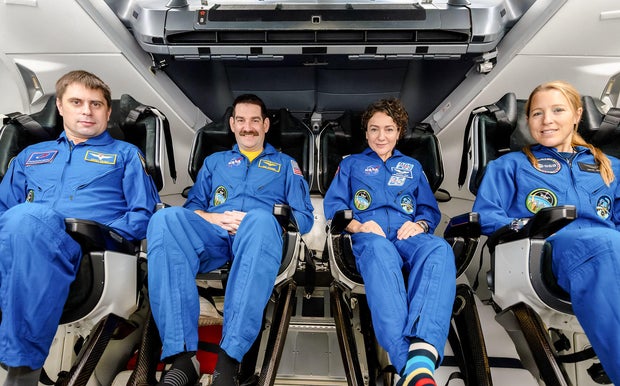
Crew 12, launching atop a SpaceX Falcon 9 rocket, will be ready to blast off as early as Feb. 11. But if the Artemis II mission gets off on Feb. 8 as NASA hopes, Crew 12 commander Jessica Meir, pilot Jack Hathaway, European Space Agency astronaut Sophie Adenot and cosmonaut Andrey Fedaev will stand down until after the Artemis II crew returns to Earth. In that scenario, Crew 12 would launch around Feb. 19.
If Artemis II takes off on Feb. 10 or 11, the only other opportunities left in the February launch period, then Crew 12 could take off 11 days later. If Artemis II runs into major problems and slips to the next launch period in March, Crew 12 could launch as early as Feb. 13, depending on when the moon mission is called off.
But there are no scenarios where Artemis II and Crew 12 would be in space at the same time unless there's an emergency aboard the space station that requires a quick launch for Meir and her crewmates. Otherwise, the moon mission has priority.
The long-awaited Artemis II mission will use NASA's huge Space Launch System rocket to boost three NASA astronauts and a Canadian crewmate on a trip around the moon and back, the first such flight since the final Apollo mission 54 years ago. The upcoming mission will set the stage for another crew to attempt a landing near the moon's south pole in 2028.
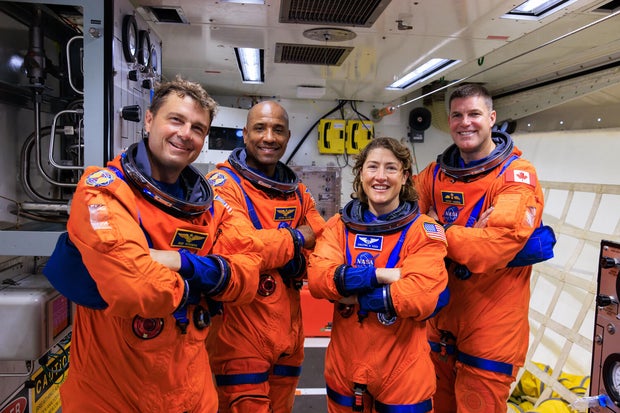
Artemis II commander Reid Wiseman, Victor Glover, Christina Koch and Canadian astronaut Jeremy Hansen had planned to blast off next Friday, assuming a leak-free fueling test Saturday.
But with the test delay and the time needed for NASA to analyze the results, the agency opted to give up launch opportunities on Feb. 6 and 7. That leaves just three opportunities in the February launch period: Feb. 8, 10 and 11. If the rocket is not off the ground by Feb. 11, the flight will slip to early March.
The "wet dress" rehearsal countdown now will start at 8 p.m. EST Saturday. Fueling will begin around 11 a.m. Monday, leading to the opening of a simulated launch window at 9 p.m. that night.
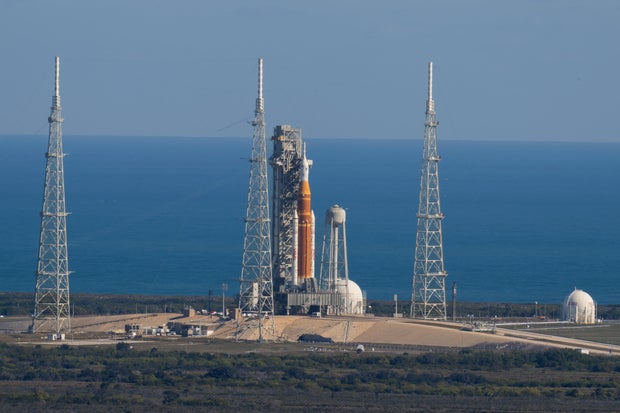
Engineers plan to load the Space Launch System rocket with more than 750,000 gallons of supercold hydrogen and liquid oxygen to work through loading procedures and to make sure the rocket's tanks, valves, propellant plumbing and umbilicals attached to the side of the booster are leak-free and good to go.
Launch Director Charlie Blackwell-Thompson and her team plan to work through a variety of recycle options to rehearse procedures for dealing with unexpected problems.
The Artemis II SLS will be making the program's second flight. Before its unpiloted maiden flight in 2022, multiple fueling tests were required to address a variety of propellant leaks and other issues. The Artemis II rocket features upgrades and improvements to eliminate those issues.
"Artemis I was the test flight, and we learned a lot during that campaign, getting to launch," said Blackwell-Thompson. "And the things that we learned relative to how to go load this vehicle, how to load LOX (liquid oxygen), how to load hydrogen, have all been rolled into the way in which we intend to load the Artemis II vehicle.
"I believe that we'll be ready for wet dress again. We'll see. This is our second hardware build for the core stage. So, you know, we'll see how it performs."