Gordon Brown, You've Lost It
This news analysis was written by CBSNews.com's Tucker Reals in London.
British Prime Minister Gordon Brown lost Thursday night's final election debate, and his disturbing performance was likely the dying breath of his Labour Party's campaign to cling to the power it's held for 13 years. After insulting life-long Labour voter Gillian Duffy (and millions of like-minded voters) a day earlier in the British political gaffe of the year, Brown proceeded to present himself onstage as the menacing, dour Scotsman his own henchmen have no doubt come to fear. He seemed, at best, nervous. In his worst moments, Brown's dire warnings of economic collapse should the government be entrusted to anyone but himself made him come across as angry, bitter and vaguely frightening. Conservative opponent David Cameron repeated his own party's refrain, that Brown was fear-mongering. Thursday night, that is exactly how Brown came across. Cameron won the debate by giving his best-yet television performance. Nick Clegg, the Liberal Democrat leader who rocketed to national prominence in the first of the debates, held his own and will enter election week as a strong contender -- a first for the Lib Dems since their creation in the 1990s. More on Britain's Election:
U.K.'s Gordon Brown Calls Supporter a "Bigot"
Video: Gordon Brown's Gaffe
Nick Clegg: Stealing Britain's Change
Meet Nick Clegg: U.K.'s 3rd Party Comes of Age
Sky News has proven that politics, in this video-mad day and age, is down to acting. The network took 20 Britons, and let 10 of them listen to the debate on the radio and the other 10 watch it on television.
The radio listeners gave Brown the victory. He gave more facts, more evidence and seemed to have a better grasp on the big topics than Cameron, who stayed vague but positive, or Clegg, who's very big, untested ideas for change likely seemed like too much of a gamble for a nation still reeling from the recession.
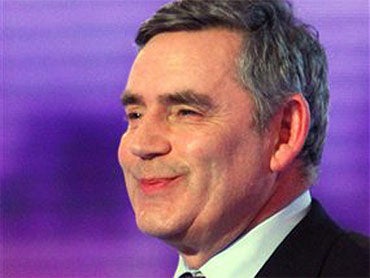
But, unfortunately for Labour, the vast majority of the nation could see Brown -- impossibly awkward smirks, angry grimaces, wrinkly consternation and all.
Cameron, I think, stands a better chance of winning an outright majority in next Thursday's election now than he has in the last three weeks.
In his opening remarks, he hit the nail on the head when he presented voters with what many will view as a very harsh reality: the only way to ensure a decisively different government comes to power after the election is by electing the Conservative Party.
Vote for his party next Thursday, as he put it, "and we can get to work on Friday."
The Liberal Democrats can't win enough seats in Parliament the way the British electoral map is drawn up to form the next government, so Clegg is almost guaranteed not to become prime minister -- this year.
If the Lib Dems gain enough seats to prevent a Conservative majority government, then the two diametrically opposed parties may have to try and forge a coalition -- that could take weeks to hammer out, leaving uncertainty for financial markets and the wider country.
The only thing that Thursday night's debate made any clearer, is that Gordon Brown, who's party was already trailing in the polls, has likely managed to cement its loss next week in the space of just 48 fateful hours.