Germany stalls Libya no-fly zone plans
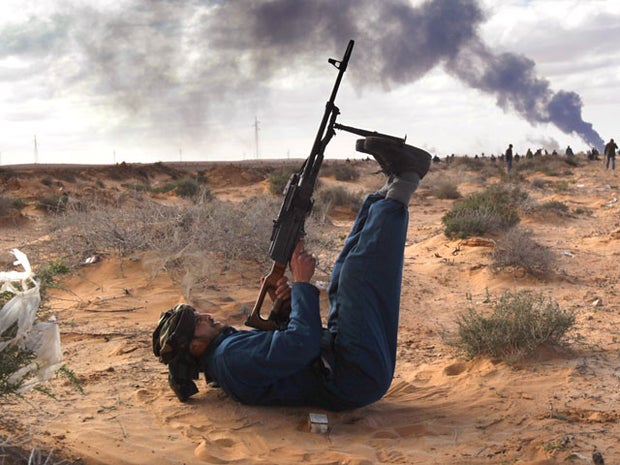
PARIS - The opposition in Libya is on the run. The military forces of Muammar Qaddafi owe their success in no small part to the fact that they have an air force and the rebels do not.
So the Arab League called on the world's leaders last week to implement a no-fly zone in an attempt to protect those that the world feels are on the right side of the Libyan conflict.
Yet Germany, backed by Russia, decided to stall attempts at yesterday's G8 summit to back a no-fly zone in Libya.
Germany's envoy said his country was "very skeptical" about military action, and diplomats confirmed that Germany was one of the most reticent countries on hand Tuesday about the no-fly zone proposal of its EU allies.
"We do not want to get sucked into a war in North Africa. We want to avoid any slippery slope in this direction," Germany's foreign minister, Guido Westerwelle said.
Westerwelle's comments reflect a general post-World War II reticence in Germany to intervene anywhere militarily.
Scoring wins, Qaddafi tells rebels: "Surrender"
Libya Reporter's Notebook: Tell the truth
Complete Coverage: Anger in the Arab World
"What is our plan if we create a no-fly zone and it doesn't work? Do we send in ground troops?" German Chancellor Angela Merkel said last week, according to the Guardian. "We have to think this through. Why should we intervene in Libya when we don't intervene elsewhere?"
Foreign Minister Franco Frattini of Italy, a former colonial power in Libya that has had strong economic ties to Qaddafi's regime, said he thought it would be "a mistake to mix up the need for speed and the need for effectiveness. Obviously things are moving fast on the ground - tanks move faster than debates at the U.N. Security Council."
To the Security Council now goes the debate over Libya, after the G8 summit failed to produce any meaningful action. At U.N. headquarters, diplomats said experts from Britain, France, Lebanon, the United States and Germany were meeting to finalize the text of a draft resolution. The draft was expected to be circulated to the 15-member Security Council later Tuesday, the diplomats said, speaking on condition of anonymity because the talks have been private.
One diplomat said the resolution will be in two parts, with Lebanon, the council's only Arab member, proposing part one, which would establish a no-fly zone over Libya, and Britain and the United States proposing a second part on other measures to strengthen sanctions approved by the Security Council on Feb. 26.
The council then imposed an arms embargo on Libya and ordered all countries to freeze assets and ban travel for Qaddafi and some close associates. It also referred the regime's deadly crackdown on protesters to the International Criminal Court, for an investigation of possible crimes against humanity.
The proposed new resolution would call for more muscular enforcement of the arms embargo, add names of individuals, companies and other entities to the list of those subject to travel bans and asset freezes, and ban commercial flights bringing arms or mercenaries into Libya, the diplomat said. It would also establish a panel of experts to monitor implementation.
U.N. diplomats are expecting tough negotiations on the resolution. At the pace they've been moving, Qaddafi's tanks will have reached Egypt's border before they're done.