Former Fed chairs, Treasury chiefs condemn Trump administration's Jerome Powell probe
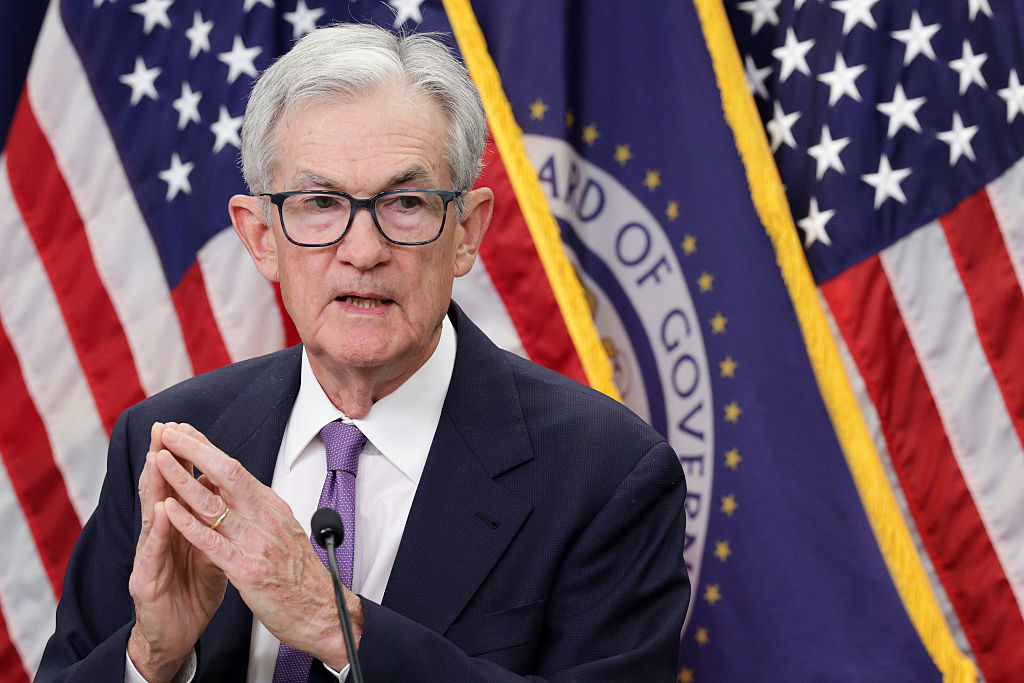
Three former chairs of the Federal Reserve and other top former economic officials are rebuking the Department of Justice for launching an investigation into Fed Chair Jerome Powell, saying the probe will undermine the central bank's independence and hurt the U.S. economy.
The statement, posted on Substack on Monday, was signed by former Fed Chairs Janet Yellen, Ben Bernanke and Alan Greenspan, as well as by former Treasury Secretaries Timothy Geithner, Jacob Lew, Henry Paulson and Robert Rubin.
"The reported criminal inquiry into Federal Reserve Chair Jay Powell is an unprecedented attempt to use prosecutorial attacks to undermine that independence," the signers of the statement said. "This is how monetary policy is made in emerging markets with weak institutions, with highly negative consequences for inflation and the functioning of their economies more broadly.
President Trump has pushed the Fed to more aggressively cut interest rates, arguing that the U.S. economy would benefit from lower borrowing costs.
A fight over independence
Powell has long defended the central bank's independence on the grounds that shielding the Fed from political influence allows monetary policy makers to make objective decisions based on economic data, rather than the interests of elected officials.
Justice Department subpoenas to the Fed threaten a criminal indictment related to Powell's testimony before the Senate Banking Committee in June 2025, Powell said in a video statement on Sunday.
"That testimony concerned in part a multi-year project to renovate historic Federal Reserve office buildings," Powell said.
Other former senior economic officials to sign the statement: Jared Bernstein, chair of the Council of Economic Advisers (CEA) under former President Joe Biden; Jason Furman, CEA chair under former President Barack Obama; Glenn Hubbard and Gregory Mankiw, who both led the CEA under former President George W. Bush; Kenneth Rogoff, former chief economist of the International Monetary Fund; ad Christina Romer, CEA chair under Obama.
"The Federal Reserve's independence and the public's perception of that independence are critical for economic performance, including achieving the goals Congress has set for the Federal Reserve of stable prices, maximum employment, and moderate long-term interest rates," the signers wrote.
The statement signals that "folks are unifying against this," Nick Anthony, a policy analyst at the Cato Institute, a nonpartisan think tank, told CBS News. "Whether it changes the administration's mind is a tough question because it's a new source of pressure. But at the same time, it might amplify their resolve in seeing that the establishment is against this, so we must be right."
Why Powell says he's being targeted
The $2.5 billion project to renovate several Fed buildings, along with Powell's testimony about that effort, came under scrutiny by the Trump administration last year, with Office of Management and Budget Chair Russell Vought accusing Powell of leading an "ostentatious" project that may be "violating the law."
Powell had called some descriptions of the renovation "misleading and inaccurate," disputing claims by the Trump administration that the overhaul included water features or rooftop gardens.
In his video remarks on Sunday, Powell tied the investigation to Mr. Trump's efforts to pressure the Fed to cut interest rates and undermine the central bank's independence.
"This new threat is not about my testimony last June or about the renovation of the Federal Reserve buildings. It is not about Congress' oversight role. The Fed, through testimony and other public disclosures, made every effort to keep Congress informed about the renovation project. Those are pretexts," Powell said. "The threat of criminal charges is a consequence of the Federal Reserve setting interest rates based on our best assessment of what will serve the public, rather than following the preferences of the president."
The Federal Reserve has cut its benchmark rate three times since Mr. Trump's inauguration in January 2025, with Mr. Powell citing easing inflation and a slower labor market as causes for the reductions.
Lawmakers across the aisle spoke out in defense of Powell. Sen. Thom Tillis, a North Carolina Republican and member of the Senate Banking panel, said on Sunday that he would oppose any of the Trump administration's nominees for the Fed, including to replace Powell.
"If there were any remaining doubt whether advisers within the Trump Administration are actively pushing to end the independence of the Federal Reserve, there should now be none," Tillis said in a statement.
Sen. Lisa Murkowski, an Alaska Republican, called the investigation "nothing more than an attempt at coercion."
Sen. Elizabeth Warren, a Massachusetts Democrat, said in a speech at the National Press Club on Monday that "Trump is trying to push out the chairman of the Federal Reserve Board and complete his corrupt takeover of America's central bank so that it serves his interests, along with his billionaire friends."
Powell's future at the Fed
Powell is set to step down as Fed chair in May, but he could continue to serve as a Federal Reserve governor beyond that time. If he remains, the Trump administration would be deprived of the chance to fill another seat on the board.
Powell has declined at several press conferences to answer questions about his plans. Asked on Monday by reporters if Powell planned to remain a Fed governor, Kevin Hassett, director of the White House National Economic Council and a leading candidate to become Fed chair, said he was unaware of Powell's plans.
"I've not talked to Jay about that," Hassett said.
In the meantime, Mr. Trump has also called on another Fed official, Lisa Cook, to step down. Bill Pulte, who Mr. Trump appointed as director of the U.S. Federal Housing Finance Agency last year, claimed Cook committed mortgage fraud after designating two homes as her primary residence.
Cook remains in her position on the Fed Board of Governors after the Supreme Court in October said it would hear arguments in January about whether the president has the authority to fire her.