Disaster in Japan: Latest developments, Mar. 19
Latest update 12:50 a.m. EDT
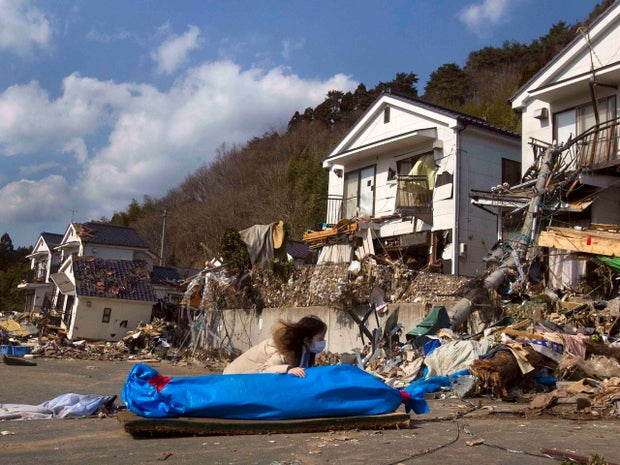
* Japan's police agency now says that more than 8,000 people are dead and more than 12,000 are listed as missing after last week's earthquake and tsunami. A week after the disasters devastated the northeast coast, the National Police Agency said Sunday that the number of bodies collected so far stood at 8,133, while 12,272 people were listed as missing.
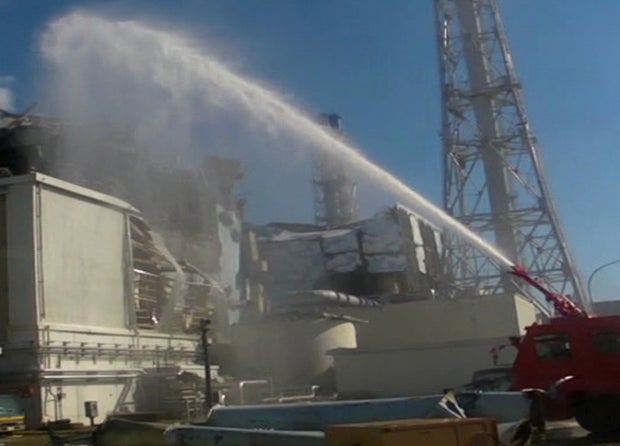
*Japan's nuclear safety agency says pressure is again rising in one of reactors at the country's tsunami-damaged nuclear complex a setback that means operators will have to vent more radioactive gas into the environment. Safety agency official Hidehiko Nishiyama said Sunday that efforts to put water in the Unit 3 reactor at the Fukushima Dai-ichi complex might not have been working.* Japan announced that conditions at the Unit 3 reactor of the stricken Fukushima Dai-ichi nuclear complex have become "relatively stable" after a third day of hosing the plant, Kyodo News reports. After the operation, Defense Minister Toshimi Kitazawa told reporters that temperatures at reactors 1 through 4 were lower than initially feared.
Complete Coverage: Disaster in Japan
* Government officials now say the tap water around Fukushima prefecture contains radioactive iodine within government safety levels. However, milk tested in the town of Kawamata exceeds safety limits for radioactive particles. Kawamata is 28 miles northwest of the nuclear plant.
* Japanese authorities report that radioactive iodine has been detected in tap water in Tokyo and five other prefectures, reports the Associated Press. A government ministry says the trace amounts are within government safety limits but usual tests show no iodine.
* Radiation has been detected in food - including spinach and milk - on farms near the crippled nuclear plant that exceeds government safety limits. Farms as far as 65 miles from Fukushima Dai-ichi reported radioactive contamination.
*Japanese news agency Kyodo pulls report of man rescued after eight days in rubble after learning from his family that he returned home after staying in a shelter.
*Japan's police agency says nearly 7,200 are dead and more than 10,900 are missing after last week's earthquake and tsunami. A week after the disasters devastated the northeast coast, the National Police Agency said Saturday that 7,197 people died and 10,905 were missing.
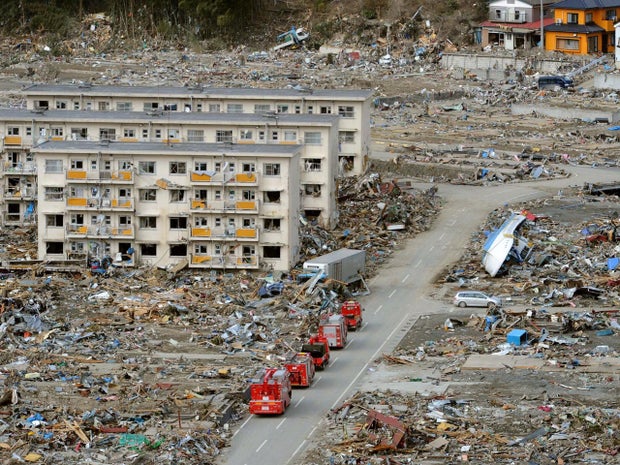
* Shortly after midnight March 19, Tokyo time, hyper rescue troops in coordination with the Tokyo Fire Department began a water discharge at Unit 3. A TEPCO statement said the process went on for 25 minutes.