Bread to beer, and back again
As craft beer market competition has increased, brewers are looking to bump their sales in new ways.
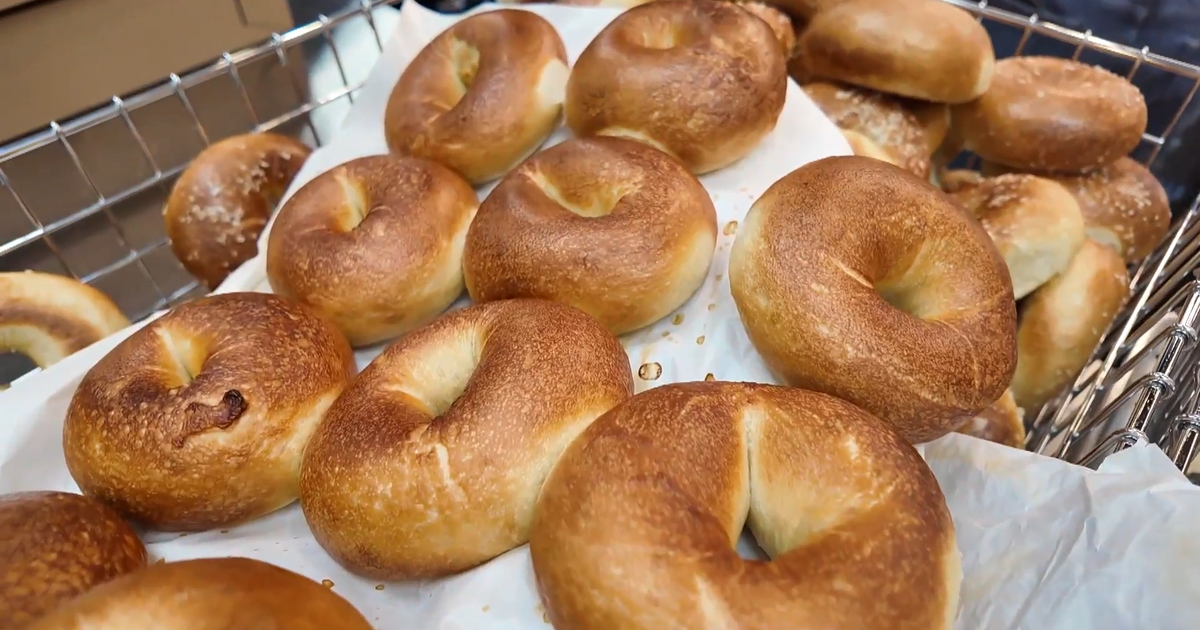
At brewer Toast Ale, the brewmasters are taking the phrase "reuse and recycle" to an entirely different level. They're turning leftover bread into beer in an effort to combat food waste.
The innovative beer company, founded in London, brews beer using leftover bread that would usually be discarded or in some cases turned into animal feed.
The founders came up with the idea as a way to use bread people wouldn't normally consume. Starting in the U.K., where 44 percent of bread produced is discarded, the makers of Toast Ale partnered with sandwich factories to use leftover bread as an ingredient in their beer.
How is it done?

The bread is dried, crushed and added to a mix of water, malts and oat husks. The liquid is drained, hops and yeast are added later, and the beer is fermented.
Now in the U.S., the brewer has opened a factory in New York, using the same technique pioneered in London and partnering with local bakeries to use leftover bread.
They've even added a twist: selling back grains used in beer-making to bakeries for use in making more bread.
The U.S. has some 5,500 breweries, and 99 percent are small, independent craft breweries, a market that has expanded rapidly, even in just the last few years. In 2011, there were 2,343 permitted breweries in the U.S., and in 2016 there were 7,190 (including those that haven't yet started up) -- an all-time high. That means many are less than 5-years-old and have never experienced an economic downturn.
But that expansion is slowing. A recent report by industry group the Brewer's Association showed craft beer volume grew 6 percent in 2016, compared with 18 percent in 2014 and 12 percent in 2015. Craft breweries account for just over 12 percent of the U.S. beer market by volume.
The category has been a hotbed for mergers and acquisitions in recent years as several larger beer manufacturers and distributors have taken over small craft breweries, like Heineken's acquisition of California-based Lagunitas Brewing or Anheuser-Busch InBev's (BUD) takeover of Colorado-based Breckenridge Brewery.
That's leading the craft industry into a fight to distance itself from "Big Beer." The Brewer's Association recently released a new label intended to distinguish smaller brewing companies from those owned by major beer makers. The group now considers a craft brewery "independent" if less than 25 percent of it is owned or controlled by an alcohol industry member that isn't a craft brewer.