Meet the 2026 Winter Olympic mascots, the Milano Cortina stoats Tina and Milo
An animal many people have never heard of — the stoat — is the mascot for the 2026 Olympic Games.
Drawings of Tina the stoat, the Olympic mascot, and her brother Milo, the Paralympic mascot, were designed by students of the Istituto Comprensivo of Taverna, according to the Olympics. The adorable mascots embody "the Italian spirit that inspires them."
"They represent the contemporary, vibrant and dynamic Italian Spirit," according to the Olympic website.
Tina and Milo are joined by six snowdrop flowers that the Olympics called "The Flo."
Meet Tina, Milo and their snowdrop friends
The official Olympic website describes Tina as creative and down to earth. She was born in Italy's mountains but now "lives" in a city. While the Olympics doesn't specify which city Tina lives in, her name is a diminutive for Cortina, one of the cities co-hosting the Winter Olympics.
"Nature is her home, and even though she now lives in the city, she does everything she can to protect it and keep it untouched," according to the Olympics.
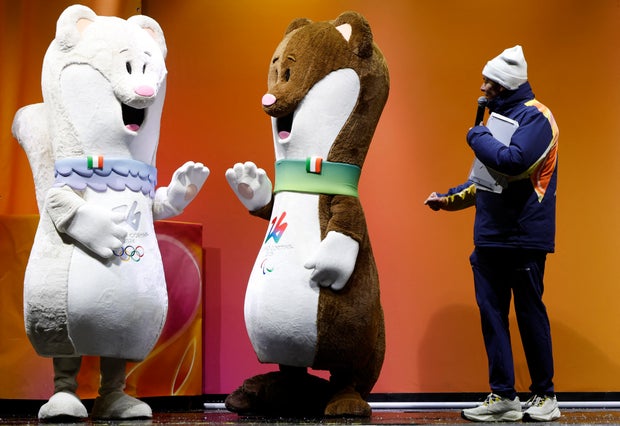
Tina's younger brother Milo, born without one paw, is the Paralympic mascot. Milo is described as a dreamer who loves to play in the snow. His name is short for Milano, the other city hosting this year's Olympics.
"Nothing can hold back his resilient character. Despite being born without a paw, he has learned to walk using his tail," according to the Olympics. "The sentence that represents him is: 'Obstacles are trampolines.'"
The Flo are described by the Olympics as "six curious and irresistible little flowers." They "never leave their friends and love to have fun even if sometimes this gets them into trouble."
What real stoats and snowdrops are like
Stoats, also called ermines, are small, carnivorous mammals in the weasel family. They can be found in Italy and in other countries around the world, including China, the United States, Japan, and Ukraine, according to the International Union for Conservation of Nature.
The species is "fast and definitely furious," according to Woodland Trust, a conservation charity in the United Kingdom.
"The stoat is not afraid to take on prey more than five times its size," according to Woodland Trust. "Up trees or underground, there are few places this potent predator won't go in search of its next meal."
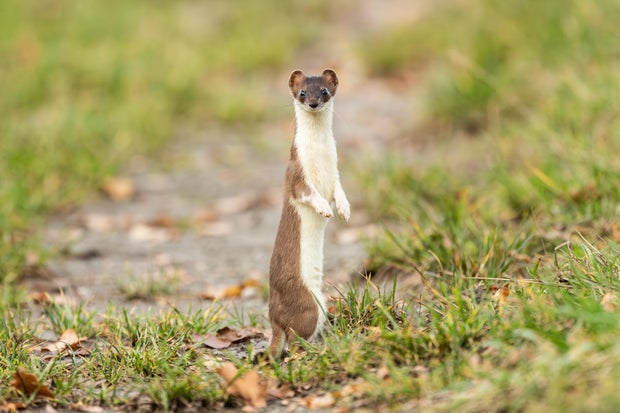
Their fur turns white in the winter, helping them blend in with snowy environments.
And while most flowers go dormant in the winter, that's when snowdrops wake up, according to the New York Botanical Garden. The flower meets " the challenge of winter head on," according to Jenny Shelton, a wildlife expert at The Wildlife Trusts.
"Snowdrops are a twinkle of joy in the winter landscape and, for many, a symbol of triumph and defiance," Shelton told CBS News in an email. "The natural world is all about competition and thriving against the odds, and in the race for vital resources, snowdrops are always out in front. As one of the first flowers to emerge, they're already soaking up sunlight and attracting pollinating insects before many other flowers have shown up."
Why stoats and snowdrops for the 2026 Winter Games?
The Milano Cortina 2026 Organizing Committee worked with the Italian Ministry of Education to get mascot ideas from students. They received more than 1,600 entries, from which two were shortlisted. After a public poll, they landed on Tina and Milo.
"The Flo" snowdrops were inspired by drawings from students at the Istituto Comprensivo Sabin.
Shelton said she sees both snowdrops and stoats as icons of resilience and hope, meeting winter's challenges head-on.
"Nature is integral to our physical and mental health and, when given the space to flourish, can really help to boost our wellbeing, resilience and overall mood too," Shelton said. "That's why helping inspiring species like stoats to thrive is so important – after all, we only win when nature wins."
Marco Granata, a biologist and PhD candidate at the University of Turin, said he feels stoats are a fitting choice for the Winter Olympics because both the animal and the Winter Games are threatened by climate change.
"I often call stoats 'wild ghosts' as they are extremely hard to see and very difficult to study because of their small size, rarity, and elusive behavior. The real risk is that they may become ghosts in a literal sense, disappearing from large parts of our territory," Granata said.
As part of the Ermlin Project, Granata is studying mustelids like stoats and assessing their conservation status in the Alps. Granata, concerned about climate change's impact on the land where stoats live, reached out to the Milano Cortina 2026 Foundation, asking for part of the proceeds to go toward a stoat preservation proposal. He said the foundation told him no.
The Milano Cortina 2026 Foundation did not respond to CBS News' repeated requests for comment.
Past Olympic mascots
Olympic and Paralympic mascots are considered ambassadors embodying the spirit of the games, according to the Olympics.
"They're tasked with giving concrete form to the Olympic spirit, spreading the values highlighted at each edition of the Games; promoting the history and culture of the host city; and giving the event a festive atmosphere," according to the Olympics.
While the mascots of today are designed and chosen well in advance, Aline Lafargue, the designer of the first Olympic mascot, had just one night to prepare a submission. Lafargue's design of a little man on skis, named Schuss, was introduced for the 1968 Winter Games hosted in Grenoble, France.
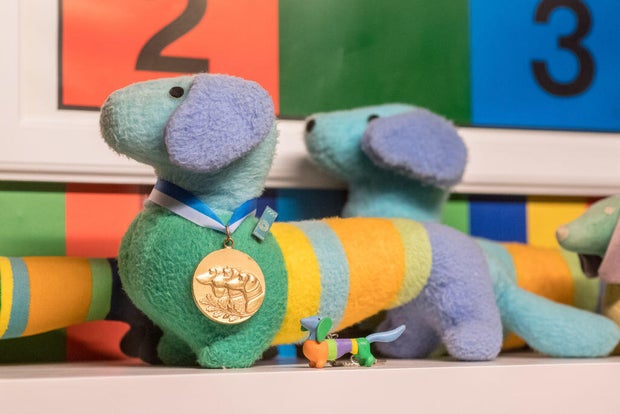
Several years later, in 1972, the Summer Olympics got its first mascot, with a dachshund named Waldi representing the Munich Games.
In the decades since, there's been Schneemandl the snowman, Amik the beaver, Sam the eagle, Hodori the tiger, and Bing Dwen Dwen, among other characters. Most recently, the 2024 Summer Games were represented by the Phrygian cap, a symbol of freedom in France's history.