LAFD vehicle numbers decrease 1 year after Palisades Fire, latest data shows

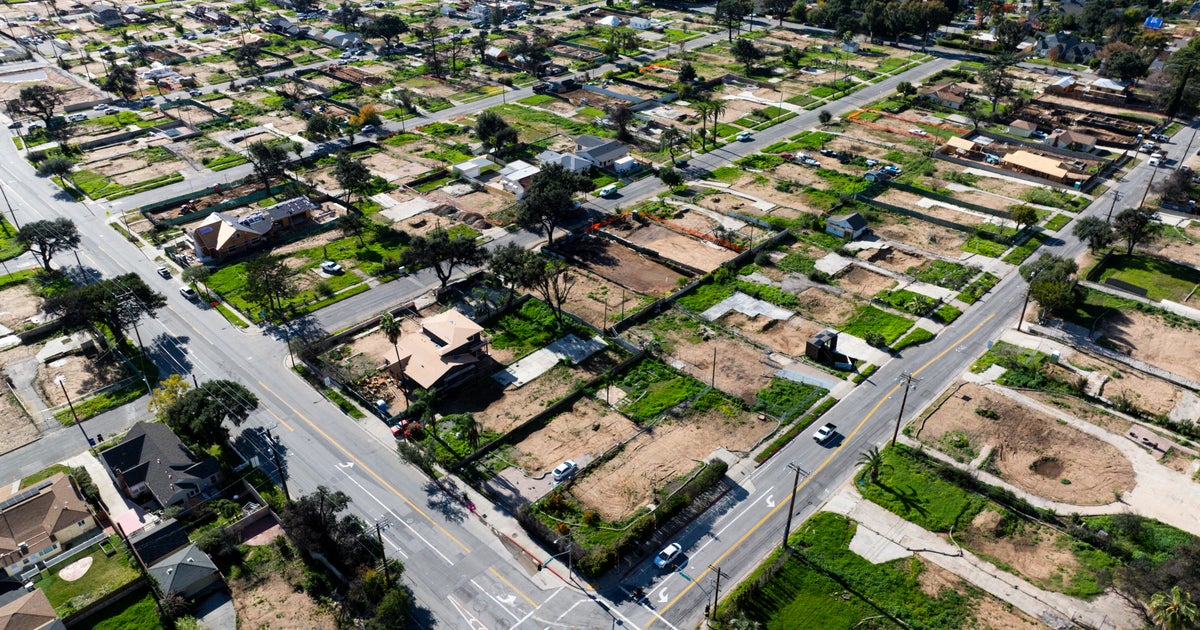
As the Palisades Fire burned out of control under hurricane-force winds, some residents chose to stay and fight, like Cort Wagner.
Wagner picked up a garden hose to take a stand against the flames himself.
"I had all hoses running at every house here, six hoses running, two at that house," Wagner said.
He explained that quickly after the blaze erupted, it became obvious he was on his own.
Last year, CBS LA obtained public records that show more than 100 Los Angeles City Fire Department (LAFD) trucks, engines and ambulances had been out of service and in need of repair.
Through a public records request, CBS LA recently received new numbers on the department's fleet.
On Jan. 7, 2025, the day the Palisades Fire broke out, there were 252 fire engines and trucks, or heavy apparatus, available to respond to calls and 217 ambulances in the total fleet. According to LAFD data, the same day there were 131 service orders for fire engines, trucks and ambulances.
In December 2025, the heavy apparatus count was down to 240 and 207 ambulances with 90 service orders, according to LAFD data. The new numbers indicated a nearly 5% drop in both categories.
In November 2025, Chief Jaime Moore was sworn in as the new head of the department following leadership changes, brought on by the handling of the Palisades Fire. Moore acknowledges the department needs more equipment, but said he has had to manage within his means while the city faces a budget crisis.
As of Jan. 6, 2026, 96 LAFD fire engines, trucks and ambulances are in need of service.
Following one of the deadliest and most destructive wildfires in California history, the department said it has added three new fire engines, with three more expected to arrive in the next few weeks.
"Right now, a fire engine is about a 2-year wait when we order a fire engine," Moore said.
Moore also said some of the fire engines and trucks in the department's aging fleet are so old, original parts are impossible to find, which is why some out-of-service apparatus sit in the shops longer.
"We're putting about on the average, 40,000 miles a year on a fire engine," Moore said. "The average person drives 14,000 a year."
The union that represents firefighters said the problem is evident at this fire station bay in South LA and many others because of previous department cuts.
"We'd have the fire truck that would be parked here. That's gone. We lost that in 2010 and behind this engine, we'd have another engine that supports the truck and so we're missing two of those apparatuses, and we only have one right now," said Doug Coates, Vice President of UFLAC-112.
A department report to the fire commission, dated just days before the Palisades Fire, said, "The overall response time of LAFD resources has increased from six minutes 51-seconds in 2018 to seven minutes 53-seconds in 2022."
The increase is about twice the four-minute standard set by the National Fire Protection Association. The union said the LAFD staffing is about half the size the department needs to keep LA safe.
"I'm trying to be as fiscally responsible as I possibly can," Moore said.
Moore is looking at adding on more of what's called "Fast Response Vehicles," outfitted with a 150-gallon tank, which doesn't have a two-year wait like a fire engine. Instead, they can be delivered in four to six months.
Moore believes they can help improve response times, especially on small fires and medical calls and, are less costly than a large fire engine, which is staffed with four members instead of two.
Moore said FRV allows them to have flexibility with a resource on the scene. However, an FRV in some cases does not take the place of a fire engine, and does it not the place of a truck, nor does it take the place of an ambulance.
A major reason so much apparatus is out of service is that the fire department has had a shortage of mechanics for years.
Since the Palisades Fire, 17 positions have been authorized for hire. One automotive supervisor position has been filled, but no mechanics so far.
"It's very challenging," Moore said. "I think there's a big demand for mechanics out there, and there's a shortage of mechanics."
Councilwoman Traci Park, who represents the Palisades, said they are really not better prepared for the next major emergency than they were a year ago.
On the mechanics shortage, Park said they may need to reform the city charter, which makes hiring key positions so slow.
"It's a leftover product from the 1960s and we have got to move to more online systems, we have to increase efficiencies, remove bureaucratic hurdles that may or may not even relate to the position that someone is applying for," Park said.
The department said it's typically taken about 8-10 months to fill positions like mechanics.
Wagner said the shortages of equipment and staff will have a lasting impact on rebuilding in his community.
"The psychological impact is you still have no faith in the governing bodies," Wagner said. "You don't have beliefs that ever will turn around."
Mayor Karen Bass' office declined our request for an interview. Instead, her office sent a statement that reads, "Mayor Bass' priority is to keep Angelenos safe. The Mayor is looking forward to working with Fire Chief Moore to better prepare L.A. for major emergencies and upcoming world events and to improve responses to 911 calls citywide.
For example, Mayor Bass proposed and secured $120 million in funding authorization for engines, trucks, and other apparatus during FY 24-25 and FY25-26. Six new fire engines are now in service.
Mayor Bass also secured 17 positions for supply and maintenance staffing, including heavy-duty mechanics, mechanic helpers, tire repairers, maintenance laborers, toolroom workers, truck operators and more. LAFD is currently in the process of hiring for the 17 positions. Once filled, LAFD's staffing level that will be dedicated to maintaining its fleet will be at its highest since 1995."
In the meantime, the firefighters' union will start a signature-gathering campaign in January to get a half-cent sales tax ballot measure on the November ballot. The money raised will go towards new trucks, engines and fire stations.