Second doctor charged in Matthew Perry death sentenced to 8 months of home confinement for ketamine charge
The second doctor charged with conspiracy to distribute ketamine in connection with "Friends" star Matthew Perry's death has been sentenced.
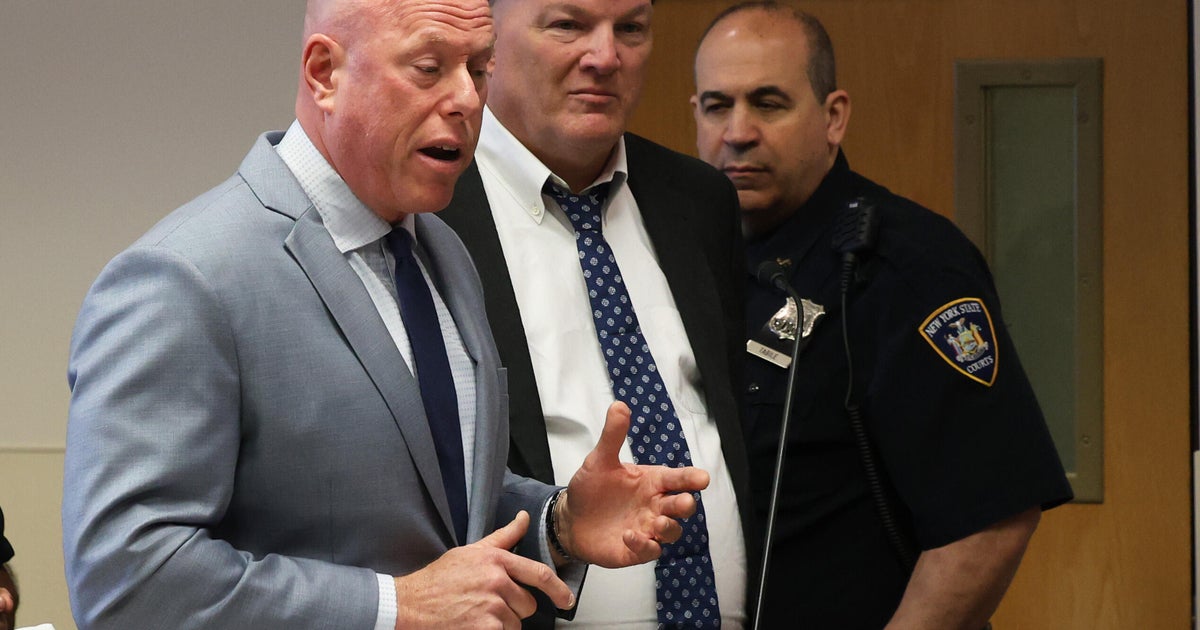
Mark Chavez, 54, was sentenced to three years of supervised release with special conditions of eight months of home confinement and ordered to perform 300 hours of community service by U.S. District Judge Sherilyn Peace Garnett on Tuesday. Chavez pleaded guilty in October 2024 to one count of conspiracy to distribute ketamine. He also admitted to selling ketamine that he fraudulently obtained from a clinic where he used to work in San Diego. He also surrendered his medical license.
"We believe that this is a fair and just outcome for this case and that Judge Garnett carefully took into account the nature and circumstances of the offense," said his attorney, Matt Binninger.
After the sentencing, Binninger spoke to reporters, emphasizing that Chavez was never Perry's physician, he never met him, spoke to him, or went to his home.
When asked by reporters if he had anything to say to Perry's family, Chavez said, "My heart goes out to the Perry family."
Perry, 54, was found unresponsive and floating face-down in a jacuzzi at his LA home on Oct. 28, 2023. The Los Angeles County Medical Examiner later determined the actor died from the "acute effects of ketamine," with contributing factors including drowning, coronary artery disease and the effects of buprenorphine, which is a medication used to treat opioid use disorder.
Another doctor who was also charged in connection with Perry's death, Salvador Plasencia, was sentenced to 30 months in prison for supplying ketamine to him and his assistant.
In his plea agreement, Plasencia admitted to enlisting Chanez to supply the drug for him, according to court documents. After selling the drugs to Perry for $4,500, Plasencia allegedly asked Chavez if he could keep supplying them so they could become Perry's "go-to," prosecutors said.
According to court documents, nine days before Perry died, Chavez was interviewed by investigators with the U.S. Drug Enforcement Agency and the Medical Board of California. Authorities said he allegedly concealed information that he distributed ketamine to Plasencia.
Chavez and Plasencia did not provide the ketamine that ultimately killed Perry, but prosecutors argued they both knew he had a history of struggling with substance abuse.
When federal investigators spoke to Chavez, they asked him about a prescription in another person's name for ketamine lozenges that were missing from Chavez's former ketamine clinic. Chavez allegedly admitted to investigators that he had the prescription filled without the knowledge or consent of the patient whose name it was placed under. But Chavez also told them that he had thrown the lozenges away because they melted in his car, the plea agreement states.
It is unclear how Chavez first came to the attention of federal investigators.
Also charged in Perry's death is Jasveen Sangha, known as the "Ketamine Queen." She is charged with supplying the drugs that caused Perry's death, and is expected to be sentenced in February 2026. In August, Sangha previously pleaded guilty to three counts of distribution of ketamine, one count of distribution of ketamine resulting in death or serious bodily injury and one count of maintaining a drug-involved premises.
Perry's former live-in assistant, Kenneth Iwamasa, and Erik Fleming, a Hawthorne man federal authorities have described as a street dealer who acted as a middleman, have sentencing dates scheduled in January 2026.